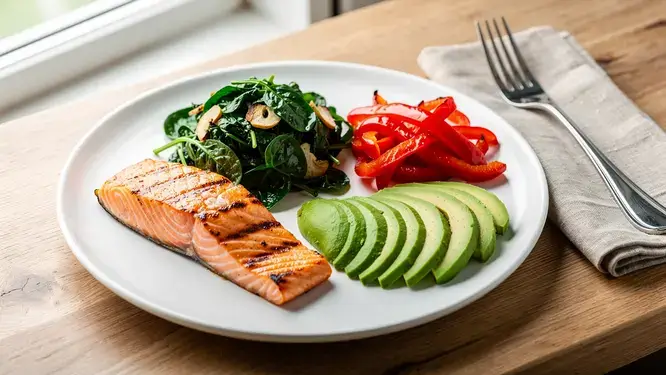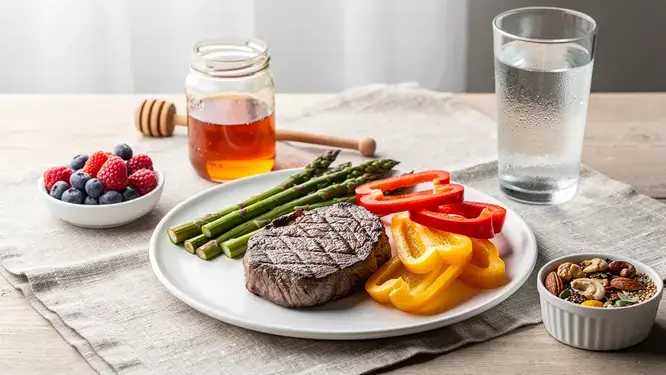
Tips
What Is the Primal Diet? Why Your Inner Caveman Might Need a Salad
Curious what is the primal diet? Discover how eating like your ancient ancestors—with a side of cheese—might energize you (and your next caveman impression).
Real-Life Fitness for Real People
Since 2024
How to divide macros into meals is a key part of effective meal planning. Fresh foods are vital for nutrition, as frozen plant-based foods can lose 70% of nutrients in 72 hours. Understanding how to structure meals around macronutrients can help you reach your health goals. Macro meal planning goes beyond calorie counting. It’s about …
How to divide macros into meals is a key part of effective meal planning. Fresh foods are vital for nutrition, as frozen plant-based foods can lose 70% of nutrients in 72 hours. Understanding how to structure meals around macronutrients can help you reach your health goals.
Macro meal planning goes beyond calorie counting. It’s about balancing the building blocks of nutrition—carbs and proteins (4 calories per gram) and fats (9 calories per gram).
These macronutrients are crucial for our body’s functions. Balancing them correctly can boost health, energy, and overall well-being.
This guide will help you divide macros into balanced meals. You’ll learn how to structure your meals for weight loss, muscle gain, or maintaining a healthy lifestyle. By spreading your macros throughout the day, you can optimize energy levels and support your goals effectively.
Macronutrients are key to our diet. They form the base of what we eat. Let’s explore protein, carbohydrates, and fats.
Protein helps your body grow and repair. It builds muscle and supports immune health. The Dietary Guidelines suggest 10-35% of daily calories from protein.
For a 2,000-calorie diet, that’s about 50-175 grams of protein.
Carbs fuel your brain and muscles. They help control blood sugar and cholesterol. The DGA suggests 45-65% of calories from carbs.
In a 2,000-calorie diet, aim for 225-325 grams of carbs.
Fats help absorb vitamins and store energy. They also support cell growth. The DGA recommends 20-35% of calories from fats.
For a 2,000-calorie diet, that’s 44-78 grams of fats.
To find your macro needs, calculate your Total Daily Energy Expenditure (TDEE). The Mifflin-St. Jeor equation can help:
Multiply your result by an activity factor to get your TDEE. Then, adjust your macros based on your goals.
Dividing macros into meals helps maintain balanced meals and optimal meal structure. This guide will help you create a meal plan that fits your macro goals.
Start your day with a macro-balanced breakfast. Aim for 35g protein, 17g fat, and 44g carbs. A Greek yogurt parfait with berries and nuts is perfect.
One cup of nonfat Greek yogurt provides ample protein. A handful of nuts adds healthy fats. Fresh fruit rounds it out with carbs.
For lunch and dinner, use this simple formula. One palm-sized portion of protein (20-30g). One cupped hand of carbs (20-30g). A thumb-sized portion of fats (7-12g).
This means about 3-4 ounces of meat. Add ½ to ⅔ cups of cooked grains. Include a tablespoon of oil or butter.
Snacks help maintain macro distribution throughout the day. Choose nutrient-dense options like a medium apple with 1 ounce of cheese. This provides a mix of carbs, protein, and fat.
Fruits and veggies are filling without greatly impacting your macro goals. They’re great for snacking.
Meal timing can boost your results. Spread your meals evenly, eating every 3-4 hours. This helps maintain steady energy levels and supports muscle growth.
Pre-planning your meals can reduce stress. It also improves how well you stick to your dietary goals.
These guidelines will help you create a balanced meal structure. Stay consistent to achieve the best results from your meal planning efforts.
Tracking macros can be easy with the right tools and strategies. It can become a natural part of your routine. Let’s look at ways to monitor your macros effectively.
Macro tracking tools have changed how we monitor our food intake. Apps like MyFitnessPal and MacrosFirst offer large food databases and easy-to-use interfaces.
These apps let you log meals quickly and scan barcodes. You can also view your macro breakdown easily.

Even with great tools, mistakes can happen. One common error is forgetting to track small snacks or condiments. These “hidden” calories can add up quickly.
Another mistake is guessing portions instead of using a food scale. Accurate measurements are key for reliable macro counts.
Check This:
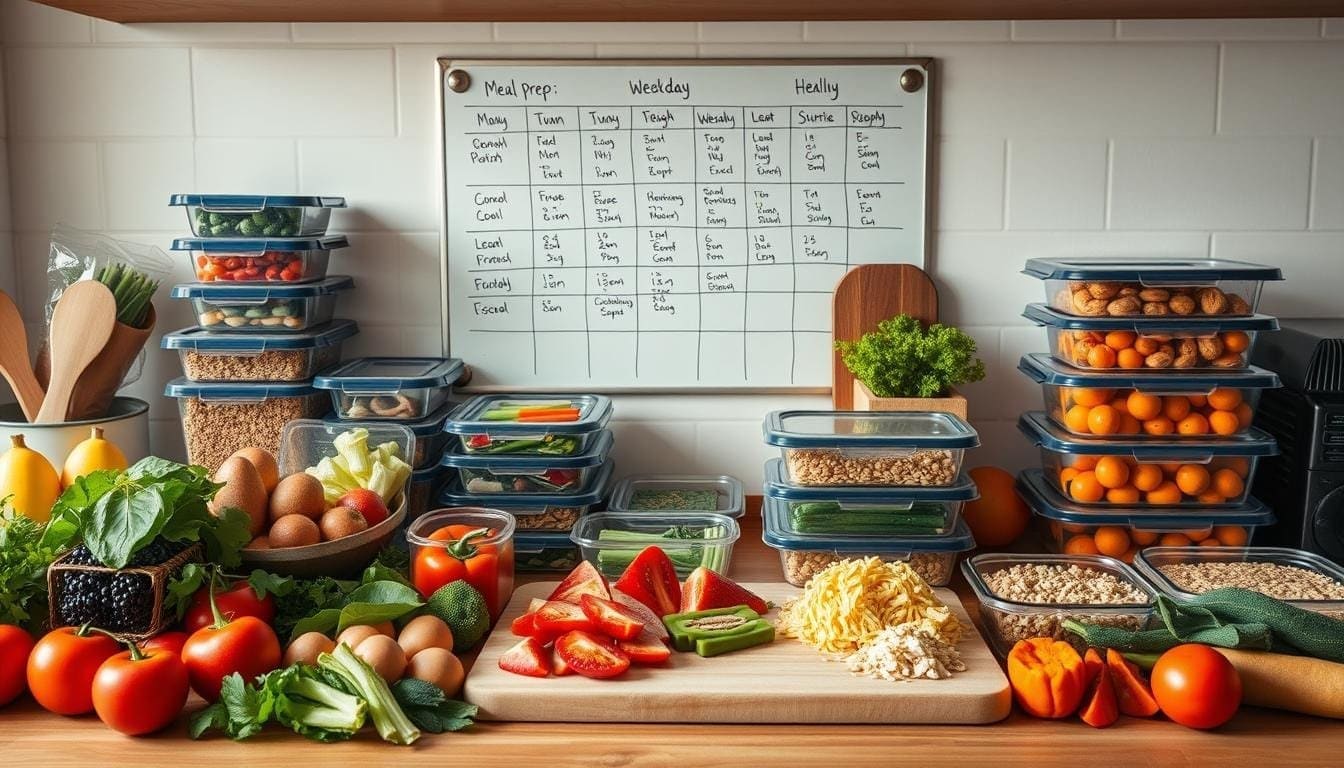
Meal prep can make macro tracking simple. Try preparing proteins in bulk, like grilling chicken or cooking ground turkey. Pre-portion your carbs and veggies too.
This way, you can easily put together balanced meals throughout the week.
| Meal Prep Item | Protein (g) | Carbs (g) | Fat (g) |
|---|---|---|---|
| Grilled Chicken (4 oz) | 35 | 0 | 4 |
| Brown Rice (1 cup cooked) | 5 | 45 | 2 |
| Steamed Broccoli (1 cup) | 4 | 7 | 0 |
Consistency matters more than perfection. Start by tracking a few meals a day. Gradually build the habit.
With these simple strategies, you’ll soon become a macro tracking expert!
Macro adjustments are crucial for reaching fitness goals. Tailoring your intake can significantly impact weight loss and muscle gain.
For weight loss, create a 500 kcal daily deficit. This means reducing energy intake by 5-8%, usually 100-200 kcal. Try a 40% protein, 40% carbs, and 20% fat split.
To gain muscle, increase daily intake by 15% of your TDEE. If your TDEE is 2,580 calories, aim for 2,977 calories daily. Set protein at 1 gram per pound of body weight.
Your macro needs will change over time. They should adapt to your goals and lifestyle. Adjust your meal plans to keep making progress on your fitness journey.
Macro meal planning is key for nutrition balance and dietary success. It helps you create a personalized eating plan that fits your health goals. You’re now ready to start your own plan.
Protein is vital in your diet. Aim for 0.8 to 1 gram per pound of body weight. A 160-pound person needs about 160 grams daily. Split this into four 40-gram portions.
Add starchy carbs, non-starchy veggies, and healthy fats to your plate. This mix gives you the best nutrition. With time, balancing your meals will become easier.
Macro planning goes beyond just hitting numbers. It creates a diet you can enjoy and stick to long-term. This approach fuels your body in the best way possible.
Start using these tips today. You’ll soon see your health and fitness goals become real. Enjoy your journey to better nutrition!
Curious what is the primal diet? Discover how eating like your ancient ancestors—with a side of cheese—might energize you (and your next caveman impression).
Curious about the zero starch diet? Learn what you can actually eat, how to avoid salad boredom, and why potatoes are definitely not invited to this party.
A beginner swim workout turns splashing around into smart, safe exercise—even if your best stroke is “try not to panic.” Learn to swim with confidence (and laughs).