Tips
What Is the Primal Diet? Why Your Inner Caveman Might Need a Salad
Curious what is the primal diet? Discover how eating like your ancient ancestors—with a side of cheese—might energize you (and your next caveman impression).
Real-Life Fitness for Real People
Since 2024
How to track macros when eating out can be tricky, but with the right approach, you can enjoy dining out while staying on track. Imagine you’re at a restaurant, eyeing a grilled chicken sandwich. You know it has about 25-30g of protein. The bun adds roughly 35g of carbs. But what about the hidden fats? …
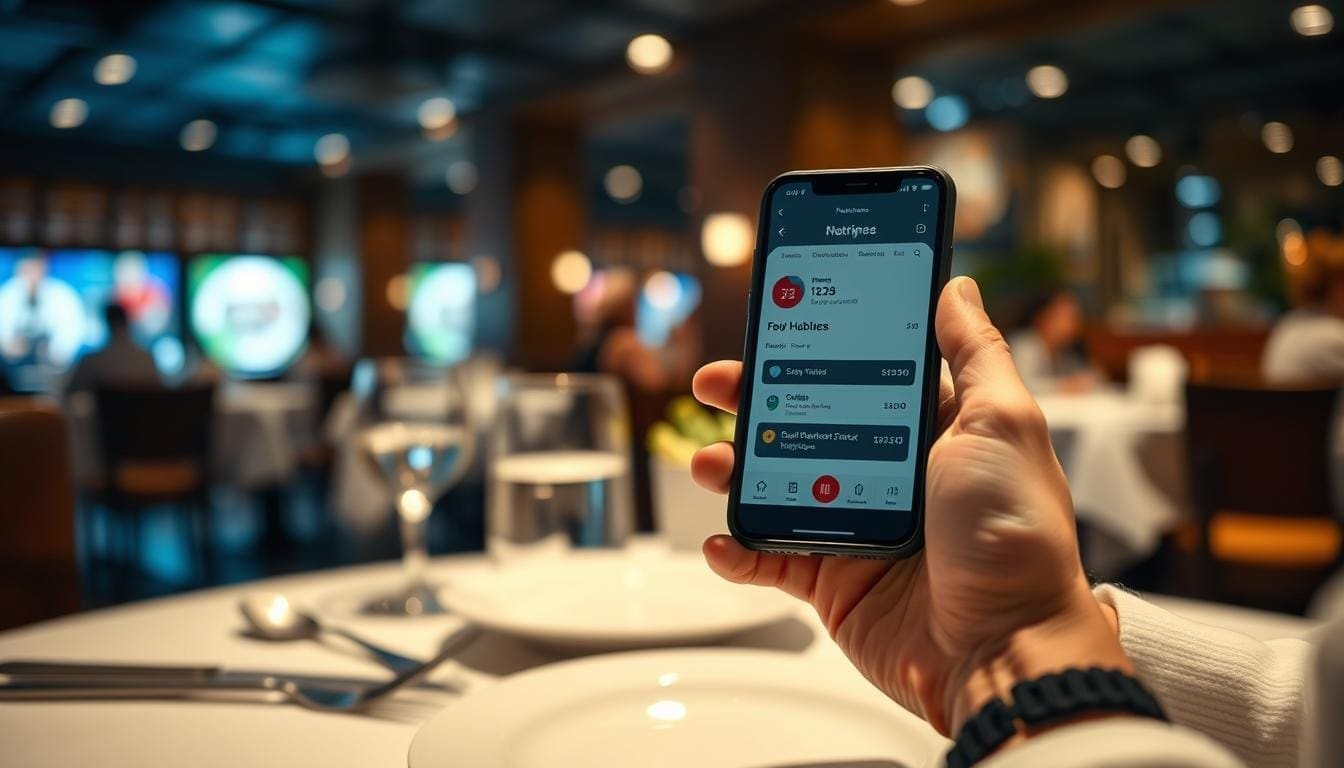
How to track macros when eating out can be tricky, but with the right approach, you can enjoy dining out while staying on track.
Imagine you’re at a restaurant, eyeing a grilled chicken sandwich. You know it has about 25-30g of protein. The bun adds roughly 35g of carbs. But what about the hidden fats?
That’s where the challenge begins. Yet, with smart choices and know-how, you can navigate any menu while meeting your nutrition goals.
Let’s explore how to track macros when eating out, including estimating portions, understanding restaurant nutrition info, and making informed choices that fit your dietary needs. These tips will help you enjoy eating out without derailing your nutrition plan.
Macro tracking helps achieve health and fitness goals. It lets us make smart choices about our diet. We can do this by understanding macronutrients and their roles.
Macronutrients are the main parts of our diet. They include protein, carbohydrates, and fats. Each one does something special for our body.
Tracking macros helps us improve our nutrition. It shows us what we’re eating. We can then make changes to reach our goals.
To set macro goals, think about your weight and how active you are. Also, consider what you want to achieve.
A typical macronutrient ratio might look like this:
| Macronutrient | Percentage of Daily Calories |
|---|---|
| Carbohydrates | 45-65% |
| Protein | 10-35% |
| Fats | 20-35% |
For a 2000-calorie diet with a 50/30/20 split, aim for 250g of carbs. You’d also need 150g of protein and 45g of fat daily.
These numbers can change based on what you need. Adjust them to fit your own goals.
Tracking macros while dining out can be tricky. But with the right approach, you can stay on target. Let’s explore ways to keep your macro goals in check.
Many restaurants now share nutrition info online. This helps you plan meals ahead of time. You can make smart choices that fit your macro needs.
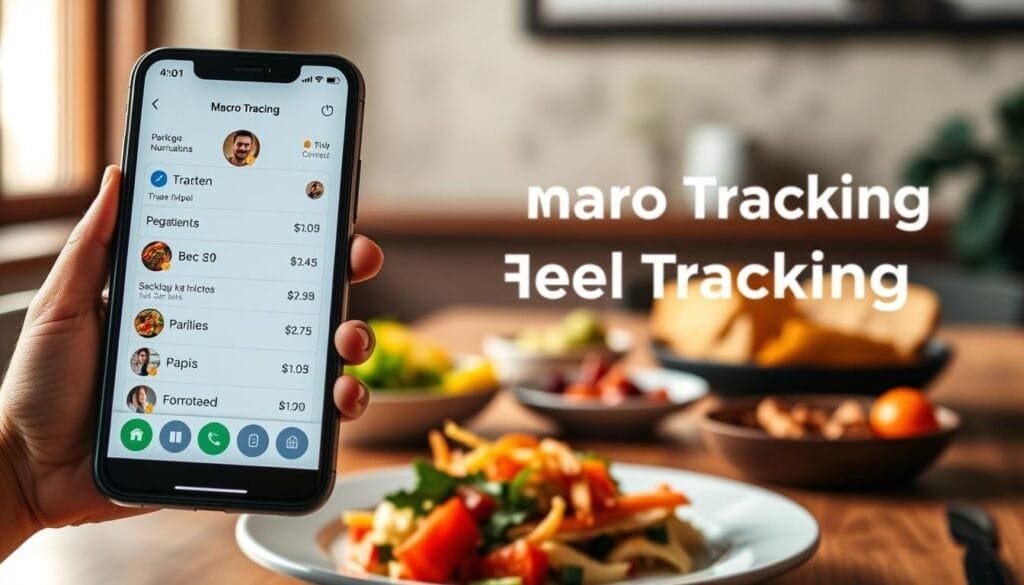
Macro tracking apps have changed how we monitor our eating. These tools offer large food databases for easy meal logging. Apps like MyFitnessPal or LoseIt! help you track macros accurately.
Guessing portion sizes is key when exact measures aren’t available. Restaurant portions are often bigger than standard servings. Try packing up half your meal right away.
This cuts calories and saves food for later. It’s a simple way to control your intake.
Restaurant nutrition info is gold for macro tracking. Look for grilled or baked dishes instead of fried ones. Watch out for hidden calorie sources like dressings.
Ask for dressings on the side to control your intake. This helps you stay within your macro limits.
Use these tips to enjoy eating out while tracking macros. Aim for 90% plan adherence for great results. This allows for occasional treats too.
Tracking macros while dining out can be challenging. Here are some tips to help you make healthy choices at restaurants. These strategies will guide you in finding macro-friendly meals.
Choose protein-rich dishes like grilled chicken, lean steak, or fish. At Chick-fil-A, try the Grilled Chicken Sandwich with 30g of protein. For fewer carbs, opt for their 12-piece Grilled Nuggets with 34g of protein.
Replace fries with veggies or a salad. The Chick-fil-A Superfood Side (Large) has 23g carbs and 8g fat. This swap can greatly reduce your meal’s calories.
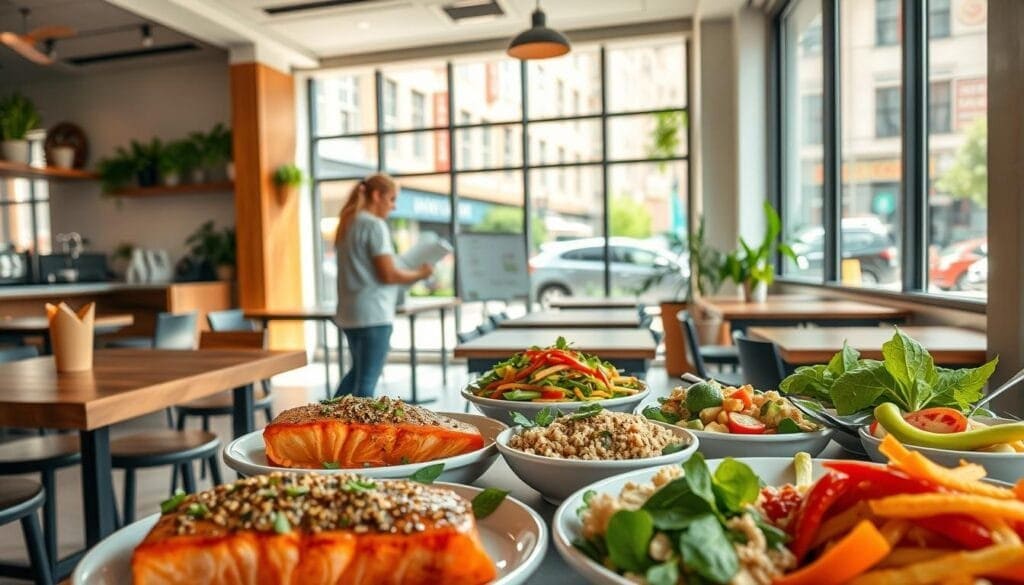
Watch out for hidden calories in dressings and sauces. Ask for these on the side to control how much you use. Many people forget about these extras, which can add up fast.
Pay attention to portion sizes. Restaurant servings are often too big. Share a meal or ask for a to-go box right away.
| Restaurant | Meal | Protein | Carbs | Fat |
|---|---|---|---|---|
| Chick-fil-A | Grilled Chicken Sandwich | 30g | 40g | 5g |
| Chick-fil-A | 12-piece Grilled Nuggets | 34g | 6g | 5g |
| Chick-fil-A | Superfood Side (Large) | 4g | 23g | 8g |
| Outback | Center Cut Sirloin 6oz | 38g | – | 7g |
| Denny’s | “Fit Slam” | 24g | 54g | 10g |
Knowing restaurant meal macros helps you stay on track with your nutrition goals. Let’s look at popular dishes to help you make smart choices when eating out.
Protein options vary in their nutrient content. Chili’s Smoked Bone-In BBQ Chicken Breast has 43g of protein and 360 calories.
Chick-fil-A’s Grilled Chicken Sandwich offers 29g of protein at 310 calories. Both are tasty choices for protein-packed meals.
Carb choices can greatly change your meal’s macro profile. Chili’s Fresco Salad without dressing has only 4g of carbs.
Their Margarita Grilled Chicken dish includes 64g of carbs. Pick wisely based on your carb needs.
Watch out for hidden fats in restaurant meals. Olive Garden’s Grilled Chicken Parmigiana has just 9g of fat.
Shake Shack’s Single Hamburger contains 21g of fat. Be aware of these differences when ordering.
| Restaurant Item | Calories | Protein (g) | Carbs (g) | Fat (g) |
|---|---|---|---|---|
| Chili’s Smoked BBQ Chicken | 360 | 43 | 20 | 12 |
| Chick-fil-A Grilled Sandwich | 310 | 29 | 36 | 6 |
| Chili’s Fresco Salad (no dressing) | 70 | 2 | 4 | 5 |
| Olive Garden Grilled Chicken Parm | 760 | 75 | 54 | 9 |
| Shake Shack Single Hamburger | 385 | 24 | 25 | 21 |
Some restaurants offer more macro-friendly options than others. Chipotle is great for its customizable menu, making macro tracking easier.
Steakhouses, sushi spots, and organic salad places are often good for macro-conscious diners. These eateries offer more control over your meal’s nutrients.
Balancing macros while eating out can be challenging. Here are strategies to help you stay on track. You can still enjoy meals out while meeting your nutrition goals.
Plan your meals when dining out. Save up to half your daily calories for restaurant meals. Focus on carbohydrates and fats.
Adjust your macros using a 2:1 ratio of carbs to fats. This helps maintain your total calorie targets.
Restaurant portions have grown larger over time. Use hand measurements to estimate serving sizes when scales aren’t available.
Practice mindful eating by stopping at 80% fullness. This helps you avoid overeating during meals out.
Hidden calories are common in restaurant meals. Dishes often have more carbs and fats than homemade versions.
When tracking macros, log individual ingredients rather than general terms. This helps avoid calorie count discrepancies.
One indulgent meal won’t ruin your nutrition goals. Use these strategies to maintain macro balance while dining out.
Macro tracking while dining out offers benefits for flexible dieting and sustainable nutrition. It helps us make informed choices that align with our health goals. Understanding macronutrients and their caloric values is crucial for this approach.
The January app, with its vast food database, can assist in this journey. However, food labels and restaurant menus can have a 20% margin of error in calorie counts.
Macro tracking improves nutritional awareness but has its challenges. Most restaurant meals exceed 1,200 calories, making accurate tracking difficult. The balanced plate concept can guide our choices.
Consistency in tracking, not perfection, is key to long-term success. This approach allows for daily and weekly variations without significant weight changes. It’s a flexible way to maintain nutritional balance.
Curious what is the primal diet? Discover how eating like your ancient ancestors—with a side of cheese—might energize you (and your next caveman impression).
Curious about the zero starch diet? Learn what you can actually eat, how to avoid salad boredom, and why potatoes are definitely not invited to this party.
A beginner swim workout turns splashing around into smart, safe exercise—even if your best stroke is “try not to panic.” Learn to swim with confidence (and laughs).