Tips
What Is the Primal Diet? Why Your Inner Caveman Might Need a Salad
Curious what is the primal diet? Discover how eating like your ancient ancestors—with a side of cheese—might energize you (and your next caveman impression).
Real-Life Fitness for Real People
Since 2024
Curious about the zero starch diet? Learn what you can actually eat, how to avoid salad boredom, and why potatoes are definitely not invited to this party.
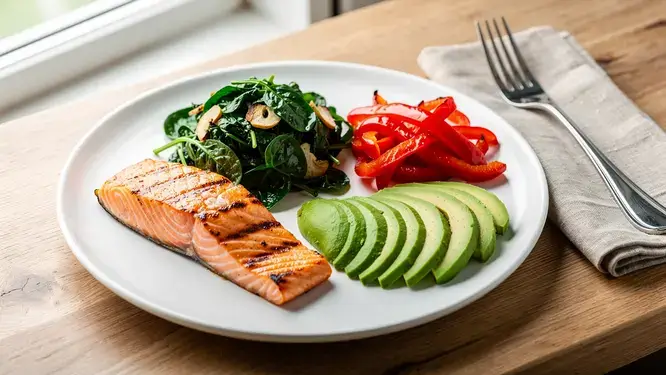
Switching to a zero starch diet means reshaping what lands in your grocery cart, focusing on high-quality proteins, non-starchy vegetables, and healthy fats. This eating approach is clear once you understand which foods are included and which are not, making meal planning easy and straightforward.
These are the core food groups to build your meals around:
Building a satisfying plate doesn’t take much creativity to start. Try grilled salmon over sautéed spinach with olive oil, or a three-egg omelet packed with mushrooms and bell peppers and finished with sliced avocado. These combinations balance protein, fiber, and fat for lasting satisfaction.
To keep meals interesting, lean on herbs, spices, and varied cooking techniques. For more ideas, check out our nutrient-dense foods for weight loss guide or browse quick and nutritious dishes you can make at home.
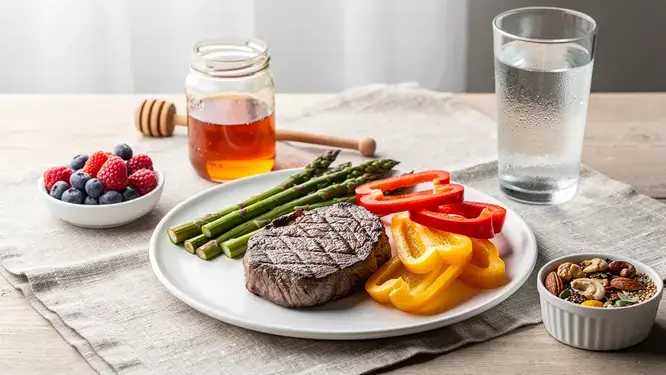
A no starch diet centers on animal proteins, non-starchy vegetables, healthy fats, and some full-fat dairy. Grains, legumes, and starchy vegetables like potatoes, corn, and peas are off the table.
Here’s where things get nuanced. No peer-reviewed studies have specifically examined what happens when you eliminate all starches completely — so any health claims need to be drawn from related research on non-starchy diets and very low-carbohydrate eating patterns.
Observational studies consistently link higher intakes of non-starchy vegetables with better weight management and a reduced risk of certain chronic diseases. That said, these are associations — not proof of direct cause and effect PMC – Vegetable intake and chronic conditions.
Randomized controlled trials on very low-carbohydrate and ketogenic diets — both of which severely restrict starch — show that participants may experience greater short-term weight loss and improved blood sugar control compared to standard low-fat diets. The catch? These advantages often level out over longer periods, and the long-term sustainability of severe carbohydrate restriction remains an open debate PMC – Low-carb diets and weight management.
Some advocates claim that cutting starch reduces inflammation or helps manage autoimmune conditions, but robust evidence in these areas is still thin. Most published research calls for larger, higher-quality trials before strong claims can be made PMC – Dietary interventions and autoimmune conditions.
When you come across bold promises about the zero starch diet, it’s worth asking whether you’re looking at observed associations or findings from rigorous controlled studies. For practical approaches to building sustainable habits, see our guide on how to keep a good diet.
Yes — cutting starches can lead to short-term weight loss by reducing overall calorie intake and depleting stored carbohydrates. Long-term results vary from person to person, and sustainable progress usually comes from consistent, healthy eating patterns rather than any single restriction.
Before jumping into a zero starch diet, talking with a qualified healthcare provider or registered dietitian isn’t just a formality — it genuinely matters. Extreme carbohydrate restriction can pose specific health risks, particularly for anyone managing chronic conditions or taking medications NIH – Healthy Eating Plan.

Certain groups should avoid this approach or attempt it only under close medical supervision. That includes people with a history of eating disorders, those with type 1 diabetes (due to elevated risk of diabetic ketoacidosis), individuals with gallbladder disease, and women who are pregnant or breastfeeding American Diabetes Association – Ketones.
Short-term side effects are common during the adaptation phase. Constipation, fatigue, and headaches often appear as the body adjusts to lower fiber and shifting electrolyte levels. Staying well-hydrated and including high-fiber non-starchy vegetables can ease the transition. Muscle cramps may also show up — adding magnesium-rich foods often helps NLM – Low-carbohydrate diets.
Micronutrient deficiencies are a real concern over time, especially for B vitamins, vitamin C, and magnesium. Periodic blood work under medical guidance is the best way to stay ahead of any gaps. Diversifying your allowed vegetable intake and considering evidence-based supplementation — only as directed by a professional — can help. Our guide on healthy meals to make at home offers starch-free recipe ideas that support nutritional variety.
There’s also a psychological dimension worth acknowledging. Highly restrictive eating plans can foster a rigid relationship with food, sometimes triggering disordered patterns or social withdrawal. If you notice signs of preoccupation or distress around eating, reach out to a mental health professional or dietitian. For a more balanced starting point, our advice on finding a diet that works for you is worth a read.
Ketosis is a metabolic state that kicks in when carbohydrate intake drops low enough that the body shifts to burning fat for fuel, converting it into ketones. Because starch is a primary source of glucose, a zero starch diet often triggers ketosis relatively quickly NCBI – Ketogenic Diet.
It’s also worth knowing that starch isn’t one thing — it’s a family of compounds with three distinct types. Rapidly digestible starch (think white bread and instant rice) spikes blood sugar fast. Slowly digestible starch, found in intact whole grains, breaks down more gradually. Then there’s resistant starch — found in uncooked oats and cooled potatoes — which bypasses normal digestion entirely and acts as a prebiotic fiber that feeds beneficial gut bacteria NIH – Resistant Starch.
On a zero starch diet, all three forms are eliminated — including that indirect source of prebiotic support. This makes it especially important to rely on low-carb, high-fiber alternatives. Non-starchy vegetables like leafy greens, broccoli, and zucchini become dietary essentials, delivering fiber and micronutrients without disrupting ketosis.
For practical ways to keep meals colorful and nutritious within these boundaries, explore fiber-rich non-starchy veggie recipes for inspiration.
Eliminating starch sharply reduces carbohydrate intake, which can push the body into ketosis — increasing fat burning and often curbing appetite in the short term. It also removes key sources of dietary fiber and certain micronutrients, so careful meal planning becomes essential to maintain both digestive health and nutritional balance.
A zero starch diet doesn’t have to mean eating the same bowl of greens every day. With a little creativity and the right techniques, variety and satisfaction are well within reach.
Sheet-pan meals are a weeknight lifesaver: toss chicken thighs, zucchini, bell peppers, and cherry tomatoes with olive oil and your favorite herbs, then roast everything on a single tray. Stir-fries adapt easily when you swap traditional rice for cauliflower rice or bulk up the vegetable medley with broccoli and snap peas.
Soups and stews are deeply satisfying on this diet. A hearty meatball and escarole soup or a Thai-style coconut curry with chicken and spinach both deliver bold, complex flavors while staying completely starch-free.
Global cuisines are adaptable. For Italian cravings, spiralized zucchini stands in beautifully for pasta, while baked eggplant slices make a solid grain-free pizza base. Japanese-inspired sashimi paired with a cucumber and seaweed salad offers something light, clean, and balanced.
Flavor is what keeps things interesting long-term. Marinades, spice blends like za’atar or garam masala, and a finishing splash of lemon juice or vinegar can transform basic proteins and vegetables — no carbs required.
For more inventive ideas, explore healthy meals you can make at home and browse diverse meal planning inspiration built around starch-free goals.
Curious what is the primal diet? Discover how eating like your ancient ancestors—with a side of cheese—might energize you (and your next caveman impression).
A beginner swim workout turns splashing around into smart, safe exercise—even if your best stroke is “try not to panic.” Learn to swim with confidence (and laughs).
Curious can you have mayo on the carnivore diet? Only if you skip the store-bought stuff! Learn how to whip up carnivore mayo and avoid condiment heartbreak.