Tips
What Is the Primal Diet? Why Your Inner Caveman Might Need a Salad
Curious what is the primal diet? Discover how eating like your ancient ancestors—with a side of cheese—might energize you (and your next caveman impression).
Real-Life Fitness for Real People
Since 2024
One day, I decided to change my nutrition. My old diet wasn’t working anymore. Then I found macro-based meal planning. It was like cracking a code for my body’s needs. My goal was to lose 20 pounds. With a macro-based plan, I saw results fast. In six months, I lost 32 pounds. It was more …

One day, I decided to change my nutrition. My old diet wasn’t working anymore. Then I found macro-based meal planning. It was like cracking a code for my body’s needs.
My goal was to lose 20 pounds. With a macro-based plan, I saw results fast. In six months, I lost 32 pounds. It was more than I ever thought possible.
Macro-based plans have helped many people. Sarah lost 29 pounds in seven months. Mike dropped 40 pounds by adjusting his macros.
These stories show the power of understanding macronutrients. By tailoring macros to your goals, you can see amazing results. This guide will teach you how to make a meal plan based on macros that works for your body and your lifestyle.
You’ll learn how to make a meal plan based on macros that fits your needs. Whether you want to lose weight or gain muscle, macros can help you reach your goals faster and more effectively. Let’s dive into how to make your perfect nutrition plan and start transforming your results today.
Macronutrients are the main parts of our diet. They include proteins, carbohydrates, and fats. Macros give us energy and support our body’s functions.
Macros are nutrients we need in big amounts. They fuel our bodies and keep us healthy. Knowing about macros helps create a balanced diet for your needs.
Each macro has a special job in our bodies. Proteins build and fix tissues. Carbs give quick energy. Fats help make hormones and absorb nutrients.
The USDA suggests eating a mix of these macros for good health.
| Macronutrient | Recommended Intake | Function |
|---|---|---|
| Protein | 10-35% of daily calories | Tissue repair, enzyme production |
| Carbohydrates | 45-65% of daily calories | Primary energy source |
| Fats | 20-35% of daily calories | Hormone production, nutrient absorption |
Knowing how macros affect your calorie intake is key. Proteins and carbs give 4 calories per gram. Fats provide 9 calories per gram.
This info helps plan meals that match your nutrition goals. Tracking macros can work better than just counting calories.
It ensures you eat balanced nutrients for health and fitness. But be careful not to become too focused on tracking.
Personal macro goals are vital for fitness success. I’ll help you figure out your daily calorie needs. We’ll also adjust macros to match your goals.
Calorie calculation is the first step. Your needs depend on age, gender, weight, and activity level. A typical intake might be 1855 calories, but this varies.
After knowing your calorie needs, adjust your macros. For weight loss, create a calorie deficit. For muscle gain, aim for a slight surplus.
At maintenance, balance calories in with calories out.
Protein is crucial for all fitness goals. Aim for 0.8-1g per pound of body weight. In a 1855 calorie plan, 120g of protein might work.
Try eating 4-5 meals daily with protein sources like chicken breast or tofu.
After setting protein, split remaining calories between carbs and fats. Our sample plan might have 220g carbs and 55g fats.
Tracking macros allows flexibility in food choices, known as flexible dieting.
| Macronutrient | Amount | Calories |
|---|---|---|
| Protein | 120g | 480 |
| Carbohydrates | 220g | 880 |
| Fats | 55g | 495 |
| Total | – | 1855 |
These principles help you set effective personal macro goals. They’re tailored to your unique needs and fitness objectives.
Creating a macro meal plan is simple. I’ll show you how to design a plan for your macro targets. Let’s look at some strategies to help you reach your nutrition goals.
First, find out your daily macro needs. Aim for 0.8 to 1 gram of protein per pound of body weight. If you weigh 150-200 pounds, try to eat about 100 grams of protein daily.
Next, spread your macros across meals. Here’s a quick breakdown:
| Meal | Protein | Carbs | Fats |
|---|---|---|---|
| Breakfast | 25% | 30% | 30% |
| Lunch | 30% | 35% | 35% |
| Dinner | 35% | 25% | 25% |
| Snacks | 10% | 10% | 10% |
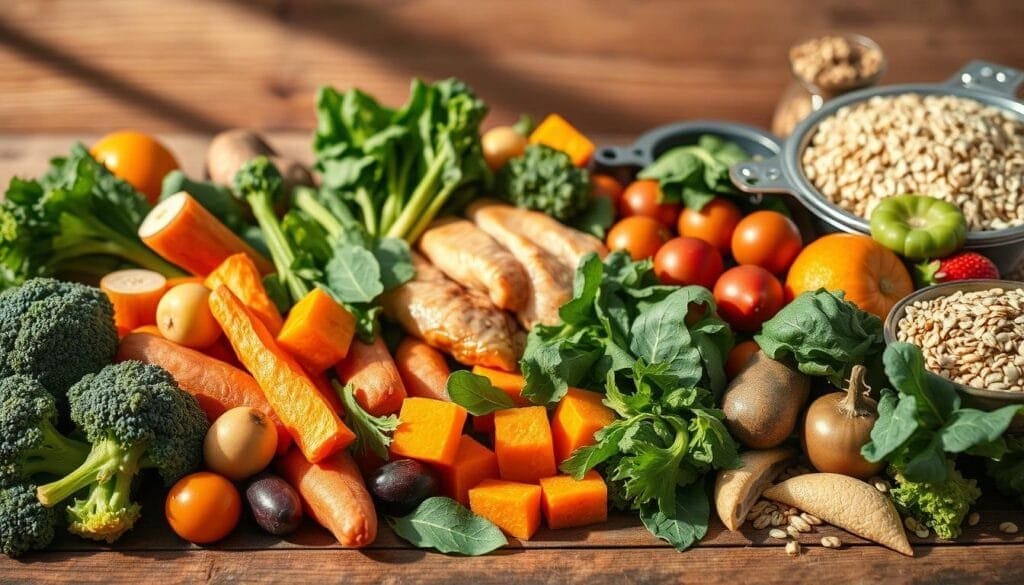
Choose whole foods for your meals. Mix proteins, smart carbs, and healthy fats. Add lots of veggies for nutrients and fiber.
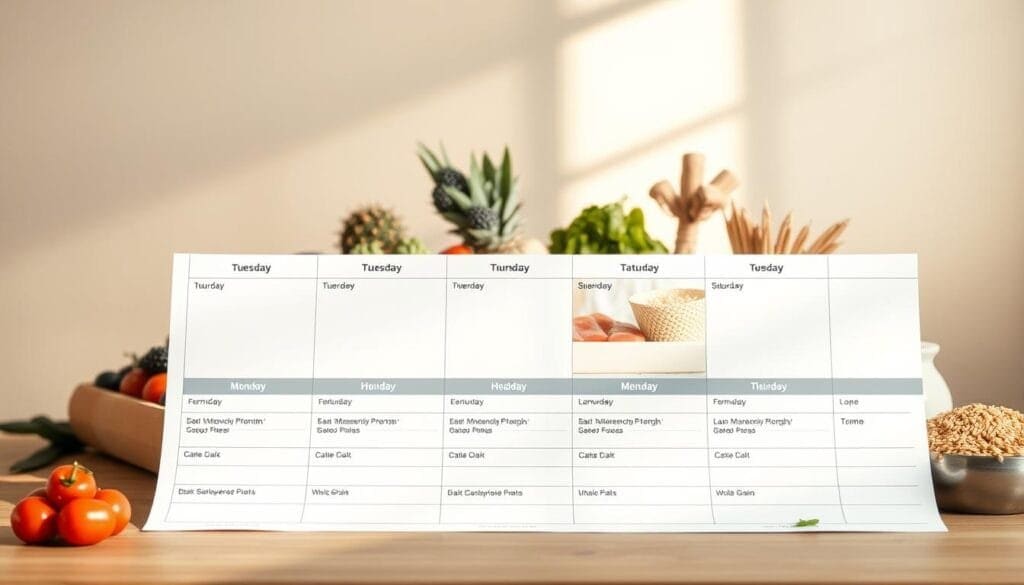
Try using a meal planning app to make things easier. These tools can create plans just for you. They often include grocery lists and recipe ideas.
Stay flexible with your plan. Allow for treats or eating out sometimes. With practice, you’ll create tasty meals that fit your macro goals.
Picking the right foods helps you reach balanced nutrition and macro goals. Let’s explore tasty, macro-friendly foods that can help you hit your targets.
Protein can be tricky to get enough of, but it’s doable. One pound of chicken breast has 100g of protein in 500 calories.
Other great protein sources include lean beef, fish, eggs, and Greek yogurt. For plant-based options, try tofu and tempeh.
Carbs give you energy and key nutrients. Pick complex carbs for long-lasting energy.
Good choices are brown rice, quinoa, sweet potatoes, and oats. Fruits like berries and apples work well too.
Fats are vital for making hormones and staying healthy. Add these good fats to your meals:
Avocados, nuts, seeds, olive oil, fatty fish, and chia seeds are all great choices.
Mix macro-friendly foods to create balanced meals. Here’s a simple meal idea that covers multiple macros:
| Food Item | Protein (g) | Carbs (g) | Fat (g) |
|---|---|---|---|
| 300g lean beef | 75 | 0 | 15 |
| 180g couscous | 18 | 140 | 1 |
| Mixed vegetables | 5 | 15 | 0 |
| Total | 98 | 155 | 16 |
This meal balances macros well, making it easier to hit daily targets. Mix things up for success.
Variety and balance are key in macro-based meal planning. Keep trying new food combos to find what works best.
Macro tracking apps and nutrition calculators make it easy to monitor your diet. These tools help you stay on top of your nutrition goals.
MyFitnessPal leads with over 11 million foods in its database. It offers barcode scanning for quick logging of packaged foods. The app also works with Fitbit and Apple Watch.
Macros First allows tracking per meal and day. This feature helps with meal planning and macro management.
Cronometer tracks over 60 nutrients, including vitamins and minerals. Its food entries are checked by professionals for accuracy. The free version shows all logged food in one list.
| App | Key Features | User Rating |
|---|---|---|
| MyFitnessPal | 11M+ food database, barcode scanning | 4.8/5 (5,000 reviews) |
| Macros First | Fastest food logger, personalized calculations | 4.9/5 (5,000 reviews) |
| Cronometer | 60+ nutrient tracking, professional verification | N/A |
MacroFactor offers customizable widgets, label scanning, and flexible macro settings. It costs $71.99 per year, less than MyFitnessPal’s premium version.
These tools make tracking your diet easy and efficient. They help you stay accountable and make smart food choices.
Macro-based nutrition offers a powerful way to customize your diet. It helps you meet your unique needs and goals. You can now create a meal plan that suits you perfectly.
Macro-based nutrition does more than just meet calorie goals. It optimizes your body’s fuel for peak performance. The right macro balance can make a big difference in your fitness journey.
For example, a 150-pound woman might need specific daily macros. This could be 68 grams of protein, 68 grams of fat, and 341 grams of carbs.
Personalized meal planning based on macros requires some fine-tuning. It may take time to find your perfect balance. Don’t hesitate to adjust if you’re not seeing results.
You might need to change your carbs or protein intake. Listen to your body and stay consistent. With practice, you’ll master macro-based nutrition and reach your full potential.
Curious what is the primal diet? Discover how eating like your ancient ancestors—with a side of cheese—might energize you (and your next caveman impression).
Curious about the zero starch diet? Learn what you can actually eat, how to avoid salad boredom, and why potatoes are definitely not invited to this party.
A beginner swim workout turns splashing around into smart, safe exercise—even if your best stroke is “try not to panic.” Learn to swim with confidence (and laughs).