Tips
What Is the Primal Diet? Why Your Inner Caveman Might Need a Salad
Curious what is the primal diet? Discover how eating like your ancient ancestors—with a side of cheese—might energize you (and your next caveman impression).
Real-Life Fitness for Real People
Since 2024
Sarah stared at her untouched gym bag in the corner of her Chicago apartment. It had been three weeks since her last workout. Like millions of Americans, she’d started January strong—new leggings, fresh playlist, lofty goals. By February, her $50/month membership felt like a guilt tax. Sound familiar? Research reveals 50% of new gym members …

Sarah stared at her untouched gym bag in the corner of her Chicago apartment. It had been three weeks since her last workout. Like millions of Americans, she’d started January strong—new leggings, fresh playlist, lofty goals. By February, her $50/month membership felt like a guilt tax. Sound familiar?
Research reveals 50% of new gym members quit within six months. In the UK alone, unused subscriptions drain £25 billion annually—with fitness plans leading the waste list. But instead of blaming yourself, it’s worth asking: how can I get motivated to workout in a way that actually sticks? Maybe the issue isn’t willpower, but the outdated strategies we rely on to stay consistent.
This guide flips the script. Forget relying on willpower or Instagram influencers. We’ll explore why 94% of New Year’s fitness resolutions fail by March and how successful exercisers build habits that stick. You’ll discover:
Whether you’re juggling Zoom calls or diaper changes, these strategies meet you where you are. No magic pills—just practical steps to make movement as routine as morning coffee.
Why do so many well-intentioned fitness plans collect dust by March? The answer lies in human psychology, not personal failure. Bestselling author James Clear captures this perfectly:
“If you think you need more willpower to stick to goals, I have good news. You don’t.”
Most struggles with exercise consistency stem from four root causes. Time pressures top the list—45% of adults cite busy schedules as their main hurdle. Next comes workout boredom, followed by aiming too high too fast. The final trap? Believing one missed session ruins all progress.
A Journal of Behavioral Medicine study reveals 68% of gym members skip workouts when relying solely on motivation. Why? Emotional states and daily stresses directly impact our drive. Professional athletes report 2-3 low-energy days weekly—yet they still train.
The solution isn’t chasing inspiration. Successful exercisers build automatic routines that work even on tough days. They focus on habit formation, like scheduling workouts at consistent times. Research confirms this approach triples long-term adherence compared to motivation-based plans.
Ever notice how some people stick with their workout plans like glue while others quit after two weeks? The secret lies in crafting goals that matter to you—not just numbers on a scale. University of Massachusetts researchers found lasting change happens when actions align with what we truly value.
Think beyond “lose 10 pounds.” What makes movement meaningful in your daily life? Maybe it’s keeping up with grandkids or having energy for weekend adventures. When fitness supports what you care about, skipping workouts feels like letting yourself down.
Consider these examples:
| Traditional Goal | Value-Aligned Goal | Success Rate |
|---|---|---|
| Six-pack abs | Carry groceries without help | 43% higher |
| Fit into old jeans | Play tag with kids pain-free | 2.5x more likely |
| Run a marathon | Walk 3 miles with friends weekly | 68% adherence |
Notice how the right column ties to relationships and health benefits? That’s the sweet spot. When your exercise plan clashes with other priorities—like family time—it becomes another chore. But when it enhances what matters, movement becomes part of your way of life.
Start small. Ask: “How does being active help me show up better for people and experiences I love?” That answer becomes your true north star.
James Clear once transformed his dental hygiene by moving floss from a drawer to his bathroom counter. This simple act highlights a powerful truth: our surroundings shape our actions more than willpower ever could. Your workout routine thrives or dies by the environment you create.
Top performers remove friction before it appears. Lay out your clothes the night before—research shows this small act boosts workout completion by 40%. Keep a packed gym bag by your front door or office chair. Even a yoga mat permanently unrolled in your house creates a visual invitation to move.
Consider these adjustments:
Your brain responds to prompts without conscious effort. Place running shoes where you’ll trip over them. Hang a calendar tracking workout days near your coffee maker. One study found participants who used visual reminders exercised 2.3x more weekly than those relying on memory.
The magic happens when preparation meets opportunity. By evening, your future self won’t need to decide—just follow the trail of breadcrumbs you left. As Clear proved with flossing, environmental design turns aspirations into automatic actions.
Mike almost skipped his morning run again—until a simple timer trick changed everything. This approach works because it addresses our brain’s resistance to big commitments. Let’s explore two proven methods to turn “I should” into “I did.”
James Clear shares a game-changing story: A reader lost 100+ pounds by limiting gym visits to five minutes initially. “After weeks of brief sessions,” Clear notes, “staying longer felt natural.” This “10-minute rule” works because:
Try setting a timer for short bursts. Most find they want to continue after the alarm—but stopping is still a win.
Accountability partners boost success rates by 76%, according to Journal of Sport Psychology studies. But solo training matters too. Consider these tips:
The secret? Have multiple backup plans. Weather ruining your run? Do living room squats during commercials. Forgot headphones? Practice balance exercises while coffee brews.
Consistent small efforts create lasting change. As one gym-goer told us: “Showing up for five minutes daily built my confidence to tackle 30-minute sessions within months.”
Gym routines often feel like dental appointments – necessary but joyless. What if your next workout doubled as binge-watching time? Meet Barbara, 77, who logs 45 treadmill minutes daily while immersed in The Crown. “I forget I’m exercising until the credits roll,” she laughs. Her secret? Treating movement as entertainment, not obligation.
Science confirms Barbara’s approach works. A Psychology of Sport and Exercise study found participants using TV distractions exercised 22% longer. Music lovers burn 15% more calories when syncing movements to beats they enjoy. The trick? Pair physical activities with pleasures you’d pursue anyway.
Try these combinations:
Rhythmic music particularly shines. Upbeat tracks lower perceived effort by 12%, making hills feel flatter. One gym member shares: “When Beyoncé plays, my treadmill speed magically increases.”
Non-traditional workouts count too. Urban hikers explore new neighborhoods weekly. Office workers swap chairs for stability balls. The key? Ditch “shoulds” and embrace what sparks joy. As Barbara proves, the best exercise routine is the one you’re eager to start tomorrow.
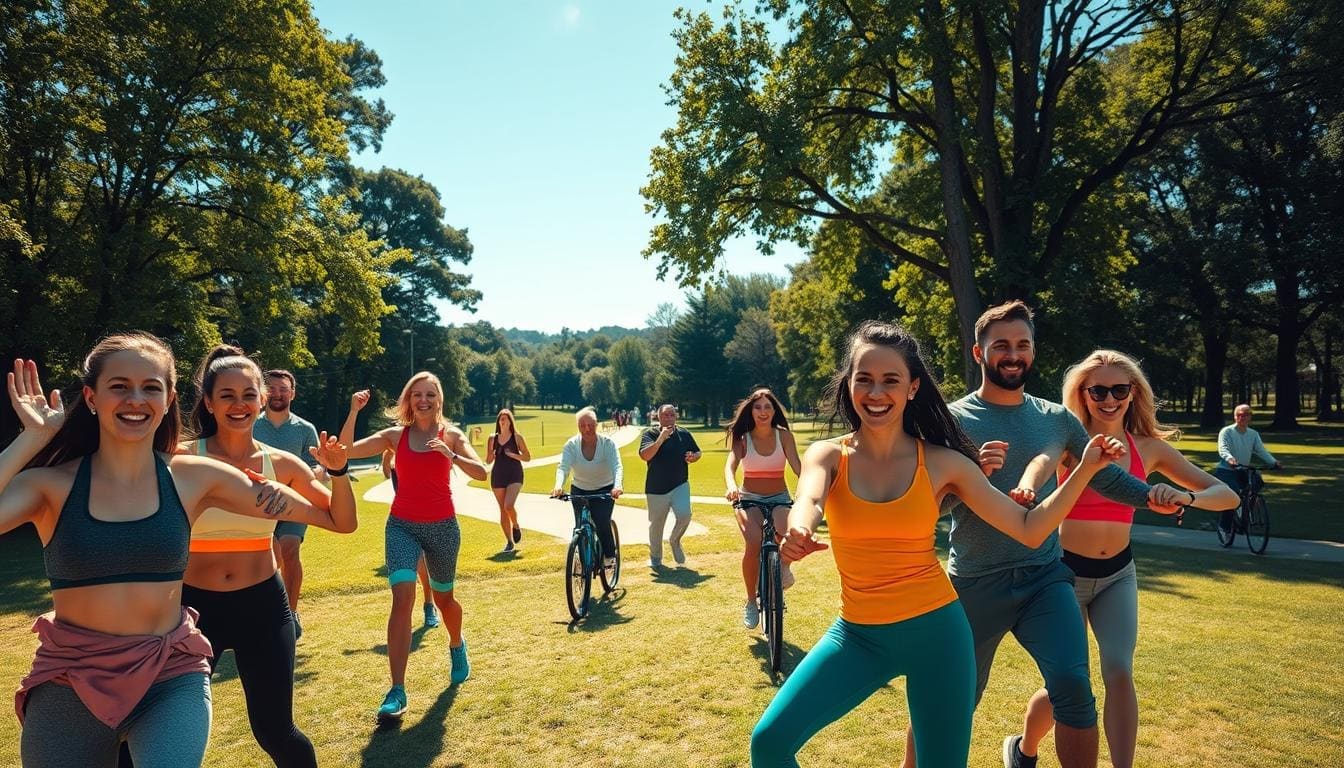
Ever wonder why gym buddies outlast solo exercisers? The CDC reveals a secret: partnered workouts boost effort by 27% compared to flying solo. It’s not just about accountability—our brains thrive on connection and healthy rivalry.
Successful routines follow a simple pattern—cue, action, reward. Lay gym clothes on your bedside lamp each night (cue). Morning jogging becomes automatic (action). Post-workout smoothies (reward) seal the deal. Neuroscience shows repeating this cycle for 21 days wires lasting habits.
Group classes aren’t just about burning calories. A Society of Behavioral Medicine study found virtual partners increase workout intensity by 19%. Real-world examples shine too:
“When my coworker texts her cycling stats, I pedal harder to match her miles.”
– Jenna, 34
Visible records transform abstract efforts into concrete wins. Fitness apps showing weekly streaks keep 68% of users engaged longer than non-trackers. One runner color-codes her calendar—green for completed runs, gold for personal bests. “Those colors push me,” she admits.
The magic happens when social bonds meet measurable growth. Whether through app challenges or studio leaderboards, combining connection with clear milestones creates unstoppable momentum.
Morning commutes and packed schedules don’t have to sabotage your fitness goals. Simple tweaks to your routine can turn sporadic efforts into lasting habits. Let’s explore practical ways to outsmart common roadblocks.
Research reveals a surprising ally: your morning brew. A Journal of Strength and Conditioning Research study found:
“Moderate caffeine intake improves endurance by 12% and reduces perceived effort during strength training.”
Pair this with strategic planning. Those who schedule workouts for specific days complete 58% more sessions monthly. Try this approach:
| Strategy | Benefit | Success Boost |
|---|---|---|
| Lay out gear nightly | Reduces morning decisions | 41% |
| 10-minute “micro” sessions | Maintains momentum | 2.3x weekly consistency |
| Backup bodyweight plans | Weatherproofs routines | 67% adherence |
Incorporate strength training twice weekly – visible progress fuels motivation. Balance this with daily walks. Just 35 minutes of brisk stepping five days weekly slashes health risks significantly.
Small changes create big impacts. Take stairs while humming your workout playlist. Do calf raises during Zoom holds. These micro-movements add up to 23 extra active minutes daily – no gym required.
Barbara’s treadmill movie nights reveal a universal truth: lasting health transformations grow from consistent joy, not grueling regimens. At 77, she proved fitness success isn’t about willpower wars—it’s crafting systems that fit your life. “I stopped chasing six-pack abs,” she says, “and found strength in Netflix marathons.”
Research confirms what Barbara discovered: pairing activity with entertainment boosts adherence by 34%. Her story mirrors countless others—parents doing living room yoga during nap time, office workers taking conference calls on walks. The magic lies in making movement effortless through smart planning.
Whether your goals involve weight management or feeling confident in favorite clothes, remember three rules. First, start smaller than you think—five-minute sessions build momentum. Second, design your house for success: visible equipment beats hidden gym bags. Third, celebrate imperfect weeks—progress compounds over time.
True strength comes from flexibility. When schedules explode, switch to bodyweight training. Miss a day? Reset with a sunrise stretch. As Barbara shows, the best plan adapts to your changing life while keeping movement enjoyable.
Try the 10-minute rule: commit to just 10 minutes of activity. Often, starting is the hardest part—once you begin, you’ll likely keep going. Pair this with upbeat music or a podcast to boost energy.
Focus on enjoyable activities like dance classes, hiking, or sports. Apps like Nike Training Club or Peloton offer guided workouts that blend fun with structure. Treat exercise as “me time” rather than a task.
Yes! Friendly challenges with a workout buddy or using apps like Strava create accountability. Research shows social support increases adherence to routines by 95% in some cases.
Wearing comfortable, stylish activewear (like Lululemon or Gymshark) can boost confidence. Lay out your gear the night before—it acts as a visual cue to prioritize your session.
Short, intense strength training or HIIT routines (20-30 minutes) deliver results. Studies prove brief, focused sessions improve cardiovascular health as effectively as longer ones.
Link workouts to existing habits (habit stacking). For example, do yoga after morning coffee. Track progress with apps like MyFitnessPal or Apple Watch to celebrate small wins.
It depends! Classes like OrangeTheory or Zumba thrive on peer energy, while solo sessions offer flexibility. Test both—consistency matters more than the format.
Not always. Gentle evening yoga or stretching can improve sleep quality. Avoid high-intensity training 1-2 hours before bed, as it may raise cortisol levels.
Align goals with core values, like hiking with family or improving posture for work. Break them into micro-goals (e.g., “walk 7K steps daily”) to build momentum.
Cue up a high-energy playlist (Spotify’s “Power Workout” is great) or sip a pre-workout drink like Celsius. These triggers signal your brain it’s time to move.
Curious what is the primal diet? Discover how eating like your ancient ancestors—with a side of cheese—might energize you (and your next caveman impression).
Curious about the zero starch diet? Learn what you can actually eat, how to avoid salad boredom, and why potatoes are definitely not invited to this party.
A beginner swim workout turns splashing around into smart, safe exercise—even if your best stroke is “try not to panic.” Learn to swim with confidence (and laughs).