Tips
What Is the Primal Diet? Why Your Inner Caveman Might Need a Salad
Curious what is the primal diet? Discover how eating like your ancient ancestors—with a side of cheese—might energize you (and your next caveman impression).
Real-Life Fitness for Real People
Since 2024
Discover effective hiit workouts for women over 50 designed to boost metabolism, improve strength, and support joint health with safe, tailored routines you can do at home.
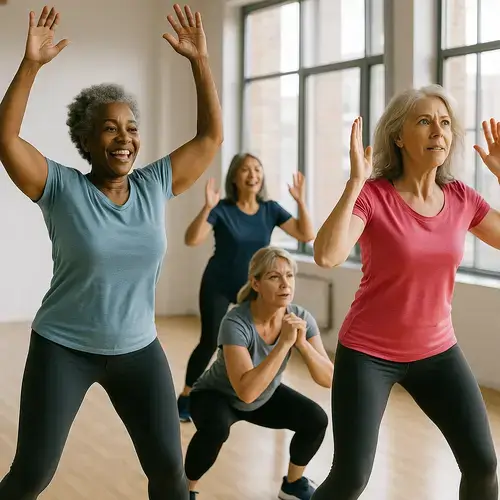
HIIT workouts for women over 50 offer a powerful, time-efficient way to boost both energy and metabolism without spending hours or risking your joints. But how do you know you’re actually doing HIIT the right way?
Disclosure: This article contains affiliate links. We may earn a commission at no extra cost to you.
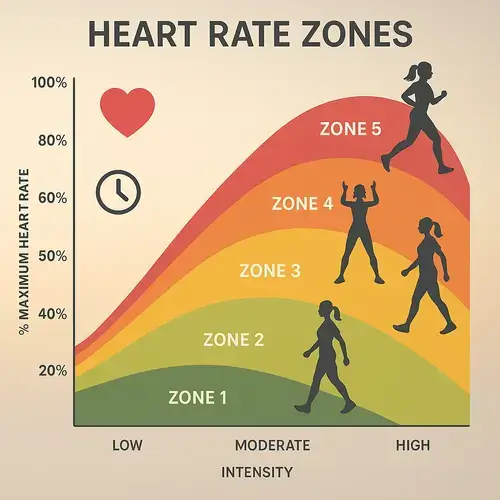
High-Intensity Interval Training (HIIT) delivers exceptional benefits for women over 50 when you execute it correctly, but there’s a lot of confusion about what true HIIT actually looks like. Real HIIT isn’t just any fast-paced workout—it’s repeated, short bursts of very high effort, typically hitting 80–95% of your maximum heart rate (HRmax) for just 20 to 45 seconds at a time. After each intense push, you’ll need a full or partial recovery period that’s at least as long as your work interval, giving your body a chance to recuperate before the next round. Here’s the reality check: if you’re not genuinely breathless during those intervals, you’re not working at true high intensity.
You’ve probably seen countless routines marketed as “HIIT” that are really just moderate circuit training in disguise. While those workouts have their place, they won’t deliver the signature effects of authentic HIIT—like that elevated post-exercise calorie burn (what exercise scientists call excess post-exercise oxygen consumption, or EPOC). This metabolic boost matters especially as your metabolism naturally slows with age, making genuine HIIT a powerful tool in your fitness arsenal.
Maximum Heart Rate Estimation: Start with the straightforward formula of 220 minus your age to approximate your HRmax. Let’s say you’re 55—that gives you an estimated maximum of about 165 beats per minute. During your HIIT intervals, you’ll want to hit 80–95% of that number (roughly 132–157 bpm). Affordable wrist heart rate monitors or smartphone pulse apps work well for tracking, though it’s smart to verify their accuracy occasionally by manually counting your pulse at your wrist or neck—just count for 15 seconds and multiply by four.
Rate of Perceived Exertion (RPE): Think of this as your internal intensity meter. On a scale from 1 (resting comfortably) to 10 (absolute max effort), your HIIT intervals should feel like an 8 or 9—very hard, almost impossible to speak. During recovery phases, you should drop down to around a 3 or 4, where easy conversation feels natural again.
The Talk Test: This one’s simple but effective. If you can only gasp out a word or two during your work intervals, you’re likely hitting true high-intensity levels. If you can comfortably hold a conversation, you’ll need to push yourself a bit harder.
Printable heart rate charts from cardiovascular organizations make handy references you can keep nearby during workouts. When you’re just starting with HIIT, check your heart rate every few minutes until you develop a feel for consistently hitting the right zones. And because health conditions and medications can significantly affect how your heart responds to exercise, always consult your physician before diving into HIIT—especially if you have any cardiovascular, respiratory, or musculoskeletal concerns. Never push through warning signs like dizziness, chest pain, or unusual breathlessness.
If you’re looking for science-backed, joint-friendly HIIT routines that fit into even the busiest schedule, the 7-Minute Ageless Body Secret is specifically designed for women over 50—delivering effective results in just seven minutes a day, right in the comfort of your own home.
You’ll find more quick and effective home routines suitable for any fitness level in our guide to quick and easy exercises that deliver results.
Ready to boost your metabolism and confidence with a straightforward, no-nonsense HIIT approach? The 7-Minute Ageless Body Secret meets your body exactly where it is for effective, sustainable results.
Starting HIIT after 50 can be genuinely empowering—but your safety comes first. A quick self-check before you begin helps you avoid setbacks and keeps your confidence riding high.
HIIT can be both safe and empowering for women over 50, provided you conduct thorough pre-exercise self-screening. This checklist, adapted from the trusted PAR-Q questionnaire, helps identify potential risks before you start pushing your limits:
If you haven’t exercised regularly for years, take medication for your heart, blood pressure, or diabetes, or you’ve noticed worsening symptoms during everyday activities, have a conversation with your healthcare provider before progressing with HIIT.
If you experience severe chest pain, loss of consciousness, worsening shortness of breath, or rapid swelling during or after HIIT, stop immediately and seek emergency care.
Professional guidance is absolutely necessary in these situations—self-directed HIIT simply isn’t recommended Source: CDC PAR-Q Form.
Low-impact HIIT options and functional exercises can deliver impressive cardiovascular benefits while protecting your joints from unnecessary stress. For more guidance, check out our guide to low-impact HIIT.
Clear, honest communication with your provider ensures your safety and builds the confidence you need to progress steadily and successfully.
For safe, effective, and joint-conscious HIIT routines specifically designed for women over 50, the 7-Minute Ageless Body Secret offers guided daily videos with modifications that prioritize both safety and progressive results.
Thank you for reading my article about hiit workouts for women over 50
Curious what is the primal diet? Discover how eating like your ancient ancestors—with a side of cheese—might energize you (and your next caveman impression).
Curious about the zero starch diet? Learn what you can actually eat, how to avoid salad boredom, and why potatoes are definitely not invited to this party.
A beginner swim workout turns splashing around into smart, safe exercise—even if your best stroke is “try not to panic.” Learn to swim with confidence (and laughs).