Tips
What Is the Primal Diet? Why Your Inner Caveman Might Need a Salad
Curious what is the primal diet? Discover how eating like your ancient ancestors—with a side of cheese—might energize you (and your next caveman impression).
Real-Life Fitness for Real People
Since 2024
Tired of chicken breast déjà vu? This 4 week mediterranean diet menu plan keeps meals fresh, heart-healthy, and fun—without sending you into hummus overload.
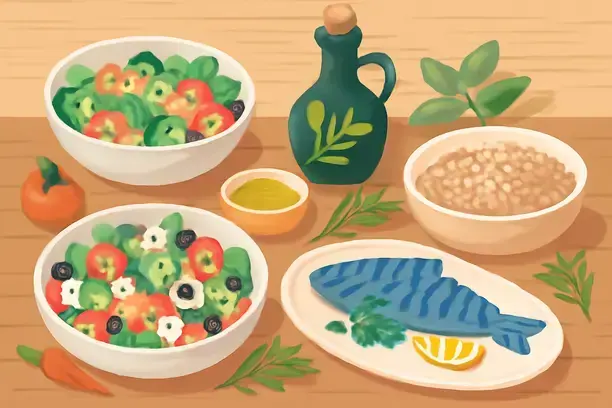
4 week mediterranean diet menu plan offers a straightforward path to healthier eating, sustainable weight loss, and truly enjoyable meals—without strict or complicated rules. This Mediterranean-inspired approach uses flexible templates, encouraging variety while keeping healthy choices effortless.
Disclosure: This article contains affiliate links. We may earn a commission at no extra cost to you.
The 4-week Mediterranean diet menu plan builds around core eating patterns that make healthy choices feel intuitive—not overwhelming. Instead of prescribing every single meal, it offers four flexible templates each for breakfast, lunch, and dinner.
You pick your favorites, then rotate proteins, grains, and vegetables to keep meals fresh and totally manageable.
For breakfast, you might choose plain Greek yogurt with seasonal fruit and nuts, overnight oats with berries and chia seeds, whole-grain avocado toast, or a veggie-egg frittata loaded with tomatoes and spinach. Lunches typically feature grain bowls, chickpea or bean salads, whole-grain wraps, or simple leftovers like roasted vegetables and fish.
Dinners follow a classic Mediterranean-style plate—grilled seafood with quinoa and roasted peppers, or a one-pot lentil stew served with fresh greens and olive oil.
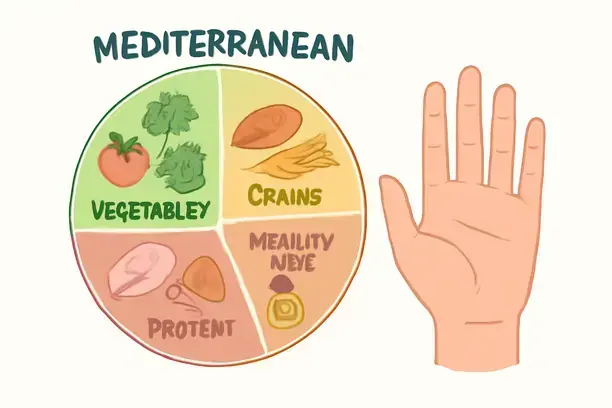
Visualize portions with this quick serving chart—keep it on your fridge:
Batch cooking can simplify weekly prep. Allocate one or two sessions to prepare beans, chop raw veggies, or roast chicken and vegetables.
Outline your core proteins and grains for the week, then fill your grocery list with fresh produce, whole grains, olive oil, and snacks like Greek yogurt or hummus.
This plan adapts easily to various diets: swap tofu or legumes for vegetarian meals, use gluten-free grains such as quinoa, and moderate cheese for a plant-forward approach. Olive oil, nuts, and seeds provide healthy fats without compromise.
If you want a printable meal plan, shopping lists, and batch-cook guides all in one place, the Mediterranean Diet – 30-Day Challenge gives you a structured, step-by-step format—perfect for staying organized and motivated through your first month.
More inspiration on daily menus and beginner shopping can be found in our Mediterranean daily menu examples and grocery checklist for beginners.
Understanding which foods fit this style is key. For a detailed list of staples and smart swaps, see our comprehensive Mediterranean diet food list.
Serving sizes and recipe adaptations are further detailed in guidelines from the U.S. Department of Health and Human Services and the Oldways Mediterranean Diet Pyramid.
Start by clarifying your main goal: steady weight loss or healthy weight maintenance. Experts generally recommend losing 1–2 pounds per week for a safe, sustainable pace.

This approach helps you avoid disappointment and the yo-yo dieting that’s so common with long-term plans like the Mediterranean diet Source: CDC.
If losing weight is your aim, this 4-week plan can help you drop 4–8 pounds when paired with a calorie deficit and consistent meals. If you’re focused on maintaining weight, use the strategies here to keep your energy up and stay on track throughout the month.
To estimate your daily calories, multiply your current weight in pounds by 12 to 15. Use the lower end for weight loss and the higher for maintenance or moderate activity.
For example:
Individual needs vary based on activity, age, and health. For a more precise number, try a calculator like the NIDDK Body Weight Planner.
The Mediterranean menu is highly adaptable. For weight loss, consider these tweaks:
Sample calorie targets: 1,400–1,600 for weight loss, 1,800–2,200 for maintenance, and 2,400+ for very active individuals.
Skip the food scale—use your hand for easy portioning:
This method works whether you’re meal prepping or dining out. For more beginner-friendly portioning tips, see Mediterranean meal basics.
Each week, plan 3–4 breakfast options and 4–5 lunch/dinner ideas you can mix and match. Repeat favorites, rotate seasonal produce, and use leftovers for fuss-free meals.
Consider batch-prepping proteins like grilled chicken or chickpeas, and chop veggies ahead to save time. For snacks, reach for fruit, raw nuts, or a small serving of cheese and olives.
If you stick to this Mediterranean menu plan for four weeks, most people notice more consistent energy, improved digestion, and easier weight management—without feeling deprived.
If you want additional support, tools, or accountability, check out the Mediterranean Diet – 30-Day Challenge for enhanced meal planning and motivation resources.
Absolutely. Swap out animal proteins for legumes, beans, tofu, or tempeh. Focus on plant-based healthy fats like olive oil and nuts, and keep plenty of vegetables and whole grains in rotation.
Yes! This plan is designed to make meal prep simple. Batch-cook grains, proteins, and veggies once or twice a week, then assemble meals as needed for convenience and variety.
The Mediterranean diet is highly adaptable. Substitute gluten-free grains for wheat, skip cheese if lactose-intolerant, and use nut alternatives as needed. Focus on fresh, whole ingredients and adjust to suit your needs.
Ready to make your own Mediterranean menu for the next month? Get started with the Mediterranean Diet – 30-Day Challenge — or for more inspiration, browse our guides to Mediterranean diet recipes and foods to avoid.
Curious what is the primal diet? Discover how eating like your ancient ancestors—with a side of cheese—might energize you (and your next caveman impression).
Curious about the zero starch diet? Learn what you can actually eat, how to avoid salad boredom, and why potatoes are definitely not invited to this party.
A beginner swim workout turns splashing around into smart, safe exercise—even if your best stroke is “try not to panic.” Learn to swim with confidence (and laughs).