Tips
What Is the Primal Diet? Why Your Inner Caveman Might Need a Salad
Curious what is the primal diet? Discover how eating like your ancient ancestors—with a side of cheese—might energize you (and your next caveman impression).
Real-Life Fitness for Real People
Since 2024
Wondering what foods not to eat when on a diet? Skip the sneaky snacks and crafty calories—learn the science, avoid common pitfalls, and laugh your way to success!
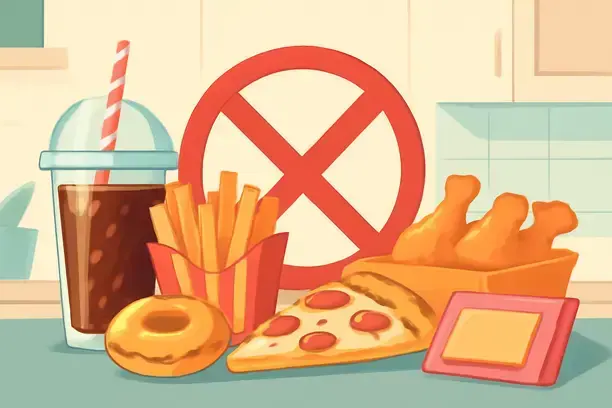
What foods not to eat when on a diet? Knowing exactly which foods to skip can make weight loss feel a whole lot easier. Avoiding the common diet-busters gives your efforts a real edge—less hidden calories, hunger, and temptation.
Disclosure: This article contains affiliate links. We may earn a commission at no extra cost to you.
When you’re trying to lose weight, certain foods can quietly undermine everything you’re doing. Sugary drinks, deep-fried snacks, refined carbs, processed meats, ultra-processed junk, and those sneakily sweetened “health” products are the biggest offenders.
They mess with your blood sugar, pack in calories without nutrition, and leave you hungry again an hour later.
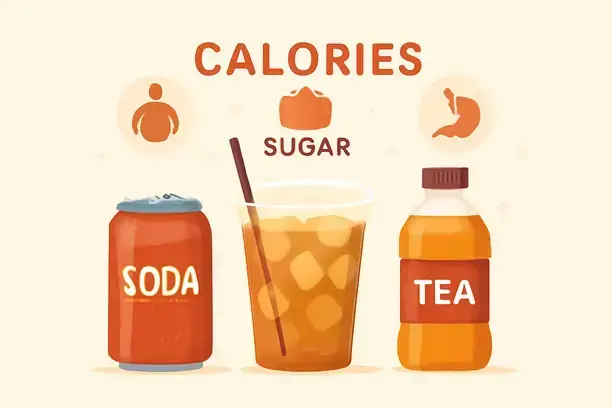
Sodas, sweetened teas, and most store-bought fruit juices send your blood sugar soaring—but they don’t fill you up. At all.
Because liquid sugar hits your bloodstream fast, you get an insulin spike without any sense of fullness. That means more calories in, zero satiety, and a higher risk of overeating later. Over time, this pattern is linked to weight gain, belly fat, type 2 diabetes, and heart disease Source: Harvard T.H. Chan School of Public Health.
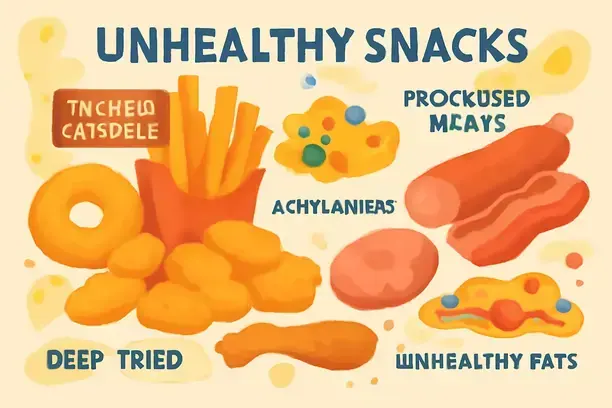
French fries, chips, fried chicken—they’re calorie bombs with almost no nutritional value. But there’s more to worry about than just the calorie count.
When starchy foods are cooked at high temperatures (above 120°C or 248°F), they form acrylamides—compounds that some studies link to cancer risk. While the occasional indulgence probably won’t hurt a healthy adult, pregnant individuals and anyone with chronic kidney disease should be extra cautious Source: National Cancer Institute.
White bread, regular pasta, pastries, most breakfast cereals—if it’s made from white flour, it’s missing the fiber and resistant starch that slow digestion.
That means rapid blood sugar and insulin spikes, followed by crashes that leave you tired and craving more food. Eat these regularly, especially if you’re not very active, and you’re setting yourself up for fat storage and metabolic trouble Source: NCBI.
Sausages, bacon, hot dogs, deli slices—they’re loaded with salt, preservatives, and saturated fat.
Eating them regularly increases your risk of heart disease and certain cancers. If you have high blood pressure or kidney problems, the sodium alone is reason enough to cut back. For heart-friendly meal ideas that actually taste good, check out our guide on healthy meals for weight loss.
Chips, packaged cookies, most granola bars, microwave popcorn—you’ve probably heard they’re “bad.” But here’s why: they’re engineered to hit your brain’s reward centers hard, making you eat more without ever feeling satisfied.
Added sugars, refined oils, and sodium are the usual culprits. If you struggle to feel full on fewer calories, our guide on how to stay full on a diet has practical tips that help.
Some foods wear a health halo but are secretly sugar traps. Low-fat yogurt with fruit on the bottom? Often packed with added sugar. That caramel macchiato? Basically dessert in a cup.
Always flip the package and read the nutrition label—even on brands that market themselves as “healthy.”
One evidence-based approach is the Mediterranean diet, which focuses on nutrient-rich, fiber-filled foods that help you lose weight without feeling deprived.
If you want structured support and done-for-you meal plans, the 30-Day Mediterranean Diet Challenge offers expert guidance to help you overcome common dieting hurdles and build sustainable habits.
Weight management comes down to energy balance—the relationship between the calories you eat and the calories you burn.
To figure out your daily needs, start with your Basal Metabolic Rate (BMR), which is the energy your body uses just to keep you alive at rest. The Mifflin-St Jeor equation is one of the most reliable ways to calculate it, or you can use a validated online calculator Source: CDC.
Next, multiply your BMR by an activity factor to estimate your Total Daily Energy Expenditure (TDEE):
For example, a moderately active woman with a BMR of 1,400 would have a TDEE of about 2,170 calories. Adjust your calorie intake below this number for weight loss or above for weight gain. For most healthy weight loss plans, a deficit of 300–500 calories per day is recommended—meaning you aim to eat 300–500 fewer calories than your TDEE.
Remember, extremely low-calorie diets (<1,200 calories/day for women, <1,500 for men) can slow metabolism and lead to nutrient deficiencies. Sustainable weight loss comes from a moderate deficit paired with healthy food choices.
Tracking what you eat can be eye-opening. There are many apps that make it easy to log meals and snacks, or you can use a food diary and nutrition labels.
Keep in mind that as your weight changes, so does your calorie requirement. Readjust your intake every 5–10 pounds lost to avoid plateaus.
If you’re interested in more tips about motivation and consistency, check out our detailed article on how to get more motivated for the gym.
Ready to simplify healthy eating? The Mediterranean Diet Challenge can help track and plan your meals with ease.
Look for foods loaded with sugar, white flour, or that are deep-fried. Read ingredient lists for hidden sugars and artificial additives even in “healthy” items, and avoid processed snacks with more than five ingredients you can’t pronounce.
Occasional cheat meals won’t ruin your results if you get back on track immediately. Planning them can even reduce cravings, but make sure they’re single meals, not entire “cheat days.”
Resume your healthy eating habits with the next meal, drink extra water, don’t skip meals, and consider a short walk to help digestion and reset your mindset. Check out our article on what to do when you overeat for more tips.
If you want additional support or ready-made meal plans to make tracking calories effortless, the 30-Day Mediterranean Diet Challenge can help you stay consistent and motivated.
Curious what is the primal diet? Discover how eating like your ancient ancestors—with a side of cheese—might energize you (and your next caveman impression).
Curious about the zero starch diet? Learn what you can actually eat, how to avoid salad boredom, and why potatoes are definitely not invited to this party.
A beginner swim workout turns splashing around into smart, safe exercise—even if your best stroke is “try not to panic.” Learn to swim with confidence (and laughs).