Tips
What Is the Primal Diet? Why Your Inner Caveman Might Need a Salad
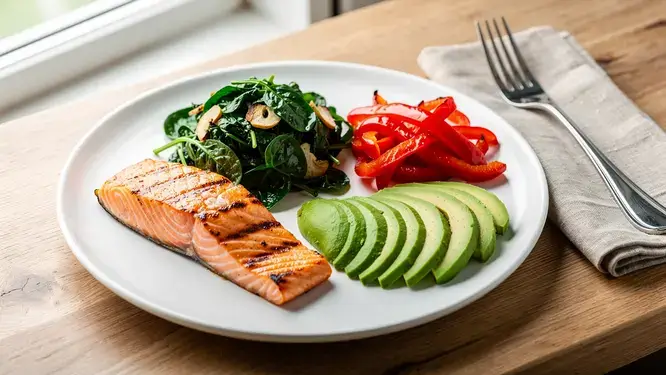
Curious what is the primal diet? Discover how eating like your ancient ancestors—with a side of cheese—might energize you (and your next caveman impression).
Real-Life Fitness for Real People
Since 2024
Cooking is not just about food; it’s about nourishing our bodies and bringing people together. As Julia Child once said, “The only time to eat diet food is while you’re waiting for the steak to cook.” This quote encapsulates the joy of cooking and the importance of savoring good meals. That’s why more people are …
Cooking is not just about food; it’s about nourishing our bodies and bringing people together. As Julia Child once said, “The only time to eat diet food is while you’re waiting for the steak to cook.” This quote encapsulates the joy of cooking and the importance of savoring good meals.
That’s why more people are looking for healthy meals to make at home—dishes that are both satisfying and supportive of their wellness goals. Cooking at home allows us to control the ingredients, portion sizes, and nutritional content of our meals. With simple meal prep techniques, we can save time during busy weekdays while enjoying wholesome food.
In this article, we’ll explore our favorite recipes for this month that are not only delicious but also packed with nutrients. Whether you’re cooking for yourself or feeding a family, these healthy meals to make at home will help you eat well without sacrificing flavor.
The importance of healthy home cooking cannot be overstated, given its impact on our overall well-being. Cooking at home provides an opportunity to take control of your diet, ensuring that you and your family consume nutritious meals and maintain a healthy lifestyle through effective meal prep.
Cooking at home allows you to reduce sodium, unhealthy fats, and unnecessary additives found in restaurant meals. Home-cooked meals are rich in vegetables, fruits, and whole grains, boosting your nutrient intake. You can also customize portions to manage weight and reduce food waste, making it a healthier choice for the week ahead.
Planning meals for the week ahead can save significant money compared to dining out. Buying ingredients in bulk and repurposing leftovers into new recipes stretches your food budget further. Creating a rotating meal plan with favorite recipes streamlines grocery shopping and reduces decision fatigue, making meal prep a practical choice.
| Benefits | Home Cooking | Dining Out |
|---|---|---|
| Control Over Ingredients | Complete control, allowing for healthier choices | Limited control, often high in sodium and unhealthy fats |
| Nutrient Intake | Higher intake of vegetables, fruits, and whole grains | Often lower in essential nutrients |
| Cost | Cost-effective with meal planning and bulk buying | Generally more expensive, especially for frequent dining out |
Starting your day with a nutritious breakfast is essential for maintaining energy levels. A well-prepared breakfast can be both quick and delicious, thanks to modern meal prep techniques.
For those busy mornings, having a variety of breakfast options is a lifesaver. Here are some ideas that fit into a healthy diet.
Overnight oats are a fantastic breakfast solution. They offer endless customization options with mix-ins like fresh berries, nut butters, and seeds. Prepare them in Mason jars for a convenient grab-and-go breakfast that requires zero morning prep.
Eggs are a versatile breakfast staple. Hard-boiled eggs can be prepared in large batches and kept in the fridge for up to 5 days. Protein-packed egg dishes like mini frittatas and egg muffins can be made ahead and stored for up to 3-5 days, providing quick reheatable breakfast options.
In addition to overnight oats and egg dishes, other meal prep options include homemade granola, breakfast cookies, and banana bread. These can be prepared once and enjoyed throughout the week, making breakfast meal prep efficient and stress-free.
Kick-start your day with our collection of energizing lunch recipes that are both healthy and delicious. These meal prep friendly ideas will keep you full and focused throughout the afternoon.
Hearty salads packed with protein sources like chickpeas, grilled chicken, or quinoa provide sustained energy. Mason jar salads with dressing on the bottom and greens on top stay fresh for days, making them perfect for meal prep.
Nutritious wraps using whole grain tortillas can be partially prepped ahead of time. Chickpea salad sandwiches offer a protein-rich vegan alternative to traditional tuna or chicken salad.
| Recipe | Main Ingredients | Prep Time |
|---|---|---|
| Mediterranean Quinoa Salad | Quinoa, roasted tomatoes, olives | 20 minutes |
| Chickpea Salad Sandwich | Chickpeas, olives, basil | 15 minutes |
| Black Bean and Corn Salad | Black beans, corn, zesty dressing | 10 minutes |
Preparing a healthy dinner at home doesn’t have to be complicated or time-consuming. With a few simple recipes, you can create delicious and nutritious meals that your whole family will enjoy. One of the easiest ways to achieve this is by using one-pan recipes that combine protein sources like chicken or salmon with a variety of colorful veggies.
One-pan dinner recipes are perfect for busy weeknights. They not only minimize cleanup but also maximize flavor. For instance, a one-skillet salmon and broccoli recipe can be ready in just 20 minutes, making it an ideal meal prep option. This dish is packed with lean protein, omega-3s, and a generous serving of veggies, making it a nutritious and satisfying meal.
Nutritious family favorites can be customized to suit different taste preferences while maintaining nutritional balance. Consider healthier versions of comfort food classics like tacos, pasta dishes, and stir-fries. These can be made with chicken or other protein sources and plenty of vegetables, ensuring a healthy and enjoyable dinner for everyone.
Embracing plant-based meals can revolutionize your dinner routine with nutritious and flavorful options. Plant-based meals centered around beans, lentils, and tofu provide complete protein without meat, making them satisfying and nutritionally balanced.
These meals are not only good for you, but they’re also incredibly versatile. You can transform classic meat dishes into plant-based versions, like chickpea butter masala instead of butter chicken, introducing familiar flavor profiles in new, healthier forms.
Vegetarian options like chickpea curry and lentil pasta dishes offer hearty textures and rich flavors that appeal to both meat-eaters and vegetarians. They’re perfect for a quick meal prep that can be ready in no time.
Vegan dinner recipes that incorporate a variety of textures and umami-rich ingredients create satisfying meals that don’t feel like they’re “missing” anything. Exploring international cuisines like Indian, Thai, and Mediterranean offers endless inspiration for flavorful vegan and vegetarian recipes.
Eating a diet rich in protein and low in carbs can be achieved with the right recipes. High-protein, low-carb meals focus on quality protein sources like chicken, fish, and seafood while minimizing starchy components. This approach not only supports weight management but also enhances overall health.
Some excellent options include chicken-based recipes and seafood sensations, which are not only delicious but also quick to prepare. For instance, a chicken parmesan dish coated with almond flour and Parmesan cheese is a keto-friendly dinner option.
Chicken is a versatile protein that can be prepared in numerous low-carb ways. Recipes like bacon ranch chicken and keto-friendly chicken parmesan are both satisfying and flavorful. Sheet pan chicken and non-starchy vegetable combinations create complete meals with minimal prep and cleanup.
Seafood options like baked salmon, shrimp stir-fry, and cod packets cook quickly, making them perfect for weeknight dinners ready in under 30 minutes. Pairing these with cauliflower rice and a flavorful sauce enhances the meal while keeping carbs low. Meal prep can also be utilized to prepare protein portions in advance, making it easier to assemble low-carb meals throughout the week.
Embracing the grain bowl concept can revolutionize your meal prep routine, making healthy eating both easy and enjoyable. Grain bowls offer a versatile and nutritious meal option that can be customized to suit any taste or dietary preference.
Mediterranean-inspired bowls featuring quinoa or farro topped with roasted vegetables, olives, and tahini sauce create a balanced meal with complex flavors. This combination not only satisfies your taste buds but also provides a nutritious boost.
Asian-fusion grain bowls with components like brown rice, edamame, pickled vegetables, and sesame-ginger dressing offer a satisfying balance of flavors and textures. Preparing grain bases like brown rice, quinoa, or farro in large batches during weekend meal prep makes assembling grain bowls throughout the week quick and easy.
Some key benefits of grain bowls include:
The formula for a perfect grain bowl includes a grain base, protein source, variety of vegetables, flavorful sauce, and crunchy toppings for textural contrast. By following this formula, you can create a delicious and healthy dish that’s tailored to your preferences.
Comforting soups and stews are more than just a meal; they’re a way to nourish both body and soul. These dishes are perfect for meal prep, as they often taste better after a day or two when flavors have melded together.
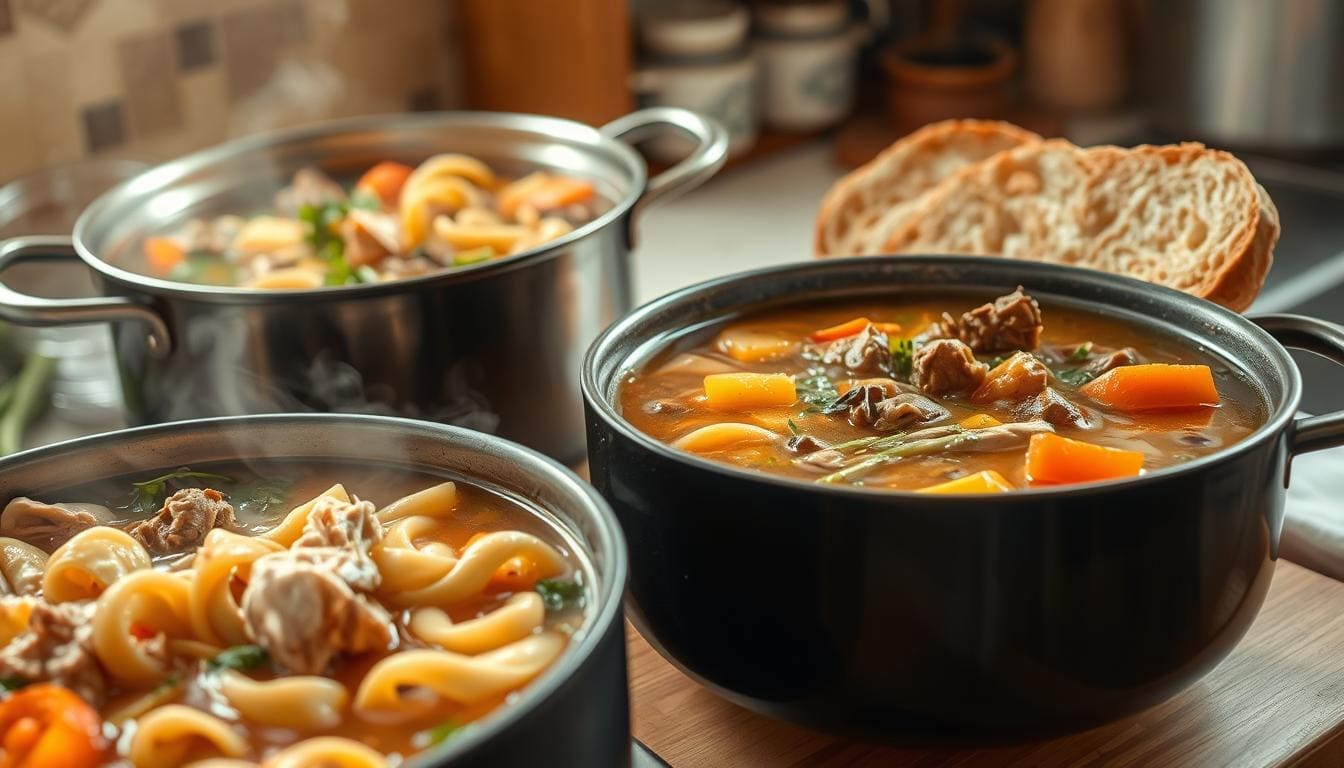
Soups and stews offer a versatile and healthy meal option. For instance, hearty bean soups featuring chickpeas, black beans, or white beans are not only budget-friendly but also packed with plant-based protein and fiber.
Hearty bean and vegetable soups are a great way to utilize whatever produce you have on hand, reducing food waste. A simple vegetable soup can be adapted with various veggies like squash, spinach, or bell peppers, making it a versatile option.
Protein-rich stews with lean meat or plant-based proteins create satisfying one-pot meals. These can be portioned and frozen for future quick dinners, making them ideal for meal prep. A pot of chili or stew cooked on the weekend can provide ready-to-heat meals throughout the week.
Adding fresh garnishes like herbs, avocado, or a squeeze of citrus when serving reheated soup refreshes the flavors and adds nutritional value. Most soups and stews freeze well for up to 3 months, creating a stockpile of homemade “fast food” for busy days.
Busy weeknights don’t have to mean sacrificing a healthy meal. With a few simple recipes, you can have a nutritious dinner on the table in no time.
For quick and delicious meals, consider simple stir-fries that can be prepared in minutes. These dishes typically use pre-cut veggies and quick-cooking proteins like shrimp or chicken.
Simple stir-fries are a staple for weeknight dinner because they are fast and versatile. By keeping a well-stocked pantry with staples like soy sauce and spices, you can create a variety of stir-fries without a special shopping trip.
Another quick option is fresh pasta dishes, which cook in just 2-3 minutes. Pairing fresh pasta with a simple sauce made from eggs, like carbonara, creates a creamy and satisfying dish without heavy cream.
Pre-prepping vegetables and proteins during meal prep can significantly cut down on weeknight cooking time, making it easier to stick to healthy eating.
With minimal cleanup and maximum flavor, sheet pan and one-pot wonders are perfect for home cooks. These recipes simplify meal preparation by combining proteins and vegetables in a single pan, allowing flavors to meld together effortlessly.
Sheet pan meals like miso chicken with sweet potatoes or salmon with broccoli create visually appealing and nutritionally balanced meals. The key to successful sheet pan cooking is choosing ingredients that cook at similar rates.
One-pot wonders, including skillet meals and Instant Pot creations, minimize cleanup while maximizing flavor. These dinner ideas are perfect for busy weeknights, as they often require minimal preparation and can be cooked in under 30 minutes, making them ideal for meal prep.
“The simplicity of sheet pan and one-pot cooking allows home cooks to create delicious chicken and vegetable dishes with ease,” a testament to the versatility of these cooking methods.
As we dive into a busier season, a well-planned meal prep strategy can be a game-changer for healthy eating. With a busy fall ahead, having a reliable meal prep routine can save time and ensure nutritious meals.
“Meal prep is not just about saving time; it’s about making healthy eating a sustainable habit.“
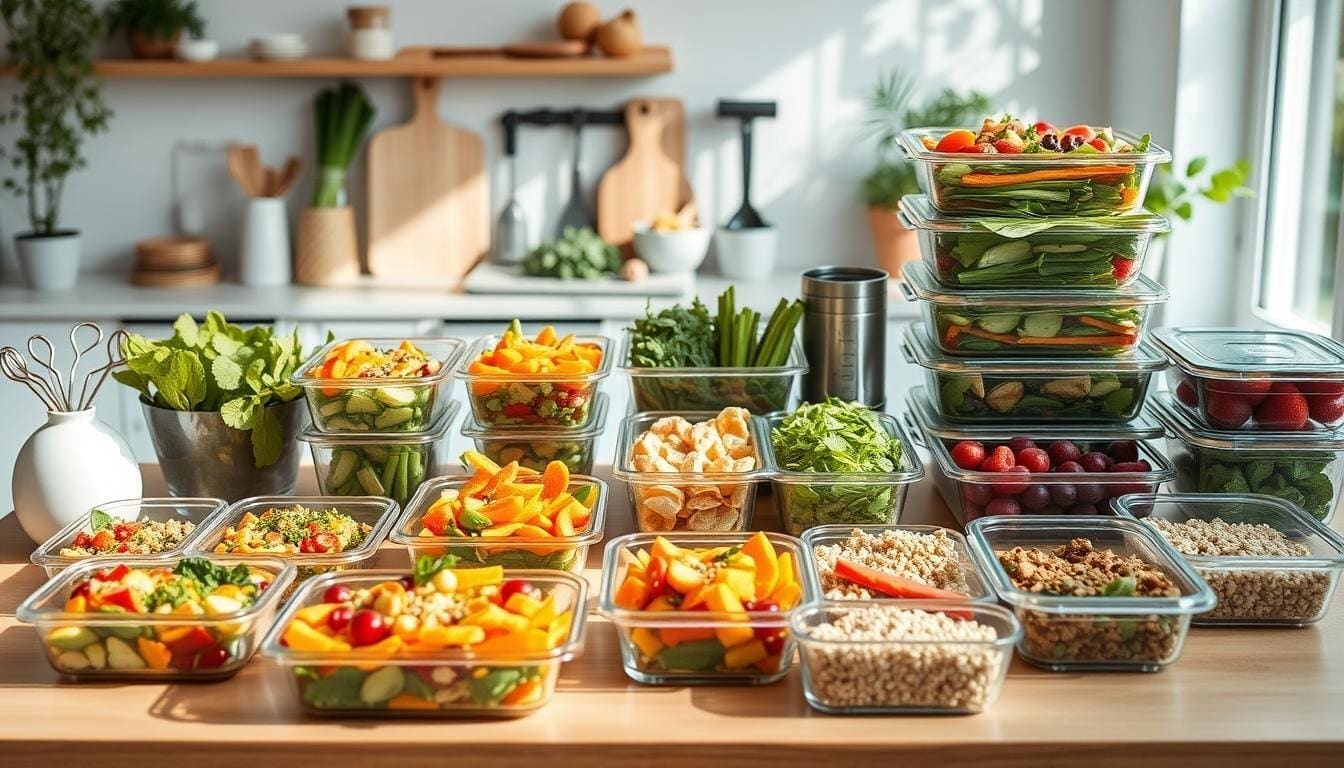
Dedicating 1-2 hours on the weekend to meal prep can save countless hours during the busy workweek. Batch cooking staples like grains, proteins, and roasted vegetables provides versatile building blocks for various meals throughout the week. By prepping components on the weekend, you can create multiple meals and reduce food waste.
Proper storage containers make a significant difference in food freshness and longevity. Invest in quality glass containers with secure lids for best results. Understanding which foods maintain quality when reheated and which are best eaten fresh helps you plan more effectively. Proper cooling before refrigerating prevents condensation that can make food soggy, while proper reheating techniques maintain texture and flavor.
By implementing these meal prep strategies, you can enjoy healthy meals throughout the week and save time during busy days.
The right sauce or dressing can make all the difference in your meal prep, adding a burst of flavor to your dishes. Whether you’re preparing salads, grain bowls, or using them as marinades, sauces and dressings are versatile and can elevate any meal.
Homemade dressings and sauces not only add layers of flavor but also avoid unnecessary preservatives and excess sodium found in store-bought options. By preparing a few versatile sauces at the beginning of the week, you can create a variety of meals using similar base ingredients.
Homemade dressings for salads and grain bowls require just a few minutes to prepare but dramatically improve the eating experience. Classic combinations like tahini-lemon and sesame-ginger work well across multiple cuisines.
Versatile sauces like pesto, romesco, or chimichurri can function as marinades, spreads, or finishing touches, making them extremely valuable in meal prep. Adding fresh herbs or a squeeze of citrus just before serving refreshes the flavors of premade sauces and dressings.
| Sauce/Dressing | Main Ingredients | Usage |
|---|---|---|
| Tahini Sauce | Tahini, lemon juice, garlic | Salads, grain bowls |
| Chipotle Sauce | Chipotle peppers, adobo sauce, sour cream | Tacos, burritos |
| Sesame Ginger Dressing | Sesame oil, ginger, soy sauce | Salad dressings, marinades |
By incorporating these flavorful sauces and dressings into your meal prep, you can enjoy a variety of delicious and healthy meals throughout the week.
Making healthier meals doesn’t have to mean sacrificing flavor, thanks to smart ingredient swaps. By substituting certain ingredients, you can significantly reduce calories and increase nutrients without sacrificing the satisfaction of your favorite comfort foods.
One effective strategy is to use lower-carb alternatives. For instance, cauliflower rice is a great substitute for traditional rice, especially in dishes like fried rice. Cauliflower’s neutral flavor makes it incredibly versatile as a substitute in recipes ranging from rice dishes to pizza crusts and mashed “potatoes.” Similarly, zucchini noodles and spaghetti squash provide vegetable-based substitutes for traditional starches.
Lower-carb alternatives can revolutionize your meal prep. Swap cooked pasta for spiralized vegetables like carrots, zucchini, or sweet potatoes to create colorful “noodles” that cook quickly and absorb flavors from sauces beautifully. For example, you can swap 5 cups of raw zucchini or carrot “noodles” for cooked pasta.
| Traditional Ingredient | Healthier Alternative | Benefit |
|---|---|---|
| Rice | Cauliflower Rice | Lower in Carbs |
| Pasta | Zucchini Noodles | Lower in Calories, Higher in Nutrients |
| Mashed Potatoes | Cauliflower Mash | Lower in Carbs, Higher in Fiber |
Boosting nutritional value can be as simple as adding extra vegetables to standard recipes or incorporating nutrient-dense ingredients like seeds and nuts. Whole grain substitutions for refined grains add fiber and nutrients while maintaining satisfying textures in many recipes. For example, using whole grain pasta instead of regular pasta can make a significant difference in the nutritional value of your meal.
Meal prepping vegetable-based alternatives like cauliflower rice in advance makes healthy choices more convenient during busy weekdays. By incorporating these smart swaps into your meal prep routine, you can enjoy healthier meals without sacrificing flavor or satisfaction.
Making healthy meals that your whole family will love is simpler than you think. By focusing on familiar flavors and formats, you can incorporate more nutritious ingredients that appeal to both adults and children.
Kid-approved nutritious options like whole grain pasta with vegetable-packed sauce, homemade pizza with whole wheat bread, and build-your-own grain salad bowls encourage healthy eating habits. Involving children in meal prep increases their willingness to try new food and builds valuable life skills.
Sneaking extra veggies into favorite dishes like adding grated carrot or zucchini to pasta sauce, cauliflower to mac and cheese, or spinach to smoothies boosts nutrition without resistance. Using cottage cheese in place of ricotta in pasta dishes adds protein while maintaining creamy texture and kid-friendly appeal.
| Meal Idea | Nutritional Boost | Kid-Friendly |
|---|---|---|
| Whole grain pasta with veggie sauce | Extra veggies, whole grains | Yes |
| Homemade pizza with whole wheat crust | Whole grains, customizable toppings | Yes |
| Build-your-own grain bowls | Variety of veggies, whole grains | Yes |
By incorporating these strategies into your meal planning, you can create healthy meals that your family will enjoy. Meal prep can also help reduce the stress of weeknight cooking and make it easier to serve healthy options consistently.
International recipes provide a treasure trove of healthy meal ideas that are both delicious and easy to prepare. By incorporating global flavors into your cooking, you can create nutritious meals that are exciting and varied. International cuisines offer a wealth of healthy cooking techniques and flavor combinations that can transform everyday ingredients into meals.
The Mediterranean diet is renowned for its health benefits, featuring ingredients like olive oil, fresh vegetables, legumes, and herbs. Chickpea-based dishes like hummus and falafel are not only delicious but also packed with protein. These ingredients can be used to create naturally healthy meals with proven health benefits, such as reducing the risk of heart disease.
Asian-inspired cuisine often incorporates ginger, garlic, and umami-rich ingredients that create complex and satisfying flavor profiles. Sesame noodles with lean chicken and vegetables make for a balanced and nutritious meal. These dishes can be adapted to include more vegetables and less oil while maintaining their characteristic bold flavors.
By incorporating meal prep into your week, you can make healthy eating a sustainable habit. It’s about finding nutritious meals you enjoy and making them a part of your routine.
With versatile meal prep components like chickpea or bean dishes, and simple cooking methods, you can create a balanced diet. Planning ahead for busy days with healthy meal options like eggs ensures you stay on track.
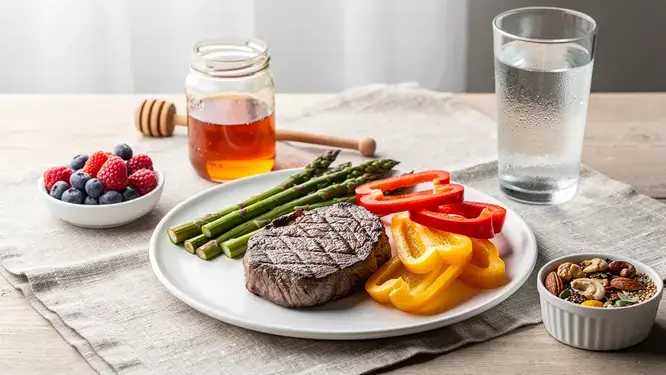
Curious what is the primal diet? Discover how eating like your ancient ancestors—with a side of cheese—might energize you (and your next caveman impression).
Curious about the zero starch diet? Learn what you can actually eat, how to avoid salad boredom, and why potatoes are definitely not invited to this party.
A beginner swim workout turns splashing around into smart, safe exercise—even if your best stroke is “try not to panic.” Learn to swim with confidence (and laughs).