Tips
What Is the Primal Diet? Why Your Inner Caveman Might Need a Salad
Curious what is the primal diet? Discover how eating like your ancient ancestors—with a side of cheese—might energize you (and your next caveman impression).
Real-Life Fitness for Real People
Since 2024
Eating more fiber can improve your digestive health, but many wonder how to eat a high fiber diet without gas. Bloating and discomfort often come with increased fiber intake, but don’t worry! You can enjoy fiber without these unwanted effects. Fiber is essential for overall health, yet many avoid it due to digestive discomfort. Understanding …
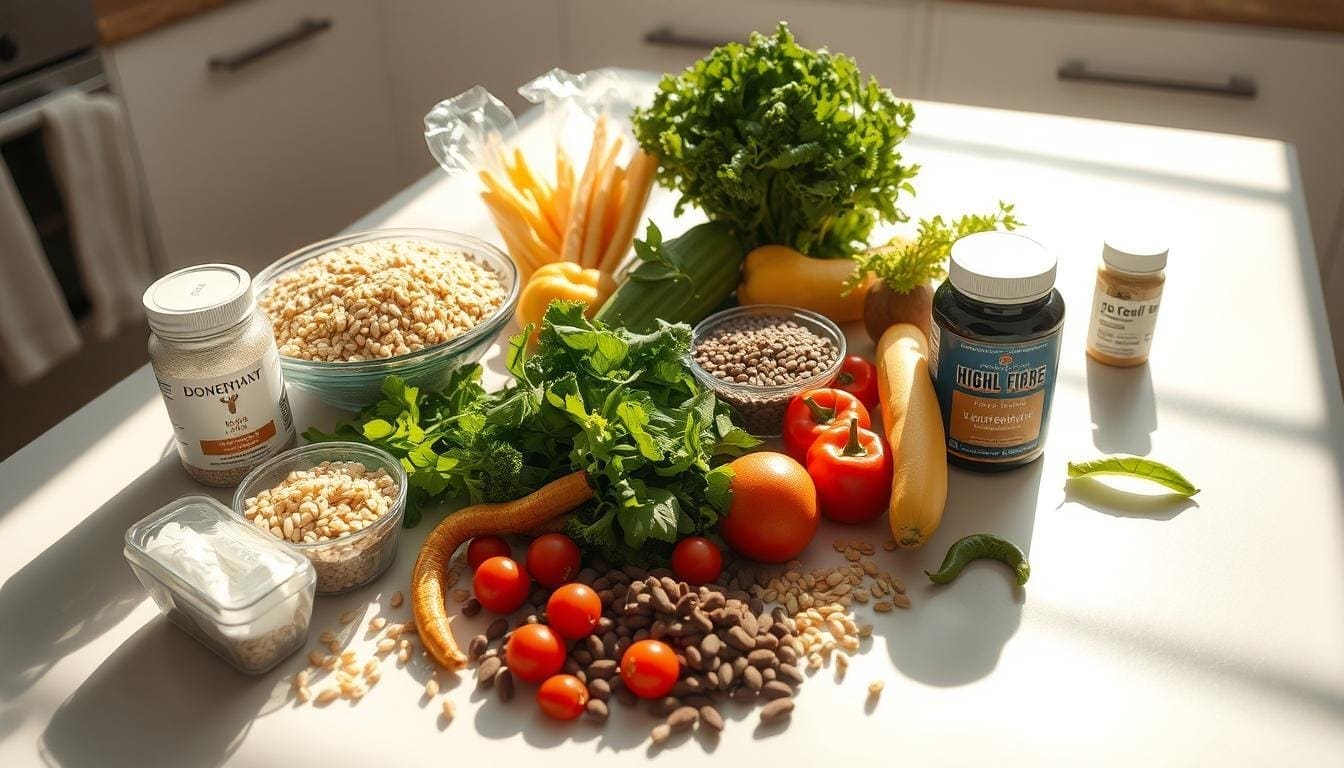
Eating more fiber can improve your digestive health, but many wonder how to eat a high fiber diet without gas. Bloating and discomfort often come with increased fiber intake, but don’t worry! You can enjoy fiber without these unwanted effects.
Fiber is essential for overall health, yet many avoid it due to digestive discomfort. Understanding how to eat a high fiber diet without gas can help you get all the benefits without the drawbacks.
We’ll explore different types of fiber and gas-free food choices. You’ll learn how to eat a high fiber diet without gas by gradually increasing fiber intake, staying hydrated, and preparing foods like beans in a way that reduces bloating.
This guide will help you embrace a fiber-rich diet comfortably. By following these simple strategies, you’ll nourish your body with fiber-rich foods while feeling great.
Fiber is essential in our diet and only found in plant foods. Let’s explore fiber types and intake stats.
Dietary fiber includes soluble and insoluble types. Soluble fiber dissolves in water, while insoluble doesn’t break down.
Soluble fiber can lower heart disease risk by up to 50%. Insoluble fiber helps with digestive issues like constipation.
Aim for 25 to 30 grams of fiber daily from food sources. For every 1,000 calories, try to get 14 grams of fiber.
Make sure 6 to 8 grams of your total intake is soluble fiber.
Check This:
| Food | Fiber Content |
|---|---|
| Raspberries | 8 grams per cup |
| Kidney beans | 7-8 grams per 1/2 cup |
| Peas | 3-4 grams per 1/2 cup |
| Sweet potato | 3-4 grams per medium potato |
Most Americans don’t eat enough fiber. The average intake is about 15 grams per day, half the recommended amount.
To boost fiber, eat five servings of fruits and veggies daily. Pick cereals with at least 5 grams of fiber per serving.
Increase fiber slowly to avoid gas and cramping. Some people may not handle sudden fiber increases well.
Boosting fiber intake is important, but it must be done correctly. Let’s learn how to add fiber without uncomfortable side effects.
Add fiber-rich foods slowly to your meals. Increase your fiber intake by 5 grams per day maximum. This helps your digestive system adjust and reduces gas.
Try adding one new high-fiber food daily. Keep this up until you reach your desired intake.
Hydration is key for fiber digestion. Drink eight glasses of water daily to soften stools. This prevents constipation and keeps things moving smoothly.

Avoid habits that make you swallow extra air. Eat slowly and chew with your mouth closed. Skip carbonated drinks to decrease bloating and discomfort.
Beans are fiber-rich but can cause gas. Soak dried beans overnight before cooking. This breaks down oligosaccharides, the sugars causing flatulence.
Rinse the beans thoroughly before cooking. This further reduces gas-causing compounds in beans.
Use these tips to increase fiber without excess gas. Listen to your body and adjust as needed.
High-fiber foods don’t always mean gas. Some foods can keep you healthy without discomfort. Let’s look at protein, veggies, fruits, grains, and dairy swaps.
Animal proteins don’t have carbs that cause gas. Greek yogurt is a top pick. It has 20 grams of protein per 7 oz. serving.
Greek yogurt also has probiotics. These can help reduce bloating.
Many veggies are high in fiber but won’t cause gas. Try carrots, eggplant, lettuce, parsnip, or potatoes. Pumpkin, spinach, tomatoes, and zucchini are good too.
For fruits, pick blueberries, oranges, grapes, or honeydew. Kiwi, raspberries, and strawberries are also great choices. These fruits give nutrients without the gas.
Some grains are less likely to cause gas. Gluten-free bread and rice bread are good picks. Brown or white rice, spelt, and quinoa work well too.
These grains give fiber without making you gassy. They’re safer than other grain products.
If dairy bothers you, try other high-fiber options. Almond milk, coconut milk, and oat milk are great choices. These plant milks often have extra nutrients added.
| Food Category | Non-Gassy Options | Fiber Content (per serving) |
|---|---|---|
| Protein Sources | Greek yogurt, Lean meats | 0-1g |
| Vegetables | Carrots, Spinach, Zucchini | 2-4g |
| Fruits | Blueberries, Oranges, Kiwi | 3-5g |
| Grains | Quinoa, Rice, Gluten-free bread | 2-6g |
| Dairy Alternatives | Almond milk, Oat milk | 1-3g |
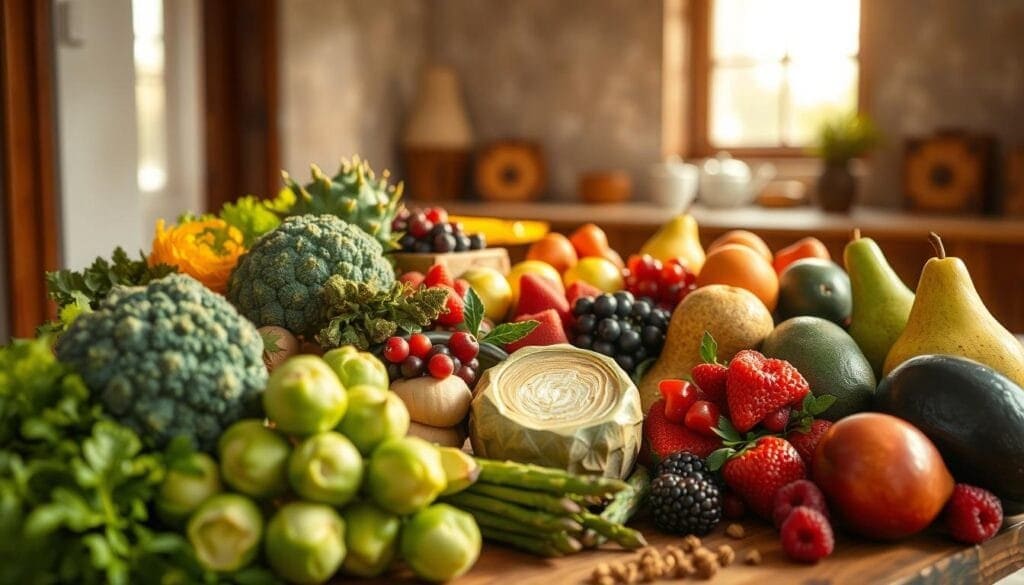
These foods let you eat high-fiber without bloating. Add new foods slowly to your diet. Drink plenty of water for good digestion.
Some foods can cause discomfort and bloating. Diet changes can help reduce gas issues. Let’s look at which foods to avoid and why.
Cruciferous veggies like broccoli and kale often cause problems. They have raffinose, a sugar that’s hard to digest. Beans and lentils can also make you gassy.
Fruits can be tricky too. Apples, peaches, and pears have fructose and sorbitol. These sugars can lead to gas. Try low-sugar fruits like apricots instead.
Dairy products may cause issues, especially if you’re lactose intolerant. Whole grains have fiber and raffinose, which can cause gas. Avoid processed foods with high-fructose corn syrup too.
Here’s a quick reference table of foods to avoid and their gas-friendly alternatives:
| Foods to Avoid | Gas-Friendly Alternatives |
|---|---|
| Broccoli, cauliflower, kale | Carrots, tomatoes |
| Beans, lentils | Well-soaked legumes, tofu |
| Apples, pears | Apricots, berries |
| Whole wheat | Rice, quinoa |
| Milk, ice cream | Lactose-free alternatives |
Everyone’s body reacts differently to foods. Keep a food diary to find your triggers. This will help you make better food choices.
Eating high-fiber foods can sometimes cause tummy troubles. But don’t worry! There are ways to help your digestion and reduce gas.
Let’s look at some good ways to keep your gut healthy. You can still enjoy fiber-rich foods without feeling uncomfortable.
Digestive enzymes can help a lot if you have gas and bloating. These supplements break down complex carbs, fats, and proteins.
Alpha-galactosidase helps digest beans and veggies. Lactase aids with dairy products. Taking these before meals can really cut down on gas.
A short walk after eating can help your digestion. Even 10-15 minutes of gentle movement can reduce gas and make you feel better.
Stretching or doing yoga for your belly area can also help. These activities improve digestion and prevent that bloated feeling.
Smart meal planning is key for a healthy tummy. Eating smaller meals more often can prevent overloading your digestive system.
Chew your food slowly to avoid swallowing air. Watch your portion sizes to help your body process fiber without making extra gas.
Try these tips to enjoy high-fiber foods without tummy troubles. Remember, everyone’s body is different. You might need to try different things to find what works best.
A high-fiber diet offers many health benefits. It promotes digestive health and reduces chronic disease risk. Here are strategies for gas-free eating to enjoy these benefits comfortably.
Start by adding 5 grams of fiber weekly to your diet. This can cut bloating by half. Aim for 25-38 grams of daily fiber intake.
Keep a food diary to track progress and find trigger foods. Drink at least 2 liters of water daily. This can boost your digestive comfort.
These tips improve more than just digestive health. They boost overall wellness too. High-fiber diets can lower type 2 diabetes risk by one-third.
They can also reduce heart attack risk by nearly 19%. Begin your journey to better health with fiber-rich, gas-free eating today!
“Let food be thy medicine and medicine be thy food.” – Hippocrates
Let’s start your high-fiber, low-gas journey with easy recipes. Try oats, chia seeds, and raspberries for breakfast. This bowl packs 18 grams of fiber. For lunch, make lentil and vegetable soup with 15 grams.
Meal planning is key to success. Prep fiber-rich ingredients weekly. Cook beans, roast veggies, and make whole grains. This helps you quickly make nutritious meals.
Adults should eat at least 28g of fiber daily. Over 90% of us don’t meet this goal. If you struggle, talk to a nutritionist.
They can give personalized advice for your diet. Check the Academy of Nutrition and Dietetics website for more info. Your local healthcare provider may offer nutritional services too.
Slowly increase your fiber intake. Choose gas-free options for better health. High fiber lowers heart disease and stroke risk by 25%. Your body will thank you!
Curious what is the primal diet? Discover how eating like your ancient ancestors—with a side of cheese—might energize you (and your next caveman impression).
Curious about the zero starch diet? Learn what you can actually eat, how to avoid salad boredom, and why potatoes are definitely not invited to this party.
A beginner swim workout turns splashing around into smart, safe exercise—even if your best stroke is “try not to panic.” Learn to swim with confidence (and laughs).