
Tips
What Is the Primal Diet? Why Your Inner Caveman Might Need a Salad
Curious what is the primal diet? Discover how eating like your ancient ancestors—with a side of cheese—might energize you (and your next caveman impression).
Real-Life Fitness for Real People
Since 2024
Discover safe and effective balance ball exercises for seniors that improve posture, stability, and core strength—no wobbles, just gains. Learn how to bounce back better!

Balance ball exercises for seniors offer a safe and effective way to improve stability, core strength, and mobility, but only if you choose a ball with the proper size, weight limit, and inflation for your needs.
Disclosure: This article contains affiliate links. We may earn a commission at no extra cost to you.
For seniors, selecting the right balance ball goes beyond just grabbing one off the shelf. You’ll need to match the ball to your height, weight capacity, and proper inflation level to get the most out of your workouts.
Typically, ball diameters correspond to height ranges: 45 cm for anyone under 5’0″, 55 cm if you’re between 5’1″ and 5’7″, 65 cm for 5’8″ to 6’1″, and 75 or 85 cm for taller folks. Keep in mind these measurements can vary slightly depending on the brand.
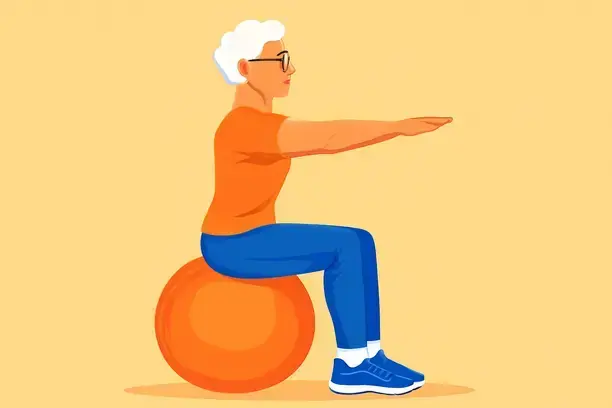
Once you’ve picked a ball based on your height, do a quick seated fit test before you start exercising. When you sit on the ball, your hips and knees should both bend at roughly 90 degrees, with your thighs parallel to the ground and feet flat on the floor. That’s your sweet spot for comfort and stability.
Weight capacity matters just as much. Always choose burst-resistant balls that clearly state their maximum static and dynamic load limits. Going over those limits isn’t just risky—it can damage the ball and lead to injury.
Look for professional-grade or anti-burst certifications, and stick with reputable brands you can trust.
Proper inflation keeps you safe and makes every exercise more effective. Inflate your ball until it yields slightly when you press your thumb into it—without leaving a deep dent. Over-inflating increases the chance of bursting and makes balancing trickier, while under-inflating reduces support and can mess with your posture.
Check your ball’s diameter regularly with a tape measure or by marking its height against a wall. Stick to the PSI guidelines your manufacturer provides.
When you choose the right balance ball and set it up correctly, you’re setting yourself up for safe, effective workouts that build mobility and confidence over time.
Staying safe is your top priority when you start balance ball exercises. If you’ve had a recent fall, deal with osteoporosis, have joint replacements, or struggle with balance, check in with your doctor or physical therapist first.
They’ll help you figure out the safest way to begin—or let you know if certain moves aren’t right for you.
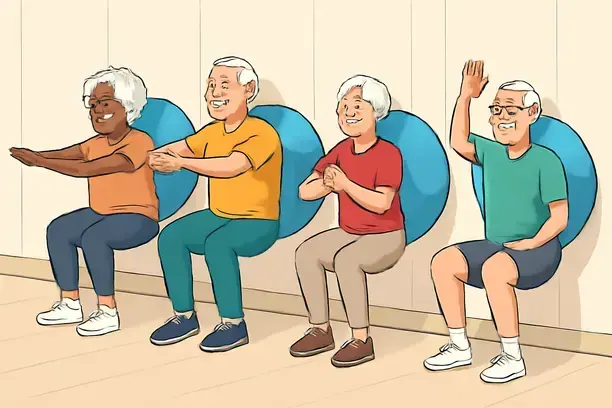
When you’re just getting started, practice near a wall or sturdy chair so you’ve got something to grab if you need it. Keep your spine neutral and your shoulders relaxed—no slouching or arching your back. Slow, controlled movements make it easier to tune into how your body’s responding and prevent any slips.
If your balance or mobility is limited right now, try seated versions of the exercises or scale back your range of motion. This approach keeps things safer and lets you build confidence at your own pace.
Stop immediately if you feel sharp joint pain, dizziness, chest discomfort, lose your balance, or get short of breath. Rest up and talk to a healthcare provider before you try again.
Listen to your body. Don’t rush your progress.
For routines that go easy on your joints and fit into a busy schedule, guided programs designed specifically for seniors can help you build strength and stability—without feeling overwhelmed or risking injury.
If you want a truly joint-friendly routine you can do in just minutes a day, there’s a digital program made for women 40+ that walks you through safe, effective moves at home. Try a 7-minute follow-along routine for better balance and energy.
Using a stability or Swiss ball, seniors can improve balance, core strength, and mobility through targeted exercises tailored to different skill levels. Let’s walk through some of the most effective moves.
Progressions/Regressions: Close your eyes briefly or move your arms out to challenge yourself; to make it easier, keep your hands on the ball and widen your feet.
Progressions/Regressions: Add light weights or hold the squat longer at the bottom; to make it easier, limit your depth.
Progressions/Regressions: Hold onto the ball for support or increase your hold time at the top.
Progressions/Regressions: Roll the ball closer to make it easier, or try with just one leg for more difficulty.
Progressions/Regressions: Move feet further back for more challenge, or bring feet closer for less intensity.
Progressions/Regressions: Hold a light weight or extend arms forward to increase difficulty.
For best results, aim to perform these balance ball exercises for seniors 2–3 times a week. Let your body recover at least one day between sessions. Start with beginner programming until you feel ready to progress, then slowly increase duration or sets, ensuring every rep is controlled and pain free.
If you’re new to working out or struggle with consistency, consider scheduling your sessions at the same time each week or pairing them with a daily habit—like after breakfast or before TV time.
As your balance and strength improve, increase difficulty by reducing support, holding each motion longer, or adding light weights. Modify as needed to keep things challenging but safe.
Want more at-home friendly moves designed just for seniors? Discover dozens of gentle routines you can do in your living room with step-by-step video coaching.
One of the biggest challenges with any exercise routine is sticking with it—especially as a senior dealing with aches, busy days, or changing energy levels. Luckily, balance ball exercises can be surprisingly enjoyable with just a few tweaks.
Group classes at a senior center can turn exercise into a social event, but you can also find a virtual community or support group online to swap progress and stay accountable.
If you’re struggling to stay motivated or not seeing results, set a small weekly challenge: Can you add ten seconds to your balance hold? Complete one more squat? Every improvement counts!
Looking for inspiration? Many people find that programs designed specifically for seniors, with clear instructions and cheerful instructors, help keep routines lighthearted and confidence high. Get quick wins with a guided plan made just for older adults.
Most experts recommend practicing balance ball exercises 2–3 times per week. This allows enough time for the body to adapt while reducing the risk of injury or fatigue. Always schedule rest days between sessions for recovery.
Yes. By strengthening core muscles, improving posture, and enhancing coordination, these exercises can significantly reduce the risk of falls in seniors. Regular practice boosts confidence and stability for daily activities.
In most cases, yes—if approved by your healthcare provider. Balance ball exercises are typically low-impact and can help maintain joint flexibility, but always start slowly and listen to your body’s limits.
Curious what is the primal diet? Discover how eating like your ancient ancestors—with a side of cheese—might energize you (and your next caveman impression).
Curious about the zero starch diet? Learn what you can actually eat, how to avoid salad boredom, and why potatoes are definitely not invited to this party.
A beginner swim workout turns splashing around into smart, safe exercise—even if your best stroke is “try not to panic.” Learn to swim with confidence (and laughs).