Tips
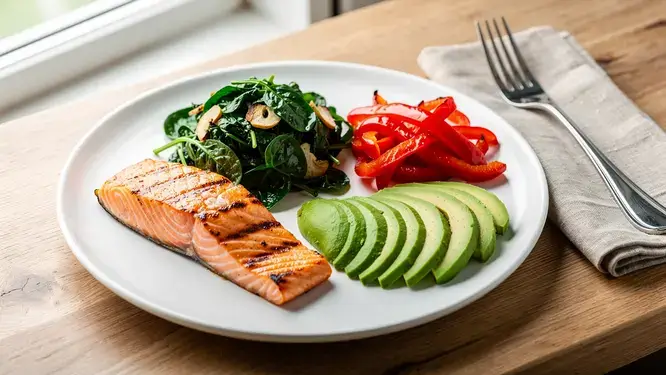
What Is the Primal Diet? Why Your Inner Caveman Might Need a Salad
Curious what is the primal diet? Discover how eating like your ancient ancestors—with a side of cheese—might energize you (and your next caveman impression).
Real-Life Fitness for Real People
Since 2024
Ready for real results? This 5 day workout plan for women is built on science, not wishful thinking—so you’ll get stronger, not just sore. See how consistency pays off!

A 5 day workout plan for women delivers results by focusing on gradual progression—making small, consistent changes so you gain strength safely and steadily. This approach helps you get stronger without overwhelming your joints or risking injury, making it ideal for long-term results.
Tracking your workouts is what separates steady progress from frustrating plateaus. Log every set, rep, and weight you use, and note your effort level on a 1–10 scale (Rate of Perceived Exertion). If a modest weight increase makes your effort spike, it’s smarter to add reps or clean up your form before loading more. Progress based on real data beats guesswork every time. For tips on building consistent habits around tracking, see our guide to sticking to a diet and workout plan.
Deload weeks are another tool most women underuse. Every few weeks, pull back your training volume or load for a short period. This gives accumulated fatigue a chance to clear, reduces injury risk, and lets your muscles and connective tissues fully adapt. Research confirms that planned deloads support steady long-term progress and fewer overuse injuries in resistance training Source: NIH — Resistance Training Progression Models.
Update your training log weekly and lean into these gradual progression strategies — your 5 day workout plan for women will stay productive and safe for months. Quality movement and consistent effort will always outperform chasing heavier weights too quickly.
The 5 5 5 30 rule is a structured warm-up protocol commonly recommended before strength training. It includes 5 minutes of light cardio, 5 minutes of dynamic stretching, 5 minutes of movement-specific drills, and 30 seconds of muscle activation holds. This sequence primes your body for heavier work and helps reduce the risk of injury.
Staying safe on a 5 day workout plan for women starts before you touch a single weight. A focused dynamic warm-up tailored to the day’s training goes a long way. On lower body days, run through leg swings, knee hugs, hip circles, and bodyweight squats. For upper body sessions, use arm circles, scapular push-ups, and band pull-aparts. Research consistently shows that dynamic warm-ups — not static stretching — deliver better injury prevention and performance in strength training Source: Journal of Strength and Conditioning Research.

When you get to your main sets, prioritize form over load. Compound lifts like squats, lunges, presses, and rows are the backbone of most effective splits — but rushing the weight up compromises technique and safety. Work at a resistance you can control cleanly for higher reps before progressing. For beginners, this usually means starting lighter than feels necessary. Real strength comes from mastering the mechanics first Source: National Strength and Conditioning Association.
Rest is just as important as the training itself. A 5-day split can quietly tip into overtraining, especially when early motivation is running high. Schedule at least two recovery days per week, and treat sleep as non-negotiable — getting enough sleep supports hormonal balance, lowers injury rates, and sharpens workout performance Source: Sleep Foundation. Gentle walking or stretching on rest days counts as active recovery, not laziness.
Finally, listen to your body’s early warning signs. Persistent soreness, nagging pain, or a noticeable drop in motivation are signals worth heeding — not pushing through. Varying your accessory exercises regularly and dialing back when needed prevents setbacks and keeps long-term consistency within reach. For more on staying on track, check out how to get more motivated for the gym.
A well-designed female workout schedule should align with your goals, recovery capacity, and real-life schedule. For a 5-day split, a common structure includes two upper body days, two lower body days, and one full-body or active recovery day — with at least two rest days spaced throughout the week. The key is balancing training frequency with sleep, nutrition, and stress management so progress stays consistent.
No matter how dialed-in your training is, nutrition does the heavy lifting when it comes to results — especially on an intensive 5 day workout plan for women. Current research suggests aiming for a moderate-to-high daily protein intake to support muscle repair and growth Source: Journal of the International Society of Sports Nutrition.

How you distribute that protein matters just as much as hitting the total. Spreading your intake across three to four evenly sized meals throughout the day maximizes muscle protein synthesis after each session and ensures you’re consistently fueled with high training volume. Studies show that spreading protein across meals — rather than loading it into one or two sittings — produces better outcomes for both strength and body composition Source: NCBI.
Don’t overlook carbohydrates. They fuel your workouts and speed up recovery. Eating a moderate carb serving before your session provides the energy you need for high-effort lifts, while post-workout carbs help replenish glycogen stores. This approach can offer improved performance and help reduce fatigue between back-to-back training days Source: NCBI – Sports Nutrition.
Hydration rounds out the picture. Drink consistently throughout the day and pay extra attention on heavy training days. Keeping electrolytes — especially sodium and potassium — in balance supports muscle function and helps prevent cramps and energy dips. Together, these strategies form a solid nutritional foundation for your 5 day workout plan for women.
You’ve probably come across bold statements like “split routines are suboptimal for 90% of people.” These sweeping claims tend to miss the point entirely. When evaluating whether a 5 day workout plan for women is right for you, the science-backed principles that actually drive results are what matter: progressive overload, appropriate training volume, consistency, and personal adaptability.
Progressive overload — gradually increasing the challenge of your workouts — is one of the most well-supported drivers of strength and muscle development. Any program, whether full-body or split-style, can be structured to support this principle. A split’s effectiveness isn’t about its format; it’s about whether it lets you train hard, recover fully, and improve week over week Source: NCBI – Evidence-based resistance training recommendations.
Training volume — total sets and reps per muscle group per week — also needs to match your goals and experience level. Beginners often thrive with fewer days or lower volume, while more advanced trainees may need higher frequency to keep making gains. Women with demanding schedules or varying recovery capacities can absolutely succeed on a 5-day split, but only when volume, intensity, and rest are calibrated to their specific needs Source: PubMed – Weekly resistance training frequency.
Generic one-size-fits-all claims ignore all of this. Instead of chasing the perfect split, ask whether your 5 day workout plan for women supports ongoing progress, suits your life, and keeps you genuinely motivated. If consistency is the struggle, a fresh approach might be all it takes. For practical ways to stay engaged with your training, see how to get more motivated for the gym.
A solid 5-day routine alternates muscle groups to allow proper recovery between sessions. Popular structures include push/pull/legs/upper/lower or chest/back/shoulders/arms/legs. What matters most is choosing a format you can sustain, one that incorporates progressive overload, and that preserves two full rest days each week.
Curious what is the primal diet? Discover how eating like your ancient ancestors—with a side of cheese—might energize you (and your next caveman impression).
Curious about the zero starch diet? Learn what you can actually eat, how to avoid salad boredom, and why potatoes are definitely not invited to this party.
A beginner swim workout turns splashing around into smart, safe exercise—even if your best stroke is “try not to panic.” Learn to swim with confidence (and laughs).