Tips
What Is the Primal Diet? Why Your Inner Caveman Might Need a Salad
Curious what is the primal diet? Discover how eating like your ancient ancestors—with a side of cheese—might energize you (and your next caveman impression).
Real-Life Fitness for Real People
Since 2024
My friend Sarah grabbed a low-fat yogurt at the store. She thought it was her new weight loss secret. I smiled, recalling my past with fad diets. I told Sarah about the macro diet for weight loss. It changed how I lost fat for good. Unlike restrictive diets, the macro diet for weight loss focuses …

My friend Sarah grabbed a low-fat yogurt at the store. She thought it was her new weight loss secret. I smiled, recalling my past with fad diets.
I told Sarah about the macro diet for weight loss. It changed how I lost fat for good. Unlike restrictive diets, the macro diet for weight loss focuses on balancing proteins, carbs, and fats instead of cutting out foods.
This approach helps your body burn fat efficiently while allowing flexibility in your meals. You can reach your goals without constantly feeling hungry.
Let’s explore how the macro diet for weight loss can transform your fat loss journey. We’ll break down the science behind macronutrients and teach you how to calculate your personal macro needs.
We’ll also share practical tips to integrate this strategy into your daily life, making weight loss both effective and sustainable.
Macronutrients are the building blocks of our diet. They include carbohydrates, proteins, and fats. These nutrients are vital for body functions and weight control.
Macronutrients provide energy in our diet. Carbs and proteins give 4 kilocalories per gram. Fats offer 9 kilocalories per gram.
The 2020-2025 Dietary Guidelines suggest a balanced intake. This includes 45-65% carbs, 10-35% protein, and 20-35% fat.
Carbs fuel our activities. Proteins support muscle health. Fats help with hormone production and nutrient absorption.
A person weighing 70 kilograms needs at least 56 grams of protein daily. This meets the minimal requirements for protein intake.
Macro-based weight loss balances nutrients for best results. Studies show both low-fat and low-carb diets can help with weight loss.
The key is finding the right balance for your body and lifestyle. Calorie restriction is important for these diets to work.
“Chronic excess energy intake from carbohydrates and fats is associated with weight gain, obesity, type 2 diabetes, and hypertension.”
Understanding macronutrients helps create a diet that supports weight loss and health. Aim to lose 1-2 pounds (0.5-1 kilograms) per week for lasting results.
A macro diet balances proteins, fats, and carbs for weight loss. It creates a calorie deficit while maintaining proper macro ratios. This approach is personalized based on activity level and body composition goals.
Start with 30% protein, 30% fat, and 40% carbs if you exercise briefly daily. This balance supports weight loss and preserves muscle mass. Adjust these percentages to fit your needs.
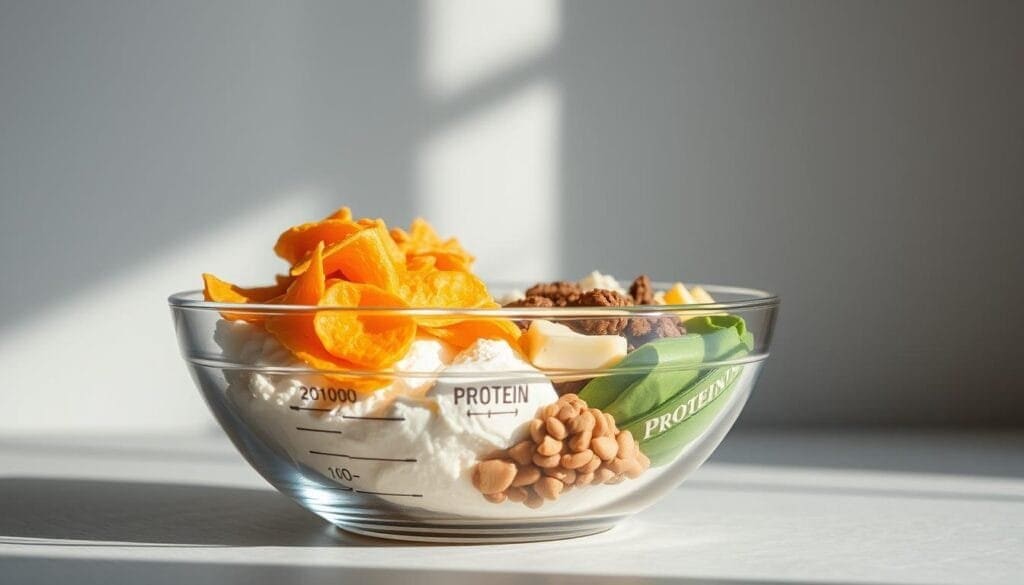
Protein is crucial for weight loss. Aim for 10-35% of daily calories from protein. Higher protein intake burns more calories during digestion than fats or carbs.
Keep fats at 20-35% of your daily calories. Choose healthy sources like avocados, nuts, and olive oil. Carbohydrates should make up 45-65% of your intake.
Focus on nutrient-dense carbs like fruits, vegetables, and whole grains. These provide essential vitamins and minerals.
| Macronutrient | Recommended Range | Calories per Gram |
|---|---|---|
| Protein | 10-35% | 4 |
| Fat | 20-35% | 9 |
| Carbohydrates | 45-65% | 4 |
Successful weight loss requires a consistent calorie deficit. Tracking macros helps achieve this while ensuring balanced nutrition. Choose nutrient-dense foods within each macro category for best results.
Personal macro ratios are key to reaching your weight loss goals. Let’s explore how to calculate them using a macro calculator.
Your calorie needs depend on age, gender, weight, height, and activity level. A lightly active person might use 10-12 calories per pound for weight loss.
For maintaining weight, a moderately active individual would use 14-16 calories per pound.

After finding your calorie needs, set your macro percentages. A common fat loss ratio is 40% protein, 40% carbs, and 20% fat.
These percentages can change based on your specific goals and preferences.
The last step is turning percentages into grams. Here’s the calorie content of each macronutrient:
If your daily goal is 2000 calories with a 40/40/20 split, aim for:
Now you’re set to start macro tracking. Stay consistent with your macro-based diet for best results.
Tracking macros can boost your weight loss journey. Let’s explore tips to make this process easier and more effective. With the right tools, you can manage your macro intake smoothly.
Macro tracking apps are essential for monitoring your food intake. MyFitnessPal and Cronometer offer large food databases and easy-to-use interfaces. These apps help you log meals and view macro breakdowns quickly.
Use a food scale for accurate measurements. This small tool can greatly improve your tracking accuracy.
Plan your meals in advance for successful macro tracking. Use glass containers for easy portion control. This saves time and helps you meet your macro goals.
Try meal delivery services with dietitian-approved options. These can simplify prep while helping you hit your macro targets.
Watch out for common tracking errors. People often forget to log snacks or misjudge portion sizes. Always measure your food, especially high-calorie items like oils and nuts.
Remember, consistency beats perfection. If you slip up, just start fresh with your next meal. With practice, tracking macros will become easier, helping you lose weight effectively.
Curious what is the primal diet? Discover how eating like your ancient ancestors—with a side of cheese—might energize you (and your next caveman impression).
Curious about the zero starch diet? Learn what you can actually eat, how to avoid salad boredom, and why potatoes are definitely not invited to this party.
A beginner swim workout turns splashing around into smart, safe exercise—even if your best stroke is “try not to panic.” Learn to swim with confidence (and laughs).