Tips
What Is the Primal Diet? Why Your Inner Caveman Might Need a Salad
Curious what is the primal diet? Discover how eating like your ancient ancestors—with a side of cheese—might energize you (and your next caveman impression).
Real-Life Fitness for Real People
Since 2024
Sarah looked at her phone, tired of counting calories. She thought, “There must be an easier way.” If you feel the same, you’re not alone. Sustainable weight loss doesn’t need to be hard. You don’t have to count every calorie. It’s okay to not track every bite. In fact, learning how to stay in a …

Sarah looked at her phone, tired of counting calories. She thought, “There must be an easier way.” If you feel the same, you’re not alone.
Sustainable weight loss doesn’t need to be hard. You don’t have to count every calorie. It’s okay to not track every bite. In fact, learning how to stay in a calorie deficit without counting calories is possible—and often more manageable for long-term success.
Your body is like a car. It needs fuel to work right. If you give it less fuel, it uses fat for energy. This happens whether you count calories or not.
Can you make a calorie deficit with simple habits? Eating better and being mindful can help. You can eat less without feeling like you’re counting all the time.
This isn’t about not eating. It’s about making healthy choices that fit your life. Let’s find ways to make losing weight easier, not harder.
First, let’s talk about what a calorie deficit is. It’s key for losing weight. Knowing this helps you lose weight in a way that lasts, without focusing too much on numbers.
A calorie deficit happens when you eat less than your body uses in a day. When you eat, your body turns food into energy. But, it doesn’t always use all that energy right away.
Any extra calories get stored as fat or carbs for later. When you eat less, your body uses stored fat for energy. This leads to weight loss.
Counting calories can be helpful but has big downsides. It’s often boring and takes a lot of time. You have to weigh food and log it on apps. This can make you give up on losing weight.
Also, calorie counts on labels and apps can be wrong by 20-30%. Your body absorbs calories differently, based on how food is cooked and your digestive system.
Counting calories too much can make you see food as just numbers. It turns meals into math problems, not enjoyable times.
Healthy weight loss is slow, about 0.5-2 pounds a week. Losing weight too fast means you’re losing water or muscle, not just fat.
Fast weight loss plans often lead to gaining back weight. This is because they’re not something you can keep doing forever.
Instead, aim for a small calorie deficit with habits you can keep for life. This way, you might lose weight slower, but it will stay off.
Mindful eating is more than just counting calories. It helps you listen to your body’s hunger and fullness signals. This way, you can eat without counting calories. It makes you enjoy your food more and eat less without feeling hungry.
Many times, we eat for reasons other than hunger. Stress, boredom, sadness, or happiness can make us want to eat. But our bodies might not need food at that moment.
To know if you’re really hungry, ask yourself these questions:
True hunger grows slowly and isn’t picky. Emotional hunger comes on fast and wants specific foods.
Eating slowly can help you eat less. Your brain takes about 20 minutes to feel full.
Mindful eating makes meals more enjoyable. It also helps you avoid eating too much and gaining weight.
Here are ways to eat slower:
The hunger-fullness scale is a great tool for mindful eating. It’s a 1-10 rating system that helps you listen to your body. It’s better than counting calories.
| Rating | Hunger Level | Physical Sensations | Ideal Action |
|---|---|---|---|
| 1-2 | Ravenous | Headache, irritability, dizziness | Eat immediately |
| 3-4 | Hungry | Empty stomach, growling | Time to eat |
| 5 | Neutral | Neither hungry nor full | Consider waiting |
| 6-7 | Satisfied | Comfortable, energized | Stop eating |
| 8-10 | Overfull | Bloated, uncomfortable | Avoid this state |
Start eating when you’re at a 3-4 and stop at a 6-7. This way, you listen to your body’s hunger signals, not just calorie counts.
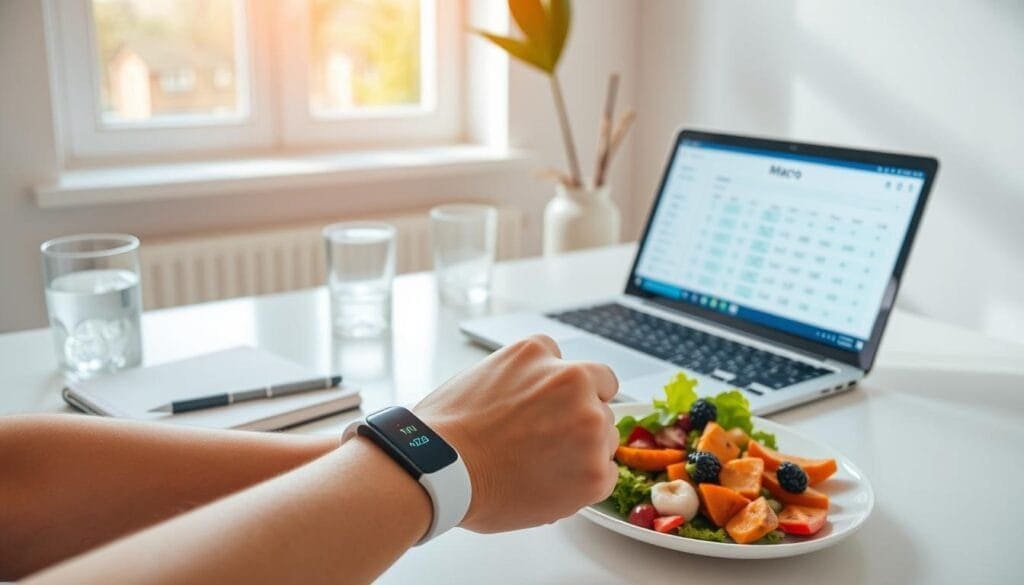
Eating while distracted can lead to eating too much. Watching TV, scrolling on your phone, or working while eating makes it hard to feel full.
To eat better, make your eating area distraction-free. Here’s how:
Mindful eating takes practice. Even noticing your eating habits in one meal a day can help a lot. It changes how you feel about food and helps with weight loss.
Choosing the right foods can help you lose weight without counting calories. Knowing which foods help with weight loss makes eating easier. It turns eating into a natural habit.
Foods with less calorie density let you eat more without gaining weight. These high volume low calorie foods have lots of water and fiber. They make you feel full by taking up space in your stomach.
Leafy greens, zucchini, and bell peppers are great for meals. Berries, apples, and watermelon are perfect for snacks. They’re sweet but low in calories. Broth-based soups can cut your calorie intake by 20% if eaten before meals.
Start lunch and dinner with a big salad or vegetable soup. This helps you eat less of the higher-calorie foods that come after.
Adding enough protein for weight loss is easy and effective. Protein makes you feel full and satisfied. Studies show eating 30% of your daily calories as protein can cut overall calorie intake by nearly 441 calories a day.
Try to eat 25-30 grams of protein at each meal. For meat lovers, a palm-sized piece of chicken, fish, or lean beef is good. Vegetarians can choose eggs, Greek yogurt, or cottage cheese. Plant-based eaters should mix legumes, tofu, tempeh, and whole grains for protein.
You don’t have to cut out fats or carbs to lose weight. It’s about choosing the right types in the right amounts. Healthy fats from avocados, nuts, seeds, and olive oil keep you full and support hormones.
Complex carbs like sweet potatoes, quinoa, and oats give you steady energy and fiber. They digest slowly, preventing hunger.
Use visual cues instead of measuring. A thumb-sized portion of fats and a cupped handful of complex carbs are good at most meals.
Meal planning doesn’t need to be about counting calories. Focus on vegetables, lean protein, and healthy fats and carbs in moderation.
Use a simple template: half your plate for veggies, a quarter for protein, and the last quarter for complex carbs or more veggies. Add a bit of healthy fat for flavor and fullness.
When shopping, stick to the store’s perimeter for whole foods. Prepare extra protein and veggies for quick, healthy meals.
Learning to control portions without measuring is freeing. It helps you manage weight without apps or scales. You can eat well and feel good without stress. Here are some easy ways to make portion control a habit.
Your hand is a great tool for portion control. Use your palm for protein, one palm for each meal. Your cupped hand is good for carbs, and your thumb for fats.
This method is perfect because it fits your size. No measuring cups needed! It helps you lose weight without counting calories.
The plate method makes portion control easy. Just divide your plate like this:
This way, you get balanced meals and control calories. Eating more veggies means you’re full with fewer calories.
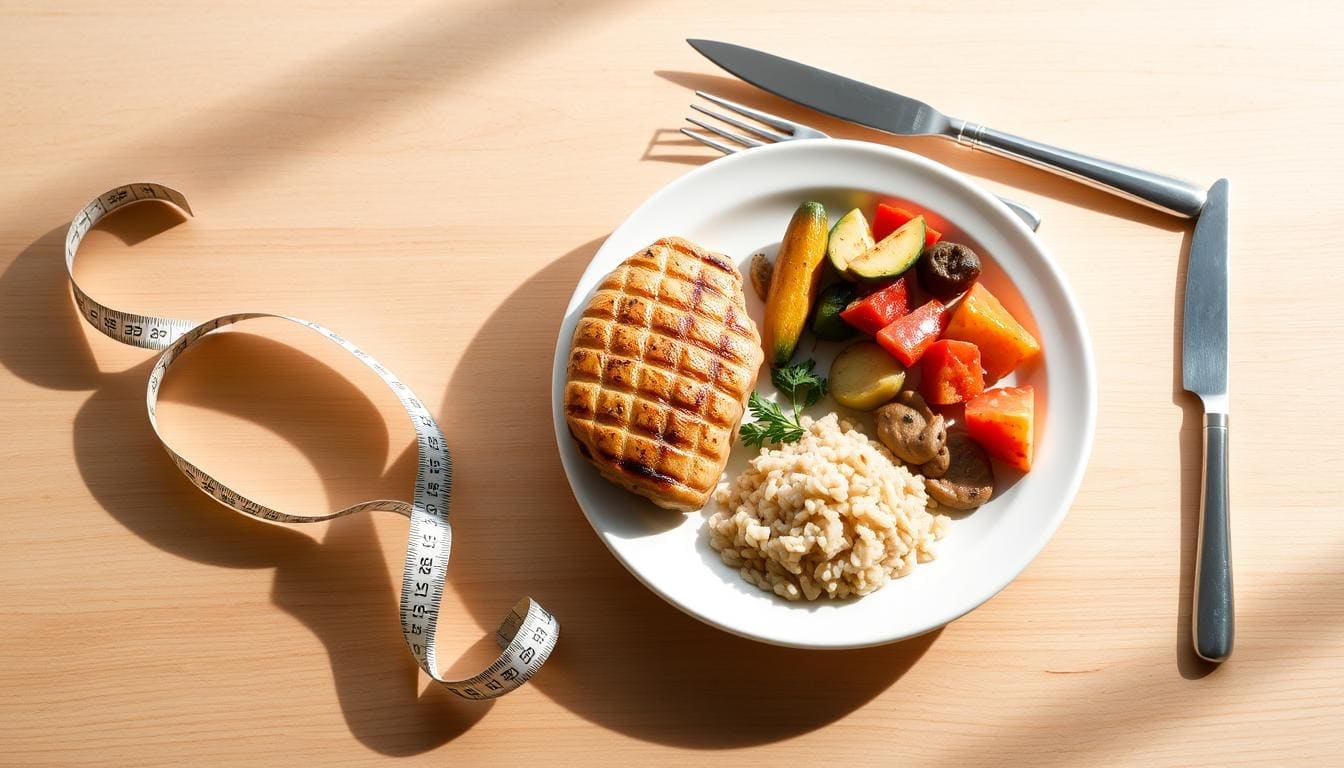
Your kitchen affects how much you eat. Using smaller plates makes you feel full with less food. A big plate makes a small portion look small.
Put snacks in small containers. Eat in the kitchen, not at the table. These tricks help you control portions without measuring.
Restaurants give you too much food. Share meals or box half for later. Order appetizers as your main for smaller portions.
Listen to your hunger when eating out. Take breaks and stop when you’re just full. This way, you eat well without counting calories.
Diet changes are key for weight loss. But, adding physical activity can help a lot. Studies show that exercise and eating mindfully work better together than diet alone. It’s all about finding fun ways to move more.
Non-exercise activity thermogenesis is the energy you burn doing daily things. This includes walking, standing, and doing chores.
Here are some easy ways to increase your NEAT:
Even a little bit of extra movement can add up. A 10-minute walk at lunch can burn extra calories without feeling like a workout.
The best exercise is the one you’ll keep doing. Many people quit because they don’t like the activity.
Try different things until you find something fun. It could be dancing, hiking, or team sports. The goal is to enjoy moving, not to dread it.
Strength training helps you burn more calories. When you build muscle, your body burns more calories, even when you’re not moving.
You don’t need to do a lot to start. Start with simple exercises like:
Do 2-3 strength sessions a week. Focus on big muscle groups. As you get stronger, add more weight or resistance.
Long-term success comes from making movement a part of your life. Start small and aim for achievable goals.
Try habit stacking by linking new habits to things you already do. For example, stretch after brushing your teeth or walk after dinner.
Consistency is more important than how hard you exercise. A daily 20-minute walk is better than an exhausting workout you dread.
By enjoying your movement and slowly doing more, you can lose weight naturally. This way, you don’t have to count calories.
Many daily habits can help or hurt your weight loss without you knowing. Diet and exercise get most of the attention. But, sleep, stress, and social habits are just as important for losing weight.
Poor sleep hurts your weight loss goals. It makes you hungry and crave more food.
Sleep deprivation messes with hunger hormones. It makes you want to eat more and feel less full. This can add a lot of extra calories to your day.
Try to sleep 7-9 hours a night. Go to bed and wake up at the same time. Keep your room cool and dark. Avoid screens before bed. These habits help you sleep well and lose weight without counting calories.
Too much stress can stop you from losing weight. It makes your body produce more cortisol. This hormone makes you store more belly fat and crave bad foods.
To stop stress eating, try these quick tips:
Eating out can be hard to stay healthy. But, you can enjoy these times without ruining your diet.
Eat a small snack before going out to eat. Look for healthy dishes on menus. Enjoy the company and talk more than you eat.
The scale can be tricky and often makes you feel bad. Instead, track things that show you’re getting healthier.
| Progress Indicator | How to Track | Why It Matters |
|---|---|---|
| Energy Levels | Daily rating (1-10) in journal | Shows how well your body is working |
| Clothing Fit | Monthly try-on of benchmark clothing | Shows how your body is changing |
| Physical Abilities | Track walking distance, stairs climbed, etc. | Shows you’re getting stronger |
| Mood and Mental Clarity | Weekly reflection on overall wellbeing | Shows your hormones are balanced |
It’s easy to eat less without counting every bite. You can make simple habits to help you. These habits make eating better and losing weight easier.
This way is simple. You don’t need apps or scales. Your hand shows you how much to eat. Your plate helps you balance food. Your hunger tells you when to stop.
Weight loss is a slow journey. Small steps are better than big ones. Start with one or two new habits. Like eating more protein or using the plate method.
Long-term weight control is about lifestyle, not just numbers. These tips help you make healthy choices. You’ll lose weight, feel more energetic, and be free from counting.
Curious what is the primal diet? Discover how eating like your ancient ancestors—with a side of cheese—might energize you (and your next caveman impression).
Curious about the zero starch diet? Learn what you can actually eat, how to avoid salad boredom, and why potatoes are definitely not invited to this party.
A beginner swim workout turns splashing around into smart, safe exercise—even if your best stroke is “try not to panic.” Learn to swim with confidence (and laughs).