Tips
What Is the Primal Diet? Why Your Inner Caveman Might Need a Salad
Curious what is the primal diet? Discover how eating like your ancient ancestors—with a side of cheese—might energize you (and your next caveman impression).
Real-Life Fitness for Real People
Since 2024
As a college student, I remember the excitement of campus life, but it often came with a challenge: staying healthy while juggling classes, social events, and part-time jobs. It’s easy to grab a quick snack or skip meals, but neglecting your nutrition can affect both your body and brain, leading to low energy and poor …

As a college student, I remember the excitement of campus life, but it often came with a challenge: staying healthy while juggling classes, social events, and part-time jobs. It’s easy to grab a quick snack or skip meals, but neglecting your nutrition can affect both your body and brain, leading to low energy and poor academic performance.
If you’re wondering how to maintain a healthy diet in college, you’re not alone. College campuses offer a variety of food options, but making the right choices isn’t always easy. According to studies, about 70% of college students struggle to eat healthily due to busy schedules and limited time. This guide is here to help you navigate the campus dining scene, offering practical tips on meal planning, smart snack choices, and building a daily routine that supports your overall health.
By focusing on nutrient-dense foods, staying hydrated, and balancing your meals, you can fuel your body and brain for success. Whether you’re grabbing breakfast on the go or navigating the dining hall, this guide will cover it all. Stay tuned for tips on everything from breakfast ideas to grocery shopping like a pro!
Planning your meals in college can be a game-changer for your health and energy levels. By setting up a structured eating plan, you can ensure that you’re fueling your body for both academic and social activities.
A consistent daily routine helps streamline meal times and reduces stress during busy schedules. Planning your day allows you to set regular times for meals and light snacks, which benefits both your body and brain. This structure can prevent impulsive junk food choices, especially during stressful moments.
Focus on meals rich in nutrients to keep your energy levels steady. Include fresh fruits, vegetables, lean proteins, and whole grains in your diet. Practical steps like creating a daily checklist for meals and staying hydrated throughout the day can make a big difference. Trusted sources emphasize that healthy eating starts with planning ahead.
| Food Type | Healthy Options | Unhealthy Options |
|---|---|---|
| Fruits | Apples, bananas, berries | Canned fruits with added sugar |
| Proteins | Grilled chicken, fish, beans | Fried meats, processed sausages |
| Grains | Whole wheat bread, oatmeal | White bread, sugary cereals |
Consistency is key to preventing unhealthy choices. With a little planning, you can enjoy a balanced diet that supports your overall well-being.
Keeping your nutrition on track while managing college life can be challenging, but with the right approach, it’s definitely achievable. Balancing your macronutrient intake is a key part of maintaining energy and focus throughout the day.
A well-rounded diet should include a mix of carbohydrates, proteins, and fats. Pairing whole grains with lean proteins and fresh vegetables ensures you’re getting the nutrients your body needs. This balance helps sustain energy levels during long study sessions and active college days.
Studies show that students who balance their macronutrient intake tend to have better overall health and mental clarity. Experimenting with different food combinations can help you find the perfect balance that works for your body and lifestyle.
Starting your day with a nutritious breakfast can make all the difference in your college life. It not only boosts your energy but also helps you stay focused throughout the day. A well-chosen breakfast sets the tone for making healthier food choices later in the day.
Some of my go-to breakfast options include overnight oats, yogurt parfaits, and whole-grain toast. These are easy to prepare and packed with nutrients. For example, combining Greek yogurt with fresh fruit and a sprinkle of granola makes for a satisfying and quick meal.
Whole grains and lean proteins are essential for sustained energy. Foods like oatmeal, whole-grain cereals, and eggs provide a steady release of energy, helping you avoid mid-morning slumps. Pairing these with fruits or vegetables adds fiber and essential vitamins.
| Breakfast Option | Key Nutrients | Benefits |
|---|---|---|
| Overnight Oats | Fiber, Protein | Supports digestion and energy |
| Yogurt Parfait | Protein, Calcium | Boosts muscle and bone health |
| Whole-Grain Toast | Fiber, Vitamins | Provides long-lasting energy |
Prepping breakfasts in advance can save time during busy weeks. Consider making a batch of overnight oats or smoothie packs on Sundays. This way, you ensure you start each day with a nutritious meal, even when you’re in a hurry.
Walking into a college dining hall can feel overwhelming with all the options available. But with a little strategy, you can make choices that support your energy and overall well-being. I’ve learned to approach the dining hall with a clear plan to find the healthiest options.
The salad bar is a great place to start. It’s loaded with fresh fruits and vegetables, which are perfect for a nutrient-packed meal. I opt for oil and vinegar dressing instead of creamy ones to keep it light. Adding lean proteins like grilled chicken or beans makes my salad more satisfying and filling.
Fried foods and sugary snacks might taste good, but they can lead to energy crashes later. I always check how foods are prepared. Grilled options are a better choice than fried ones. For example, choosing grilled chicken over fried chicken makes a big difference in keeping my meal balanced.

By focusing on these strategies, I can enjoy meals that fuel my body without sacrificing taste. Staying mindful of portion sizes and ingredients helps me make choices that align with my health goals.
Staying hydrated is crucial for both physical and mental performance, especially during busy college days. Drinking enough water supports energy levels, skin health, and even focus. I aim to drink at least 2-3 liters of water daily, which includes fluids from foods like fruits and vegetables.
A reusable water bottle has become my daily essential. It’s convenient, eco-friendly, and helps me track my water intake. Plus, it’s always there to remind me to take a sip, even when I’m on the go.
To avoid excess sugar, I opt for unsweetened teas or low-calorie beverages. Replacing sugary drinks with water has helped me stay energized and avoid unnecessary snacking. Proper hydration keeps me satisfied throughout the day.
| Drink Type | Healthy Choice | Unhealthy Option |
|---|---|---|
| Soda | Sparkling water with natural flavor | Regular soda with high sugar |
| Juice | 100% fruit juice without added sugar | Sweetened fruit juices |
| Coffee | Black coffee or with a splash of milk | Coffee with sugary syrups |
By choosing water and healthier beverages, I maintain my energy levels and support my overall well-being.
As a busy college student, finding snacks that are both convenient and nutritious can be tough. However, with a little planning, you can keep your energy levels steady and your taste buds happy.
I always keep a small bag of healthy snacks in my backpack. It’s packed with options like fresh fruit, a handful of nuts, or a pre-packed rice cake. These snacks are not only satisfying but also low in sugar, making them perfect for busy days.
Having easy access to these snacks helps me maintain steady energy levels between classes. They’re practical for busy college days and help prevent impulsive purchases of unhealthy snacks. Plus, they’re convenient and offer great nutritional benefits to keep me focused throughout the day.
| Healthy Snack | Why It’s Good |
|---|---|
| Fresh Fruit | Natural sugars and fiber for sustained energy |
| Nuts | Rich in healthy fats and protein |
| Rice Cakes | Low-calorie and versatile for toppings |
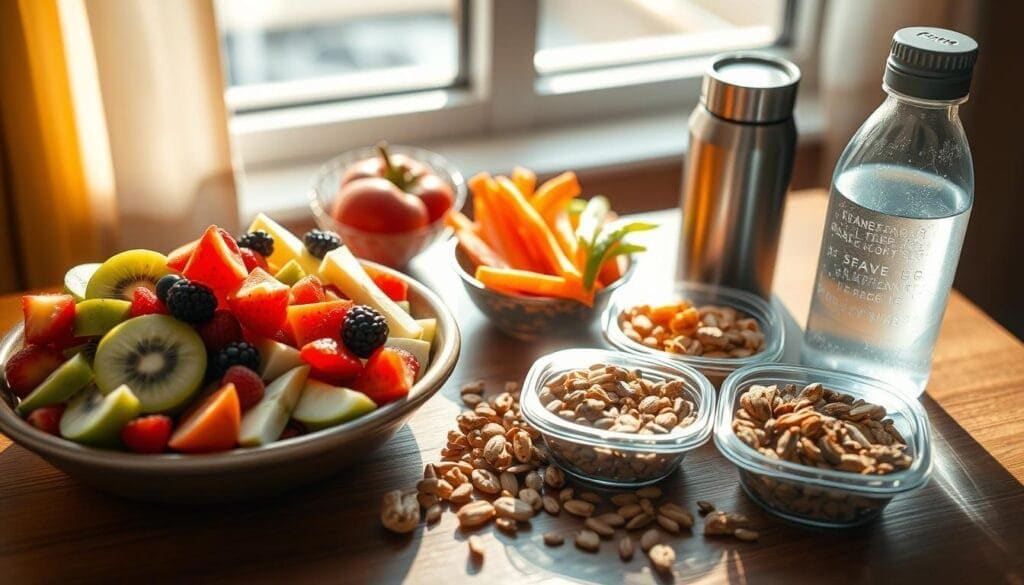
These snacks are easy to carry and provide the nutrients I need to stay focused and energized. They’re the perfect solution for a busy college student like me!
Developing a solid meal plan and smart grocery shopping habits can make a huge difference in maintaining your energy and focus during college. By organizing your shopping and cooking, you can save time, money, and ensure you’re fueling your body with the right foods.
Starting with a well-thought-out grocery list is key to healthy eating. I begin by checking what I already have in my pantry and fridge to avoid duplicates. Then, I plan my meals for the week, focusing on fresh fruits, vegetables, and nutrient-rich ingredients. This approach helps me avoid impulse buys and stick to my budget.
Meal prepping at the beginning of the week is a game-changer. It ensures I always have a healthy meal or snack ready, even on the busiest days. I allocate a few hours on Sundays to prepare meals, portion them out, and store them in the fridge or freezer.
This strategy not only saves time during the week but also helps me avoid unhealthy fast food options. Plus, it’s budget-friendly since I can buy ingredients in bulk and plan meals without waste.
By combining smart grocery shopping with meal prep, I maintain my energy levels and support my overall well-being. Experimenting with different recipes keeps things interesting and ensures I never get bored with my meals.
Embracing a balanced lifestyle as a college student is all about making small, consistent changes that add up over time. By focusing on planning your meals, choosing nutrient-rich foods, staying hydrated, and selecting smart snacks, you can maintain your energy and support your overall well-being.
Remember, it’s all about balance and flexibility. Whether you’re grabbing a quick meal or reaching for a snack, every choice counts. Limit sugary options and opt for fresh fruits or nuts to keep your energy levels steady. Don’t let a busy schedule derail your goals—take charge of your nutrition and make choices that fuel your body and mind. With a little creativity and planning, you can thrive, even on the most demanding college schedule.
Curious what is the primal diet? Discover how eating like your ancient ancestors—with a side of cheese—might energize you (and your next caveman impression).
Curious about the zero starch diet? Learn what you can actually eat, how to avoid salad boredom, and why potatoes are definitely not invited to this party.
A beginner swim workout turns splashing around into smart, safe exercise—even if your best stroke is “try not to panic.” Learn to swim with confidence (and laughs).