Tips
What Is the Primal Diet? Why Your Inner Caveman Might Need a Salad
Curious what is the primal diet? Discover how eating like your ancient ancestors—with a side of cheese—might energize you (and your next caveman impression).
Real-Life Fitness for Real People
Since 2024
Looking for the best diet for men over 50? Get expert-backed tips, food swaps, and practical plans. Eat well, dodge dad jokes, and age with swagger—see how!
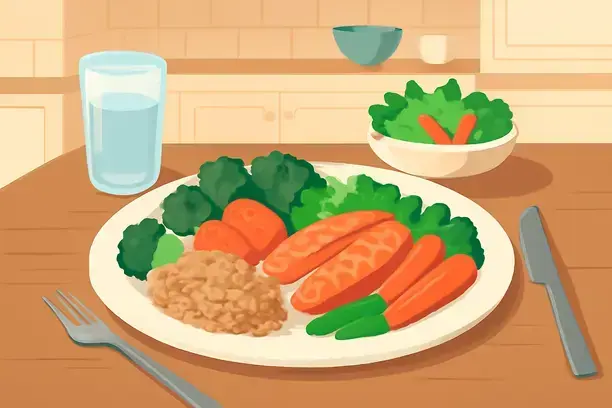
Diet for men over 50 calls for a unique approach—focusing on heart health, muscle preservation, and energy—so you stay strong, sharp, and active as you age. The right diet fits your lifestyle and health goals without causing unnecessary stress.
Disclosure: This article contains affiliate links. We may earn a commission at no extra cost to you.
Men over 50 benefit most from diets that promote heart health, cognitive function, muscle preservation, and metabolic balance. Choosing the right eating pattern depends on your personal health goals and any medical conditions you’re managing.
The Mediterranean diet consistently ranks as one of the most heart-healthy and sustainable eating patterns for men over 50. It focuses on whole plant foods, moderate fish and poultry, healthy fats—especially olive oil—and limited processed foods.
Studies link this diet to lower cardiovascular and metabolic disease risk, as well as longevity benefits Source: Harvard Health.
For practical meal ideas, check out our Mediterranean diet daily menu sample.
The DASH (Dietary Approaches to Stop Hypertension) diet is designed primarily to support heart and blood pressure health. It emphasizes fruits, vegetables, low-fat dairy, lean proteins, and reduced sodium.
Multiple trials confirm its effectiveness in lowering blood pressure, especially in aging adults Source: National Heart, Lung, and Blood Institute.
The MIND diet combines elements of both DASH and Mediterranean diets, targeting brain health and the reduction of dementia risk. It focuses on leafy greens, berries, nuts, olive oil, whole grains, and fish, while limiting red meat and sugar.
Research suggests adherence to the MIND diet slows cognitive decline with age Source: Alzheimer’s Society.
Learn more about plant-forward eating with our guide on easy plant-based meals for better health.
Protein needs often rise with age to fight muscle loss. Higher-protein diets—whether flexibly modified or macro-based—promote muscle mass retention, better satiety, and improved metabolism.
They range from power breakfasts to balanced macro-focused plans.
For easy macro-focused meal ideas with higher protein, see our balanced high-protein meal ideas.
Intermittent fasting, including popular 16:8 or 5:2 patterns, cycles between eating and fasting. Evidence shows IF can assist with weight loss, improve insulin sensitivity, and reduce inflammation when paired with nutritious foods.
This approach is especially helpful for men over 50 facing weight or metabolic plateaus Source: Mayo Clinic.
Low-carb and ketogenic diets reduce sugars, grains, and starches to encourage fat burning. They may benefit men over 50 seeking rapid improvements in weight and blood sugar control.
That said, they require careful micronutrient and fiber management for safety.
If you want a quick-start, low-carb plan that skips calorie counting and heavy prep, the Rapid Soup Diet system supports fast, simple fat loss—especially for men 50+ who want results without overwhelm.
To personalize your eating plan, see our guide on finding the right diet for your body. The best diet is one that fits both your health needs and your lifestyle for sustainable results.
Starting a new diet after 50 requires caution, especially if you’re managing chronic illnesses or taking ongoing prescriptions. Here are the key safety considerations:

Maintain an up-to-date medication and supplement list and review it with your healthcare team. If you experience symptoms like muscle pain, palpitations, confusion, or fatigue, stop the diet and seek care promptly.
Stop dietary changes immediately and seek medical advice if you develop:
Those with complex health conditions or multiple medications should consult physicians before altering diet plans. Small, gradual changes are safer than drastic shifts for many men over 50.
If you want a structured, gentle start with clear instructions, consider the 14-Day Rapid Soup Diet designed for adults 50+, emphasizing simplicity and control.
Focus on maintaining balanced nutrition and gradual improvements to reduce health risks associated with aggressive dieting.
Most men over 50 need between 2200 and 2800 calories daily to maintain weight, depending on height, body composition, and physical activity. Less active men or those with slower metabolism lean toward the lower end, while active or larger-framed men may require more.
Consulting a healthcare professional is recommended, especially when managing health conditions or medications.
For weight loss, reducing 300–500 kcal per day safely yields about 0.5 to 1 pound lost weekly. Avoid extremely low-calorie diets without medical supervision to prevent muscle and nutrient losses—which are especially critical to avoid in this age group.
Diabetes-friendly meal plans recommend spreading carbohydrates evenly and pairing them with protein and healthy fats to stabilize blood sugar Source: CDC.
Rotate protein sources like chicken, fish, tofu, and lean beef. Swap whole grains with sweet potato, farro, or brown rice as preferred.
Men with low activity or weight loss goals can reduce starches and increase vegetables. Diabetics should focus on low glycemic index foods and avoid sugary drinks or snacks Source: American Diabetes Association.
Explore balanced meal ideas with our collection of healthy meals for the month.
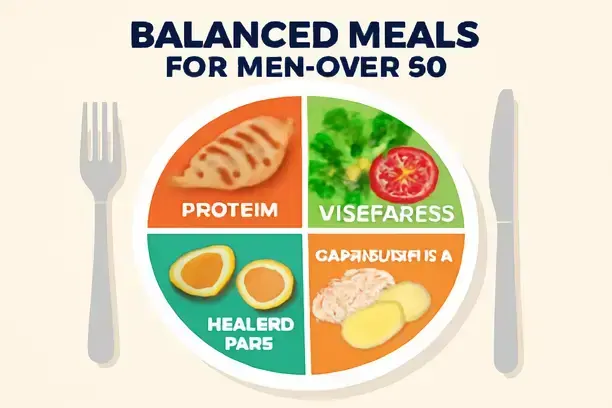
For those who prefer not to count calories, use your hand and plate as natural guides:
Adjust portions based on your hunger, activity level, and goals. This simple method supports balanced eating without constant tracking Source: FitSero.
Tip: Cook double portions at dinner for next-day lunches or use slow cookers for convenience.
For more ideas, visit our healthy family meals for weight loss—many are adaptable for men over 50.
Supplements may be helpful for men over 50 who have trouble getting enough vitamin D, B12, or calcium from food. However, whole foods should remain the foundation. Speak with your doctor before starting any supplements, especially if you take prescription medications.
Moderate alcohol intake—up to one drink daily—may fit some diets such as Mediterranean, but excess can raise blood pressure and interfere with medications. Always discuss your alcohol intake with your healthcare provider if you have heart or liver concerns or take prescription drugs.
Curious what is the primal diet? Discover how eating like your ancient ancestors—with a side of cheese—might energize you (and your next caveman impression).
Curious about the zero starch diet? Learn what you can actually eat, how to avoid salad boredom, and why potatoes are definitely not invited to this party.
A beginner swim workout turns splashing around into smart, safe exercise—even if your best stroke is “try not to panic.” Learn to swim with confidence (and laughs).