Tips
What Is the Primal Diet? Why Your Inner Caveman Might Need a Salad
Curious what is the primal diet? Discover how eating like your ancient ancestors—with a side of cheese—might energize you (and your next caveman impression).
Real-Life Fitness for Real People
Since 2024
Living with celiac disease or choosing a gluten-free lifestyle can be tough. But, the right celiac diet plan can help you thrive. About 1% of people worldwide have celiac disease. The need for gluten-free foods has grown a lot because of more people being sensitive to gluten. A good gluten-free meal plan is key to …
Living with celiac disease or choosing a gluten-free lifestyle can be tough. But, the right celiac diet plan can help you thrive. About 1% of people worldwide have celiac disease. The need for gluten-free foods has grown a lot because of more people being sensitive to gluten.
A good gluten-free meal plan is key to managing symptoms and boosting health. It’s not just about avoiding gluten. It’s about making a balanced and nutritious diet that fits your needs.
Gluten-related disorders have jumped by 400% in 50 years. So, having a gluten-free diet that’s tailored to you is more important than ever. We’ll look at gluten intolerance, the benefits of a gluten-free diet, and the challenges of sticking to it.
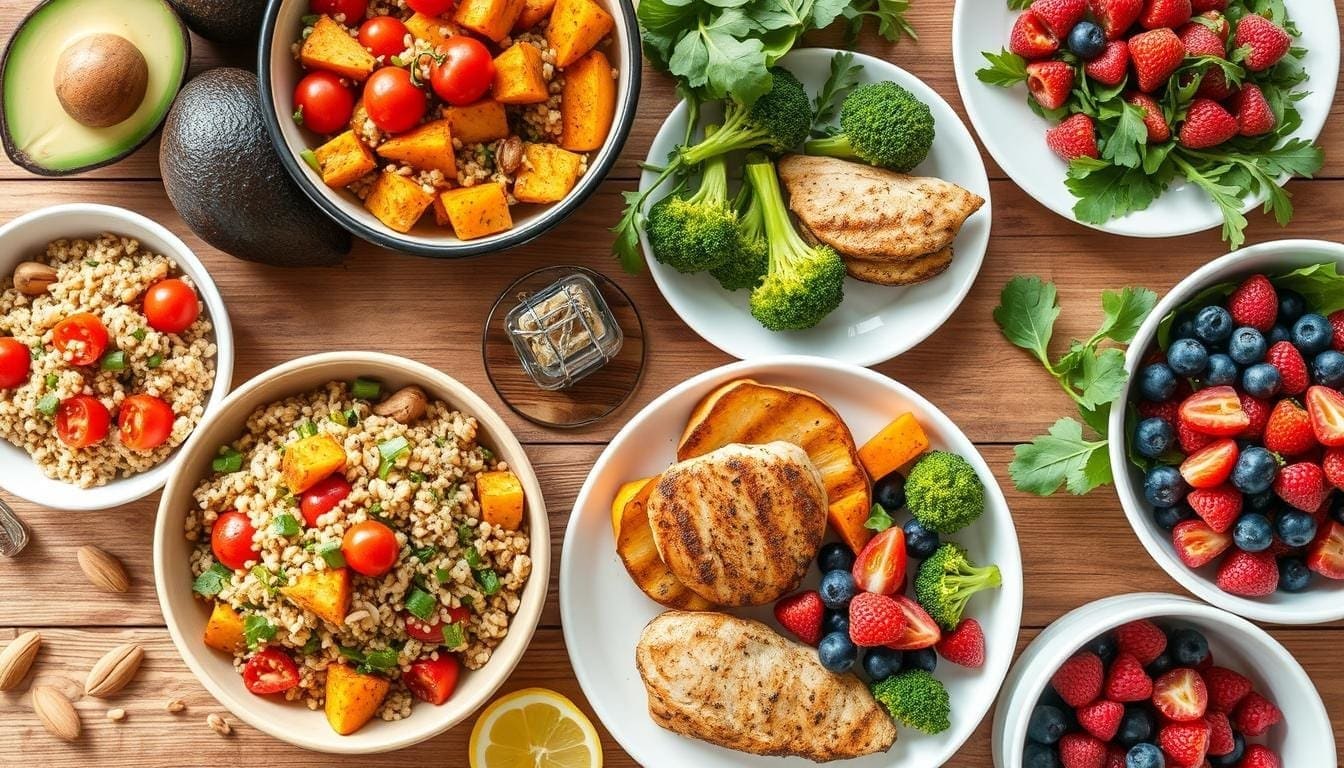
Whether you want to lose weight, gain muscle, or improve flexibility and recovery, a gluten-free diet can help. By mixing gluten-free whole grains, lean meats, and healthy fruits and veggies, you can reach your health goals.
Managing celiac disease requires a well-planned gluten intolerance diet. It’s important to avoid trigger foods and make sure you get enough nutrients. About 1 in 100 people worldwide have celiac disease. In the United States, only 17% of those with it are diagnosed.
A gluten-free diet means avoiding foods with gluten, found in wheat, barley, and rye. You should steer clear of regular bread, cereals, and pastas. Even some processed foods, like cookies and cakes, might have gluten. Always check food labels and choose products labeled as gluten-free to avoid cross-contamination.
People with celiac disease often don’t absorb nutrients well, leading to vitamin and mineral deficiencies. Eating a balanced diet rich in whole, nutrient-dense foods can help. By understanding your diet needs and making smart choices, you can manage your condition and stay healthy.
| Foods to Avoid | Safe Alternatives |
|---|---|
| Conventional wheat-based breads | Gluten-free breads made from rice, corn, or quinoa |
| Regular cereals | Gluten-free cereals made from rice, corn, or gluten-free oats |
| Pastas | Gluten-free pastas made from rice, quinoa, or corn |
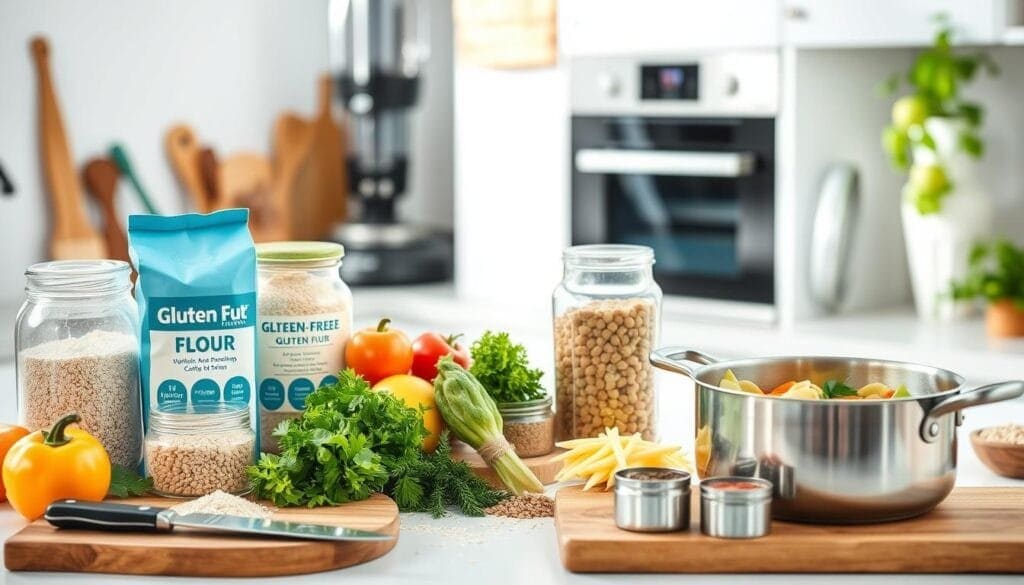
To set up a gluten-free kitchen, you need the right gluten-free kitchen essentials. This includes a dedicated space to avoid cross-contamination. You also need a well-stocked pantry and a variety of celiac-friendly recipes. Creating a gluten-free kitchen is not hard or expensive. With some planning and creativity, you can make a kitchen that’s safe and functional for those with celiac disease.
Key components include a separate cooking area, utensils, and storage containers to prevent cross-contamination. Make sure your pantry has gluten-free staples like rice, quinoa, and gluten-free flours. There are many celiac-friendly recipes to try, including gluten-free bread, pasta, and baked goods.
Don’t Miss:
It’s also important to know how to read food labels and identify gluten sources. Be aware of hidden gluten in foods like malt, barley, and rye. Knowing how to avoid cross-contamination is key. By following these tips and stocking your kitchen with the right gluten-free kitchen essentials, you can create a safe space for cooking and eating gluten-free meals.
With a little planning and creativity, you can make a gluten-free kitchen that’s safe and functional. Stock your kitchen with the right gluten-free kitchen essentials and try different celiac-friendly recipes. This way, you can enjoy delicious and safe meals without worrying about gluten contamination.
Creating a weekly meal plan is key for a balanced gluten-free diet. With some planning, you can get all the nutrients you need. Plus, you’ll enjoy tasty gluten-free dishes. Meal planning saves time, cuts down on waste, and helps you make healthy choices.
A good meal plan should have gluten-free options for every meal. Start by using your favorite gluten-free foods like fruits, veggies, lean proteins, and whole grains. Try meal prepping on weekends or one day a week. This makes healthy eating simpler and more convenient.
Here are some tips for planning your meals:
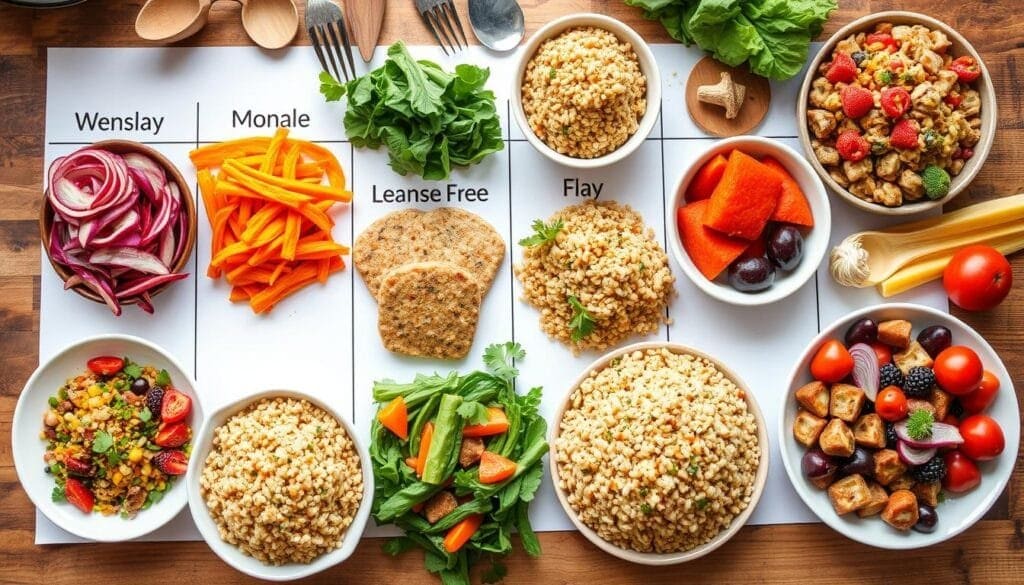
By using these tips and adding gluten-free menu ideas to your meal planning, you can create a balanced and tasty weekly meal plan. It will meet your dietary needs and preferences.
| Meal | Gluten-Free Options |
|---|---|
| Breakfast | Gluten-free oatmeal, scrambled eggs, fresh fruit |
| Lunch | Grilled chicken salad, gluten-free wraps, quinoa bowls |
| Dinner | Grilled salmon, roasted vegetables, brown rice |
Managing a gluten sensitivity meal plan starts with smart shopping. Grocery stores now have many gluten-free options. It’s key to know how to shop well.
First, learn to read food labels. Look for gluten-free logos and check the ingredients for gluten. Also, choose naturally gluten-free foods like veggies, fruits, and nuts.
For saving money, try these tips. Buy in bulk, use coupons, and pick seasonal produce. Plan meals with gluten-free foods like legume pasta and quinoa.
| Tips | Benefits |
|---|---|
| Buy in bulk | Save money on staples like rice and quinoa |
| Use coupons | Get discounts on gluten-free products |
| Purchase seasonal produce | Enjoy fresh and affordable fruits and vegetables |
Smart shopping makes your gluten-free meal plan easier and cheaper. Always choose certified gluten-free products. Be careful of gluten in other foods.
For those with celiac disease, gluten-free eating can be tough, dining out included. About 1 in 133 people in the U.S. have celiac disease. Also, 30% of Americans are trying to cut down on gluten. It’s key to be ready and have a plan for social events and eating out.
When you’re out to eat, finding gluten-free options is a must. About 85% of restaurants offer gluten-free choices. But, cross-contamination is a big worry. A study found that 20.6% of gluten-free foods have gluten from cross-contamination.
To have a good time eating out, here are some tips:
Also, using apps like “Find Me Gluten-Free” can help find safe places to eat. This way, people with celiac disease can feel more at ease when dining out and eating gluten-free.
| Restaurant Type | Gluten-Free Options | Cross-Contact Risk |
|---|---|---|
| Dedicated Gluten-Free | High | Low |
| Non-Dedicated Gluten-Free | Medium | High |
Following a gluten-free diet means focusing on nutrition. It’s key to get all the nutrients you need. A well-planned gluten-free diet can keep you healthy. Celiac diet guidelines say to eat a variety of foods to get all nutrients.
To have a nutritionally balanced diet, eat fruits, veggies, lean proteins, and whole grains like rice, quinoa, and corn. Also, be careful to avoid gluten cross-contamination.
Some important nutrients might be missing in a gluten-free diet. These include fiber, iron, and B vitamins. Eating foods rich in these or taking supplements, after a doctor’s advice, is key. A balanced diet with gluten-free foods ensures you get all nutrients.
Always talk to a healthcare professional before taking supplements. They can spot any nutritional gaps and suggest the right supplements. This ensures you get all the nutrients you need.
| Nutrient | Food Sources | Supplementation |
|---|---|---|
| Fiber | Fruits, vegetables, whole grains | Psyllium, methylcellulose |
| Iron | Red meat, poultry, fish, beans | Ferrous sulfate, ferrous gluconate |
| B Vitamins | Meat, poultry, fish, whole grains | B complex supplements |
By following celiac diet guidelines and focusing on nutrition, you can keep your diet healthy and balanced while avoiding gluten.
Starting your celiac diet plan and gluten-free living journey is a big step. It shows you’re taking charge of your health. It might feel tough at first, but it opens up a world of new foods and recipes.
See this change as a chance to focus on your health and happiness. Surround yourself with people who support you. They can help you through this journey.
Living with celiac disease can be easy and rewarding. There are many tasty, healthy gluten-free foods out there. Enjoy trying new things and finding your favorite dishes.
Your health is important, and it’s worth the work. By sticking to a good celiac diet plan, you can feel great again. Live your life to the fullest.
Curious what is the primal diet? Discover how eating like your ancient ancestors—with a side of cheese—might energize you (and your next caveman impression).
Curious about the zero starch diet? Learn what you can actually eat, how to avoid salad boredom, and why potatoes are definitely not invited to this party.
A beginner swim workout turns splashing around into smart, safe exercise—even if your best stroke is “try not to panic.” Learn to swim with confidence (and laughs).