
Tips
What Is the Primal Diet? Why Your Inner Caveman Might Need a Salad
Curious what is the primal diet? Discover how eating like your ancient ancestors—with a side of cheese—might energize you (and your next caveman impression).
Real-Life Fitness for Real People
Since 2024
Discover effective calisthenics for seniors designed to improve strength, balance, and mobility safely. Learn expert tips and easy routines to stay active with confidence.
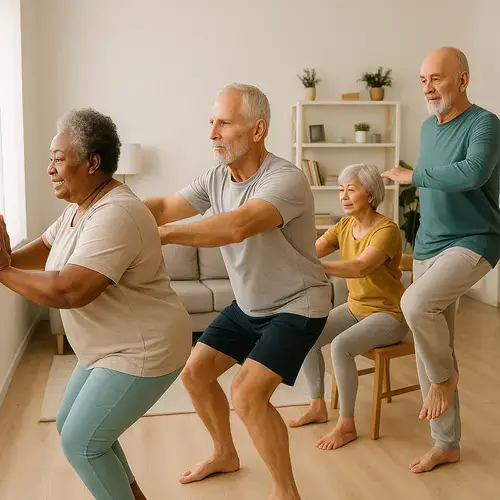
Calisthenics for seniors offers a simple and effective way to stay strong, steady, and independent—without requiring long or complicated workouts. Good news: you can build real strength and balance with simple movements, right at home, in just minutes a day.

Disclosure: This article contains affiliate links. We may earn a commission at no extra cost to you.
Calisthenics gives seniors a practical, accessible way to build strength, balance, and mobility using just your own bodyweight. But here’s what really matters: starting with a proper warm-up. You’ll prepare your body, reduce injury risk, and honestly just feel better once you get moving.
Spend about five minutes on gentle, full-body movements to increase blood flow and loosen up your joints. Try two rounds of these:
Once you’re warmed up, do 8–10 reps of mini-squats—only as low as feels comfortable—and a few wall push-ups with a slow, controlled tempo. This primes your muscles and helps reduce fall risk before you tackle the main exercises.
Let’s break down the core movements that’ll help you build strength safely and effectively.
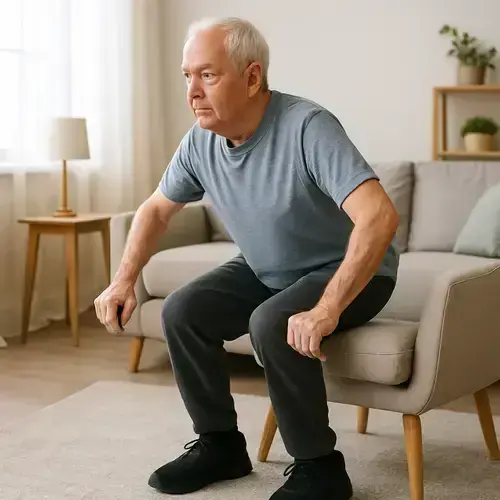
You might also want to explore isometric holds—static exercises that build strength without movement. Wall sits, modified plank holds against a wall or countertop, and seated static presses are all excellent options for seniors. Build endurance gradually, prioritize form over duration, and don’t push yourself to hold positions too long too soon.
Here’s a general rule: move slowly and deliberately, maintain correct posture, and only progress when your basic movements feel stable and pain-free. If you’re new to exercise or returning after a break, it’s smart to check with your healthcare provider to make sure your routine suits your health status (Source: CDC).
Consistency with these exercises builds strength, confidence, and independence over time. If you’re looking for tailored, joint-friendly routines specifically designed for adults 40 and up, programs like the follow-along 7-minute routines for strength and mobility offer accessible sessions that require no equipment or gym visits.
Calisthenics isn’t just popular—it’s backed by solid evidence. Studies show bodyweight exercises help older adults maintain muscle mass, bone density, balance, and functional independence. The American College of Sports Medicine endorses moves like chair squats, wall push-ups, and step-ups as effective ways to preserve physical function and reduce fall risk (Source: CDC).
A 2023 systematic review supports multimodal exercise interventions—including calisthenics and balance training—for lowering fall rates and enhancing daily living abilities in seniors (Source: British Journal of Sports Medicine).
That said, risks remain low for most active seniors. But if you’ve had recent fractures, severe osteoporosis, uncontrolled high blood pressure, cardiac conditions, or a history of serious falls, extra caution is necessary. Medical clearance and personalized assessments from licensed physical therapists are recommended in these cases (Source: NHS UK).
Experts emphasize the importance of tailored programs. Dr. Roger Fielding, PhD, at Tufts University, notes that when properly calibrated to your individual health and mobility, bodyweight resistance exercises are excellent for maintaining strength and balance. Dr. Dan Ritchie, PhD, advises prioritizing strength and functional movements over excessive cardio or restrictive diets to combat age-related muscle loss.
Our editorial content remains independent of commercial influences. Affiliate recommendations are clearly marked, and we always encourage you to critically evaluate products in consultation with your healthcare provider. For more beginner-friendly options and low-impact exercises, check out our guide to low-impact exercise for seniors.
When you’re incorporating calisthenics into your routine, safety, manageable intensity, and gradual progression should be your top priorities. Health guidelines recommend 150 minutes weekly of moderate aerobic activity, plus muscle-strengthening exercises—like calisthenics—at least two non-consecutive days per week (Source: CDC).
Aim for a moderate effort level—you should be able to hold a conversation, but singing would be difficult. That corresponds to about a 5 or 6 on a 1–10 Rate of Perceived Exertion scale. Your movements should increase your heart rate and breathing without causing dizziness or strain.
Start with 1–2 sets of 8–15 reps per exercise, focusing on joint-friendly moves like chair squats or wall push-ups. Rest for 1–2 minutes between sets. Maintain strict form and never push through pain or discomfort. Warning signs like chest pain, unusual shortness of breath, or dizziness mean you need to stop immediately and get professional advice (Source: NHS UK).
Progress by increasing repetitions, sets, or slightly advancing exercise difficulty as you build comfort and strength. This might mean lowering the incline of your push-ups, sinking a little lower in your squats, or holding an isometric exercise a bit longer. Remember, quality matters more than quantity. Your primary goal is functional mobility and confidence, not just numbers.
To help you stay consistent, set aside regular time in your schedule for these exercises, and consider partnering with a friend, spouse, or workout group for added motivation and accountability. Even short, frequent sessions contribute meaningfully to your functional health. For more inspiration on consistency and building motivation, check out our advice on how to get more motivated for the gym or step-by-step how to get motivated to workout again.
If you’re looking for easy ways to stay moving every week, try mixing calisthenics with regular walks, easy stretching, or fun dance routines. Keeping workouts enjoyable boosts adherence and can help you overcome mental barriers on tired days. You’re building strength, not perfection—and that’s what matters most for long-term well-being.
Ready to follow an expert-designed routine that fits right into your day? Try these short calisthenics routines tailored for older adults to build strength and mobility at your pace.
Thank you for read my article for Calisthenics for Seniors
Curious what is the primal diet? Discover how eating like your ancient ancestors—with a side of cheese—might energize you (and your next caveman impression).
Curious about the zero starch diet? Learn what you can actually eat, how to avoid salad boredom, and why potatoes are definitely not invited to this party.
A beginner swim workout turns splashing around into smart, safe exercise—even if your best stroke is “try not to panic.” Learn to swim with confidence (and laughs).