Tips
What Is the Primal Diet? Why Your Inner Caveman Might Need a Salad
Curious what is the primal diet? Discover how eating like your ancient ancestors—with a side of cheese—might energize you (and your next caveman impression).
Real-Life Fitness for Real People
Since 2024
Picture your kitchen filled with colorful fruits, veggies, lean meats, and whole grains. You’re ready to change your eating habits for better nutrition. Understanding how to eat a macro diet helps you balance proteins, carbs, and fats to fuel your body efficiently. Counting macros isn’t as hard as it seems. It’s about understanding how macronutrients …

Picture your kitchen filled with colorful fruits, veggies, lean meats, and whole grains. You’re ready to change your eating habits for better nutrition. Understanding how to eat a macro diet helps you balance proteins, carbs, and fats to fuel your body efficiently.
Counting macros isn’t as hard as it seems. It’s about understanding how macronutrients work in your body. By learning how to eat a macro diet, you can tailor your nutrition to meet your unique health and fitness goals.
Studies show macro diets can improve body composition and boost energy levels. The Institute of Medicine suggests healthy eating guidelines for adults, including 10-35% of calories from protein, 20-35% from fat, and 45-65% from carbs.
This guide will teach you to calculate your daily calorie needs and determine ideal macronutrient ratios. We’ll also cover tools for tracking your intake effectively.
By the end, you’ll know how to eat a macro diet and make smart choices about your nutrition. You’ll be able to take control of your health like never before.
Macronutrients are the key parts of our diet. They include proteins, carbohydrates, and fats. These nutrients keep our bodies healthy and working well.
Proteins help our bodies grow and repair. They give us 4 calories per gram. Proteins make up 10-35% of our daily calories.
They build muscles and create enzymes. Proteins also support our immune system to fight off illness.
Carbs are our main energy source. They also provide 4 calories per gram. Experts say 45-65% of our daily calories should come from carbs.
They fuel our brain and muscles. Carbs keep us active all day long.
Fats are packed with energy. They give us 9 calories per gram. Fats should make up 20-35% of our daily calories.
They help our bodies absorb vitamins. Fats also produce hormones and keep our body temperature steady.
| Macronutrient | Calories per gram | Recommended % of daily calories |
|---|---|---|
| Proteins | 4 | 10-35% |
| Carbohydrates | 4 | 45-65% |
| Fats | 9 | 20-35% |
Knowing about macronutrients helps us eat better. It’s not just about calories. We need the right mix of proteins, carbs, and fats for good health.
A macro diet balances nutrients for your goals. It involves calculating, determining, and tracking your intake. This approach ensures you get the right mix of nutrients.
Start by figuring out your Total Daily Energy Expenditure (TDEE). Use the Mifflin-St. Jeor equation and multiply by your activity factor.
Here’s an example for a lightly active 30-year-old woman:
TDEE = [10 x 68 (kg) + 6.25 x 168 (cm) – 5 x 30 (years) – 161] x 1.375 = 2,103 calories
After finding your calorie needs, choose your macro ratios. A typical split is 40% carbs, 30% protein, and 30% fat.
For a 2,000-calorie diet, this means:
Tracking macros is key to success. Apps like MyFitnessPal or My Macros+ help log food intake.
These tools make it easy to calculate macros and meet nutrition goals.
Macro ratios can change based on your goals. Athletes might need more protein. Those aiming for weight loss may adjust carbs.
Find the balance that works for you. Consistently track your intake for the best results.
A balanced diet needs key macronutrients from various food sources. Let’s look at essential proteins, complex carbs, and healthy fats. These will help you build a well-rounded meal plan.

Protein helps build and repair muscles. Add these options to your meals:
Complex carbs give you lasting energy. Try these healthy choices:
Healthy fats help make hormones and absorb nutrients. Add these to your diet:
Mix these proteins, carbs, and fats in your meals. You’ll create a balanced diet that supports your health and fitness goals.
Effective macro meal prep is crucial for success on a macro diet. Planning meals in advance helps you hit daily protein, carb, and fat targets. This approach eliminates guesswork and keeps you on track with nutrition goals.
Start by figuring out your daily calorie needs and macronutrient ratios. A 1,855-calorie plan might include 120g protein, 220g carbs, and 55g fat. Spread these totals across your meals and snacks for balanced nutrition.
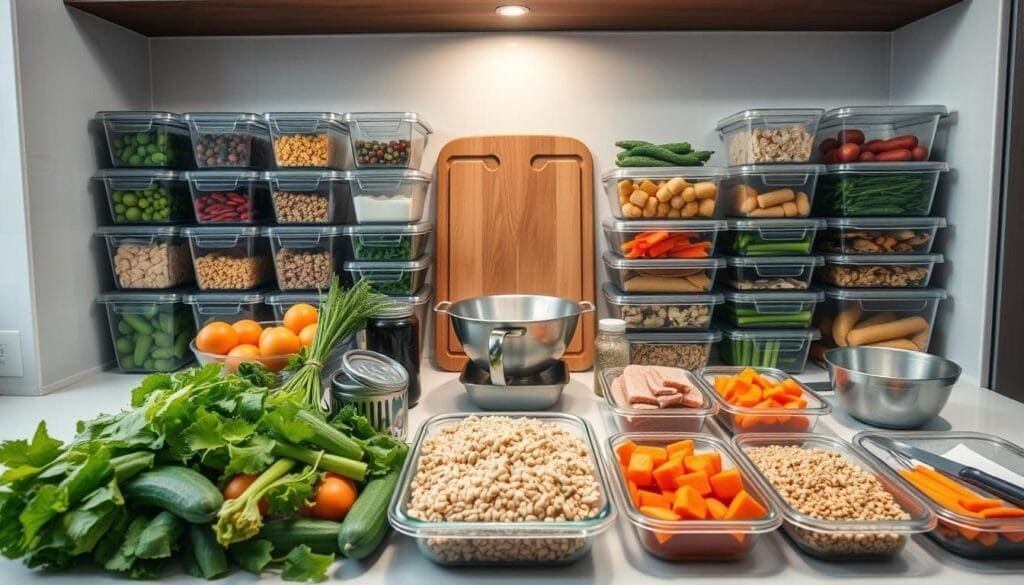
When planning meals, focus on protein-rich foods. Many people struggle to get enough protein. Aim for 4-5 meals daily to reach your protein target easily. Include lean meats, fish, eggs, and plant-based options like tofu.
Batch cooking saves time in macro meal prep. Cook large portions of proteins and complex carbs weekly. Store them in portion-sized containers for quick, balanced meals. Keep meals simple yet diverse to maintain interest.
Macro tracking allows flexibility in your diet. You can include favorite foods if they fit your daily targets. This approach is less restrictive than other diets, making it easier to maintain.
With consistent planning and preparation, you’ll achieve your nutrition goals more easily. This method helps maintain a healthy lifestyle long-term.
A macro diet can be tricky to follow. Many people make mistakes that slow their progress. Let’s look at some common pitfalls and how to avoid them.
Don’t forget about micronutrients while focusing on macros. These vitamins and minerals are crucial for your health. Eat 4-5 servings of fruits and veggies daily for a wide range of micronutrients.
Food quality is as important as hitting your macro targets. Whole, nutrient-dense foods are better than processed options. They can boost your energy levels and overall health.
Accurate tracking is key to macro diet success. Common errors include underestimating portions and forgetting to log snacks. Using generic food entries can also throw off your counts.
Weighing your food and tracking consistently can make a big difference. This helps ensure you’re meeting your macro goals accurately.
| Mistake | Impact | Solution |
|---|---|---|
| Overlooking micronutrients | Potential nutrient deficiencies | Include variety of fruits and vegetables |
| Ignoring food quality | Poor energy levels and health | Choose whole, nutrient-dense foods |
| Inaccurate portion sizing | Over or undereating | Use a food scale for precise measurements |
Consistency matters more than perfection in a macro diet. Small, sustainable changes over time lead to lasting results. Keep at it, and you’ll see progress on your macro diet journey.
A macro diet offers many benefits for sustainable nutrition and health. It focuses on balancing proteins, carbohydrates, and fats to optimize your body’s function. Success comes from understanding your needs and adjusting your macro intake.
Macro diets do more than manage weight. They support fitness goals and improve diet quality. This approach can also enhance your relationship with food.
Tools like food diary apps and kitchen scales help track your intake. These tools allow you to make informed choices about your nutrition.
Remember, progress matters more than perfection in macro dieting. Start with small changes and listen to your body. Adjust as needed.
With practice, counting macros becomes easier. This leads to long-term, sustainable nutrition habits. These habits will support your health and wellness goals.
Curious what is the primal diet? Discover how eating like your ancient ancestors—with a side of cheese—might energize you (and your next caveman impression).
Curious about the zero starch diet? Learn what you can actually eat, how to avoid salad boredom, and why potatoes are definitely not invited to this party.
A beginner swim workout turns splashing around into smart, safe exercise—even if your best stroke is “try not to panic.” Learn to swim with confidence (and laughs).