Tips
What Is the Primal Diet? Why Your Inner Caveman Might Need a Salad
Curious what is the primal diet? Discover how eating like your ancient ancestors—with a side of cheese—might energize you (and your next caveman impression).
Real-Life Fitness for Real People
Since 2024
Curious if the 30 day mediterranean diet meal plan can help you shed pounds without giving up pasta—or taste buds? Learn how science, flavor, and laughter all fit on your plate.

30 day mediterranean diet meal plan followers want a straightforward, flexible approach that fits real life—without endless measuring or bland food. This meal plan lets you enjoy flavorful meals, steady energy, and healthy weight loss in just 30 days.
Disclosure: This article contains affiliate links. We may earn a commission at no extra cost to you.
This 30-day Mediterranean diet meal plan is built on evidence-based calorie and nutrient targets designed for general adult health. Most daily menus deliver between 1,500 and 1,700 calories—an effective range for modest weight loss and overall wellness, especially for women and moderately active adults.
Men and anyone with higher energy needs can easily scale up by adjusting portions. These ranges are starting points, since everyone’s requirements differ based on age, body size, metabolism, activity level, and any medical conditions Source: National Institutes of Health.
Here’s what a typical day looks like:
Adjusting your calorie intake is straightforward. Swap foods or tweak portion sizes to match your goals.
For example, adding an extra tablespoon of olive oil adds about 120 calories. A handful of nuts adds roughly 100–120 calories, and an additional cup of cooked grains contributes around 200 calories—all without disrupting the Mediterranean balance.
To reduce intake, cut back on bread, grains, or higher-fat items by small amounts. This typically lowers your daily total by about 100–200 calories while keeping you satisfied and energized.
Personalization is key. On more active days—or if you’re maintaining rather than losing weight—increase serving sizes or add nutrient-dense snacks.
If you feel overly full or want quicker weight loss, reduce starchy sides or snack frequency to drop your intake by 150–250 calories per adjustment.
For more flexible meal and preparation ideas, see our sample Mediterranean diet menu. Special nutrient targets include meeting or exceeding fiber benchmarks—21–25 grams for women and 30–38 grams for men—provided you tolerate fiber well.
If you’re new to higher fiber intake, introduce changes gradually Source: Harvard T.H. Chan School of Public Health.
Sodium deserves close attention, especially if you have hypertension or heart conditions. Anyone requiring tailored nutrient management—such as people with diabetes or kidney disease—should consult a qualified dietitian before modifying this plan.
Medical disclaimer: This plan isn’t a substitute for personalized advice from healthcare professionals. If you have chronic conditions or take medication, seek professional guidance before making significant dietary changes Source: Centers for Disease Control and Prevention.
Quick reference for adjustments:
If you’d rather skip the guesswork, the Mediterranean Diet – 30-Day Challenge gives you a full month of done-for-you meal plans, recipes, and a nutrition journal—making portion adjustments and tracking effortless.
The Mediterranean diet consistently ranks among the healthiest eating patterns, thanks to its emphasis on whole grains, fresh produce, fish, nuts, extra-virgin olive oil, and moderate wine consumption. These components align with recommendations from major public health organizations.
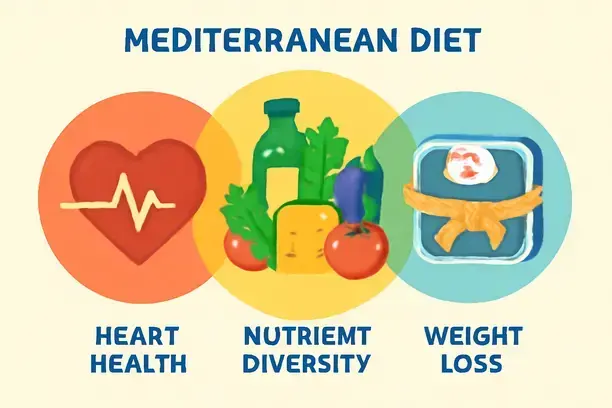
This 30-day Mediterranean diet meal plan reflects evidence spanning decades and diverse populations.
A landmark study reinforcing these benefits is the 2013 PREDIMED randomized trial involving over 7,000 adults in Spain at risk of heart disease. Those assigned to a Mediterranean diet supplemented with nuts or extra-virgin olive oil experienced about a 30% reduction in major cardiovascular events—such as heart attacks and strokes—compared to a standard low-fat diet, with follow-up over nearly five years (Source: New England Journal of Medicine).
That’s a dramatic difference in real-world outcomes.
Additional pooled data from multiple population studies indicate that higher adherence to a Mediterranean-style diet correlates with lower risk of type 2 diabetes, reduced incidence of some cancers, and healthier body weight maintenance. However, personal outcomes vary with lifestyle, genetics, and commitment (Source: CDC).
If you prefer a structured format, a 30-day Mediterranean diet challenge provides daily guidance to help translate evidence-based recommendations into sustainable habits.
While population-based studies demonstrate clear benefits, individual results can range widely. Factors such as age, health status, medication use, and adherence all influence outcomes.
Some individuals achieve significant improvements in weight or cardiovascular risk, while others see more modest changes.
Personal testimonials featured in programs like the Mediterranean Diet – 30-Day Challenge illustrate individual experiences but shouldn’t substitute medical advice.
While a structured plan can boost commitment, always check with your provider before major dietary changes.
Curious what is the primal diet? Discover how eating like your ancient ancestors—with a side of cheese—might energize you (and your next caveman impression).
Curious about the zero starch diet? Learn what you can actually eat, how to avoid salad boredom, and why potatoes are definitely not invited to this party.
A beginner swim workout turns splashing around into smart, safe exercise—even if your best stroke is “try not to panic.” Learn to swim with confidence (and laughs).